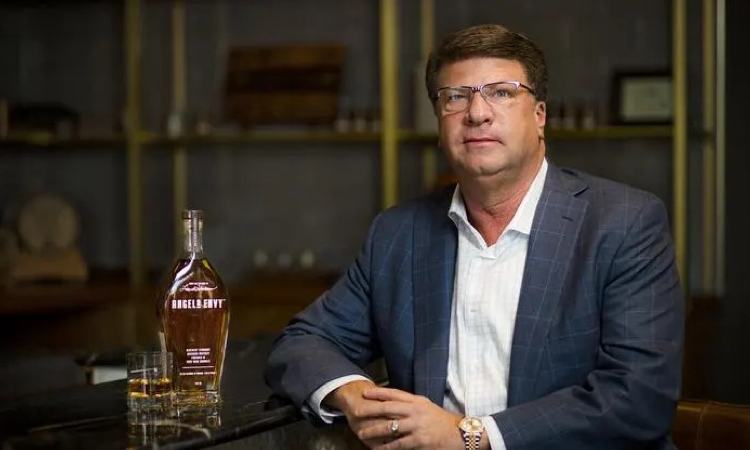
“It’s always a good day to talk about whiskey,” Wes Henderson says.
Wes Henderson has spent his life in the bourbon business, first as the son of legendary master distiller Lincoln Henderson, then as a founder who rewrote one of the industry’s oldest rulebooks. He’s still not finished.
Henderson grew up around the stills long before he had any plans to run one. “My father spent decades as a master distiller at Brown-Forman,” Wes said. “He built brands like Gentleman Jack, Jack Daniel’s Single Barrel, Early Times, and Woodford Reserve. I tagged along on weekends.” But Wes soaked up a world he assumed would always be background noise rather than his own career.
For a while, whiskey wasn’t the plan at all. Henderson considered medicine, then found radio at fifteen, running the board solo at a small AM station in Kentucky. “I was good at radio, but broadcasting is a business where you’re only as good as your last ratings book,” Wes told me. “I never had a tidy plan to get back into spirits. It was just one decision leading to the next until I found the family calling, of whiskey.”
The Start of the Story
The turning point for Wes came when his father retired from Brown-Forman. Lincoln had recently survived melanoma, and Wes felt time pressing on him.
Wes’ urgency prompted him to create Angel’s Envy, a distillery built to bring some of his father’s shelved ideas to life. “Some of my dad’s ideas were either too early or too far outside industry norms to catch on,” said Wes.
“The Angels’ Envy name itself was a wink at whiskey lore. Instead of losing whiskey to the ‘angel’s share’ that evaporates during aging, I liked the idea that what remained would be good enough to make the angels jealous.”
His advice to any new distiller starts with focus. “Build one great product, let it pay the bills, and use that foundation before branching out,” he told me. Angel’s Envy followed that logic, growing into one of the fastest-rising super-premium whiskeys in the country.
In 2015, Wes sold the brand to Bacardi as growth began demanding more capital than his smaller operation could provide. “I figured that was the end of the road for me, and planned to retire, but retirement didn’t take.”
The Start of the Finish
What makes Henderson’s story unique is what he started in 2009, when almost nobody in American whiskey was finishing bourbon in secondary barrels. But Wes thought otherwise. He treated the extra maturation of finishing as a way to add depth to whiskey that was already strong on its own.
“Drinkers responded in a way I didn’t expect. I heard, again and again, from people who said Angel’s Envy port-finished bourbon was the first whiskey they ever loved,” Wes told me.
Today, cask finishing is everywhere in American whiskey. Henderson sees it as the rule he broke that changed the whole category, and he’s still chasing the next unconventional idea, including a cold-climate aging project he’s not ready to detail yet.
To Wes, cask finishing that takes place between the base spirit and the barrel. “The finishing reveals corners of flavor that would never show up on their own,” he said.
The rest of the industry may have now followed his lead, but Henderson is less interested in being copied than in moving forward. He looks to push finishes into places that may be improbable at first, then inevitable once you taste them.
The Next Generation
If Angel’s Envy was about a father-son bond, True Story is about the next generation. “I started the company to build something new alongside my six sons, several of whom now work across the business,” — operations, production, processing, IT, social media.
Andrew Henderson serves as operations and production manager; Connor Henderson is a processing supervisor; Christian Henderson works as a processing operator; Kyle Henderson is SVP of operations and head of production; Spencer Henderson supports the team as an IT consultant; and Ian Henderson leads the brand’s influencer and social media presence.
Wes’ creative instinct shows up in how True Story approaches its own narrative . “Bourbon brands should speak up only when they have something worth saying,” he said. “I named the company around a simple idea, that whiskey is a reason for people to sit down, talk, connect, and, well, tell a story.”
“I think of myself more as a creator than a curator,” he said.
True Story’s packaging reflects Wes’ appetite for conversation. The bottle is a unique opaque black bottle for the bourbon, finished in white Muscatel casks, paired with a bottled-in-white rye finished in Amburana and sherry casks.
“I like to call the bourbon in our bottle approachable, and the rye a genuine flavor bomb, with almost nothing in common between the two beyond the family name.”
Frequently Asked Questions of Wes Henderson at True Story
How did growing up around Brown-Forman shape your palate before you ever worked professionally in whiskey?
Long before Wes thought about a career in spirits, years of everyday exposure to the aromas, barrel char, and fermentation smells of the distillery gave him an intuitive foundation. He wasn’t learning to evaluate whiskey from scratch as an adult; he was refining instincts formed in childhood, which later let him move faster and trust his own judgment when developing new products.
What’s the biggest misconception people have about finishing a whiskey?
Wes says people often assume that finishing is a way to mask a mediocre base spirit or to artificially manufacture flavor. In his view, it’s the opposite. Finishing only works when the underlying whiskey is already great. The secondary cask adds complexity to something strong, rather than covering up weakness. This is why he insists the starting bourbon has to be right first.
How does True Story decide which barrels to use for a new finish?
The process is built around small trial batches. Wes and his team taste extensively before committing a full barrel program to any new cask type, prioritizing whether a finish creates genuine contrast rather than simply following a trend. Ideas that don’t earn their place on the shelf get shelved, sometimes for years, until the timing is right.
What’s something about running a family business that surprised you?
Wes has found that understandable roles are important, more so in a family company. Without defined lanes, he told me, sibling dynamics can blur professional boundaries. He treats his sons as colleagues first during work hours, separating that from family life, so the business runs on merit and communication rather than personal history.
How does Wes think about competition from the many new whiskey brands in the market?
Wes doesn’t think of new ideas as a threat. He pays less attention to how many new labels appear and more attention to whether the True Story brand stays on-point. He believes brands that chase every trend dilute themselves faster than the market does.
And Now, For the Rest of the True Story
Looking ahead, Wes Henderson isn’t panicking about industry headwinds such as shifting drinking habits, inflation, and younger consumers with tighter budgets. Instead, he sees a correction.
“The market is still settling after the distorted highs of 2020 and 2021, when demand and new brands surged in ways he warned wouldn’t last,” he said. “Now, with more labels competing for the same shelf space, I expect the brands that hold onto quality and a distinctive point of view to be the ones still standing.”
For Wes Henderson, the story does not end. Shaped by patience, perspective, and the long arc of bourbon itself, the story just gets at least a second finish.
Interested in hearing the next chapter of the Wes Henderson and sons story? If so, view the True Story website and Instagram.
See our full podcast with Wes at whiskeyshenanigans.com. And for more conversations with fascinating people in the whiskey world, check us out on Instagram @whiskeyshaniganspodcast
Listen to our podcast with Wes Henderson as guest.
Read a chapter of the Whiskey Rule Breakers book about Wes Henderson.