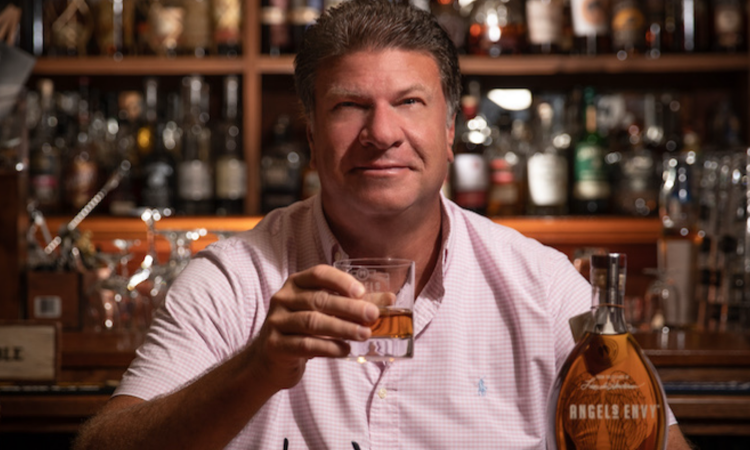
Wes Henderson is a true flavor man. In this episode, Randy and Wes trade stories on unconventional barrel finishing, what makes a bourbon truly finished, and why it’s sometimes best to break from standard American aging rules.
 Apple Podcasts
 Amazon Music
 Spotify
 YouTube
Read more about Wes Henderson in an excerpt from our Whiskey Rule Breakers book.
Transcript
Randy Warren (00:06):
Welcome to Whiskey Shenanigans. I’m your host, Randy Warren. Whiskey Shenanigans, where we help our listeners experience the world of whiskey, every aspect of life, as if it was accompanied by a glass of bourbon. The sports world on whiskey. Basically every part of life on whiskey. Whiskey Shenanigans is about getting exclusive interviews from Bourbon Row in Kentucky, where we can learn about the secrets that make our favorite bourbons unique. We will get inside the hearts and minds of many distillers and help you understand what and how they are achieving it. Whiskey Shenanigans is about going beyond boring podcasts featuring just tastings. Heck, what do you get out of that anyway? It’s about bringing on guests and experiencing the entire world through whiskey. But be warned, if you’re diving in and you want to participate in these riveting discussions, you will need to grab a glass or a dram and be prepared to be entertained.
(01:10):
Here we are again, Whiskey Shenanigans fans. We are very excited today to have with us Wes Henderson. Probably some of you know that name from Angels Envy Fame, we’ll call it. And now he has a new endeavor that he has undertaken, and we’re going to go into some of that. It is called True Story. And it is so good that after I bought a bottle of it before this podcast, I ended up drinking it all. So I don’t even have it anymore because I drank it all.
Wes Henderson (01:43):
It’s what you’re supposed to do with it, Randy.
Randy Warren (01:45):
Exactly. Exactly. That’s what I figured. So it’s a pleasure to have you on, and I’m really glad you were able to join us today.
Wes Henderson (01:53):
Thank you so much. I’m excited and it’s a beautiful day and it’s always a good day to talk about whiskey. Absolutely. Absolutely. It makes it even better. Beautiful Kentucky skies behind me. And so I’m ready to chat about whatever you want to chat about.
Randy Warren (02:07):
All right. Well, why don’t you tell us just briefly how you got started in this industry? I mean, your kids are in it now, but were you a kid and your father was in it and then you kind of followed him into the industry?
Wes Henderson (02:22):
I mean, dad spent pretty much his entire career after college in the industry. He used to work in a laboratory, like a testing lab right out of college for a few months, I think. And then started at Brown-Foreman in 1964, which was two years before I was born. So I was always around the Brown-Foreman family. I grew up going to work with my father on weekends sometimes, so around the lab, around research and development, really just anywhere around the company. So it was always a very familiar place for me. But really, honestly, I didn’t really know that that would be my career path for a long time. So it was nice growing up in those scenarios. Some of my comfort aromas are fermenting mash. That’s what I remember growing up walking into a distillery. And I’d go to Jack Daniels with my dad. I’d go to Europe and look at barrels.
(03:21):
I would go to Canada to look at Canadian mist and all these other things. So it was a long time in the industry. Well, I mean, not in the industry, but as part of the industry when I was a kid.
Randy Warren (03:34):
Yeah. And you went to college. Were you a chemical engineer or something like that? Or what did you think you were going to get into?
Wes Henderson (03:41):
Well, I really always, probably, I was a science geek. When I was younger, I probably saw myself being a doctor or something like that. Anatomy was always really an interest to me. As a matter of fact, I had a microscope in my bedroom. I had a walk-in closet and I had a lab. I’m talking when I was like 10, 11 years old, a lab. And I would stick my parents’ finger to look at their blood under the microscope. I’d stain the slides and look at the blood cells and all that stuff. So I thought that’s where I would go, but really I drifted initially. So my first job at 15 was a radio DJ, believe it or not. A little radio station in the middle of Podunk, Kentucky, Eminence, Kentucky AM station. And I came in on a Sunday morning, my dad would drop me off.
(04:30):
I would run the station all day. And then sunset, these stations, some of these AM stations come on at sunrise and you have to go off at sunset. So I’d power it up in the morning on a Sunday morning. I’d turn it off when I left. And I loved radio. I was good at it and did that for several years. So I saw myself probably a pretty successful radio guy in the Louisville area and other markets. I saw myself probably doing that.
(04:59):
But as I got older and ended up getting married and you start to think it’s a great life, but you’re only as good as your last ratings book. And I decided to take a little more direction. Still not quite back to the spirits industry yet, but making the moves that would eventually put me back there. And it wasn’t planned that way. It wasn’t a well thought out plan. I’d like to say like, I did this, this and this in order to get here, here and here, I just did this, this and this and it just so happened to lead back to here.
Randy Warren (05:32):
I would imagine a lot of paths lead back into that industry from the Louisville area though.
Wes Henderson (05:38):
Yeah, you’re right. And there’s so many different people think that a lot of times it’s spirits or bourbon, it’s just the actual liquid. There’s so much relating to getting that liquid produced, to getting it marketed, to the finance side, to the procurement side, all those things. And so there’s a million different ways you can be involved in this industry other than just making the bourbon, which gets most of the attention.
Randy Warren (06:04):
Right. Yeah, absolutely. And we’re going to talk about some of those today. I mean, we’ll get to maybe some finance questions later on because that’s an interesting topic these days as well for everything that’s going on in the industry. But right now you started a true story. And when I think about what you did, being very entrepreneurial, it’s kind of like, well, that’s a big deal. Leaving Angel’s Envy, which you were instrumental in that whole thing, and it was a huge success. And I guess what I’m wondering was, were you captured by your success? In other words, you like to experiment, but it was so good. What you built there was so good that it really became about reproducing that so good product.
Wes Henderson (06:55):
I think that there’s an element to that. When I started Angel’s Envy, the plan was number one, dad had retired from Brown-Foreman and I would love to have worked with my father. He was a melanoma survivor. And I felt like that if we were going to do something together, it was time to do it or we might run out of time. So the plan was to open a little craft distillery and be able to do all those different things, all these crazy ass innovations and stuff that dad might’ve worked on before Brown-Foreman that didn’t make it out because it wasn’t good enough yet or it wasn’t the right time or whatever. So that was initially the plan. But as Angels Envy evolved. And we did break ground. I mean, with Angel’s Envy, I mean, we pioneered secondary barrel finishes with that pork barrel finish. So as we got more into it, I think that it became less like doing the mad scientist stuff.
(07:53):
Although we did some fun innovations. I mean, we had a ton of special releases, so it’s not like we weren’t innovating. It just wasn’t like some of these guys out there that have 15 different SKUs out there, the real mad scientist stuff, which I admire. But I always felt like you had to have one core product and if you had that core, and that’s the advice I would give a lot of these distillers who really like to do the crazy stuff, focus on one, pay the bills on that, build that brand, and that gives you the wherewithal to do the other stuff. So I think that was a component. And I sold Angels Envy to Bacardi. So I felt like actually I hadn’t planned on doing anything else. I had planned on retiring when I left Angels Envy.
Randy Warren (08:40):
Right. So what made you decide to do it all over again?
Wes Henderson (08:47):
Craziness, insanity. I think that I was getting bored. I’m not very good at filling my time doing other stuff, although I do a ton of other stuff. I guess it just never had the same fulfillment as creating things. I was fond of saying I’m a creator, not a curator. And that’s kind of the way I felt at Angels Envy. When most of my time was spent, and God bless Bacardi, I love Bacardi. I mean, they’re great people, but keeping the big company out of the little brand, keeping them at bay and say, guys, look, you bought this company because of this, this and this. Don’t screw it up by trying to make it another Bacardi. And they were great at that. They recognized that, but that became my job. So I was getting bored. I wanted to do something with the boys as well. I have six sons.
(09:40):
And to leave them a legacy that they could have on their own, that was a big driving factor as well.
Randy Warren (09:48):
I mean, I’ll tell you, I mean, I had a business that I started with my dad, a lot like you, in the finance business, grew it into a pretty decent sized financial advisory firm. And then when it got to a couple years ago, I though, well, after 25 years of doing that, it’s time to retire or move on to something else. And I asked my son who was in the business like, “Hey, you want to run this thing?” And he’s like, “Dad, you work way too hard, man. I don’t know. I don’t think I really want to run this thing.” And he was only in his late 20s at the time, so he wasn’t probably ready anyway, but he didn’t really want it. And it’s like, so how did your sons, how did they feel about getting into the business with you?
Wes Henderson (10:36):
And I think with your experience is not an unusual experience. I talk to a lot of entrepreneur groups and speak at a lot of events like that, and it’s been family businesses. And it is not uncommon at all for the child. And sometimes, especially, I say the child, not as a child, but as a younger person, they don’t always understand and appreciate what dad has built. And to them, it was just what dad did. It wasn’t anything sexy about it. There wasn’t anything. And people have their own paths as well. But the boys have always wanted to get into the industry. And as I said earlier, there’s so many things you can do in this industry. Most of my kids are involved in operations, but different aspects of operations. You’ve got distilling, blending, bottling, supply chain, shipping, logistics, all these things. And then on the marketing side, I’ve got boys that would like to be out in the marketplace talking to consumers.
(11:35):
I’ve got my oldest as our chief operating officer. So there’s room for everybody to do different things. And I think it’s finding the niche the best that you can and trying to give them, not only do what they want to do, but offer them advancement opportunities and personal growth opportunities and things like that, which isn’t always easy to do in a big company. I mean, a small company, I’m sorry. Because you’ve only got 15 people that work there, but you’ve got to nurture that with the kids. So I think that they’ve got to want to do it for the right reasons.
Randy Warren (12:12):
Yeah. And did all six follow you into TrueStory?
Wes Henderson (12:15):
We’ve got, like I say, four and a half now. One of them is a consultant, an IT consultant for us. I’d like to bring him over eventually. But it’s like I said, we don’t need a full-time IT guy right now, but we’ll need him eventually. My youngest is working as an electrician apprentice, which I think is really cool. And maybe he’ll come. Look, I tell him at distilleries at Eagles Envy, we had an electrician on site that worked in maintenance. So there’s room there, but hell, with the trades now, he’ll make bank. Yeah.
Randy Warren (12:52):
Growing up.
Wes Henderson (12:53):
Oh my gosh. Plumbers, electricians, auto mechanics. I saw auto mechanics making $300,000 a year, which is fricking awesome. Go. Do it, man.
Randy Warren (13:04):
Yeah. That is fantastic. And the electricians and the plumbers, like you say, they’re doing really well also. So as I mentioned to you before, we’re writing a book called Whiskey Rule Breakers. And one of the things that we like to ask is out of all this experimentation and all of this interesting stuff, what’s the most rule-breaking thing you’ve ever done? Is it like taking a whiskey barrel to the top of a mountain to age it there? Or is it maybe the Sahara Desert? I don’t know. Any crazy stuff or a flavor that you’ve tried to put in there or get into there from the wood or whatever that was just crazy?
Wes Henderson (13:48):
I mean, don’t think that we haven’t thought about dragging barrels to the top of the mountain. I’ve got a project now where we’re going to Antarctica, which I can’t really talk about more beyond that.
(13:59):
I think the single thing that we did is, and back in 2009 when I started this company or started Angels Envy rather, it was unheard of for American whiskeys to be finished in secondary barrels. And that was a huge rule breaker. And there was a lot of noise about it when we first started doing it because people didn’t understand it. And we had a lot of naysayers, but we just plowed through. And we didn’t pretend that it was a substitute for traditional bourbon. I call it bourbon and more, or it’s not done till it’s finished. And it’s adding additional dimension and additional depth to fantastic whiskey. You got a fantastic whiskey to start with. So I think that’s the biggest rule. And that rule that we broke changed the entire bourbon world. I mean, it really did. And you look now, and so I’d say that’s probably, and I look shit, I break rules all the time.
(14:58):
I just got you an explicit rating by saying that I’m sure on your podcast.
Randy Warren (15:02):
Maybe. I
Wes Henderson (15:03):
Use that word. Yeah.That’s probably not even a bad word anymore. But lots of rules have been broken along the way, but I’d say that’s the most impactful one.
Randy Warren (15:13):
Yeah. And it actually, I see it all over the place now. It’s super popular. People are doing it like crazy. I even tried it myself. So this whiskey right here is from Nebraska. So a friend of mine owns a farm out in Nebraska. And he’s like, “Hey, if you want to use my corn to make whiskey, there’s a still out there and a guy who makes whiskey out there called flyover whiskey. And he’ll put your label on it and all this stuff. You give him your formula of what grains you want and where you want them from. And he’ll get them for you and he’ll distill it and get it ready for you. And he’ll mature it in small barrels for like six months or whatever, and then he’ll send it to you.” Which he did. And it was pretty good. And I though of you and I said, “Well, you know what?
(16:04):
It would be better if I did a little finishing on this. Whatever how it would turn out if I took some new oak staves and put it into a decanter and just sealed it up and tried it every day for a week or two weeks.” After two weeks, it was smoother. It was creamier. It was more vanilla, more caramel. It definitely had an impact day by day by day. And I had a lot of people try it out and they were like, “You know what? That’s not bad.” Well, that’s good. Well, we can thank Wes Henderson for that.
Wes Henderson (16:39):
Oh, congratulations. I think you mentioned the character that it added to the whiskey. And one thing that, especially with the Angels Envy pork barrel finish and with True Story, our Muscatelle finish, that finishing really softens the whiskey. So it took whiskey, especially to people. I hear it all the time from people. Angels Envy is the first whiskey that I had. The first whiskey that I loved. People that were new to the category, but it was complex enough to be good for somebody who was more experienced. So it was kind of the best of both worlds. So it added just that. It softened it, but it didn’t dumb it down. And it’s hard to do that sometimes. It’s hard to make something that’s, I hate to use the word basic because that’s not the word I mean at all, but very approachable. It’s hard to make something very approachable and still have depth and character.
(17:33):
Usually you’re going to have one or the other. Some of your gateway bourbons are like that. So I would consider Angels Envy a gateway bourbon.
Randy Warren (17:42):
And does it lead me to true story?
Wes Henderson (17:46):
Well, I think that true story is just the evolution of our family in this industry. It’s just the logical next step. I’ve always been fond of saying. We were always under, well, not under pressure, but in the bourbon industry, you’re under pressure to release new stuff all the time. And what’s the next hot thing? We always did a good job of not allowing that to happen, meaning we weren’t pushing something out the door just to meet a number because the counting says we need more of this or more of that. We would put stuff out there that when it was ready, first of all. Second of all, that added to the conversation. You always want to be part of the bourbon conversation. That’s my goal. And we agreed that we’re not going to say anything unless we have something to say. And I promise that there’s a point here.
(18:35):
And I felt like that we had more to say after Angel’s Envy. We just weren’t finished. Same with my dad after Woodford. Dad had more to express and we had more to express and we’re doing that in true story now.
Randy Warren (18:49):
And what’s the story in true story?
Wes Henderson (18:52):
Well, I mean, the name, first of all, I think is really a special way to frame what I consider to be what bourbon does for us in society, meaning socially.
Speaker 3 (19:07):
Okay.
Wes Henderson (19:08):
There are so many stories. I say this a lot. There’s so many stories inside that bottle. You just have to open it and share it with your friends. And then that’s where the magic happens. And there have been so many times where I’ve walked into a room of people that I don’t know of 50 people. And I sit down in a chair in the middle of the room and we just start talking about life and bourbon and we drink some bourbon. And for that moment, doesn’t matter what somebody does for a job. It doesn’t matter who they voted for. It doesn’t matter what religion they are, what their socioeconomic skill, what their race is, whatever it is. It doesn’t make any difference. We’re just sitting down sharing some bourbon. And so that’s where the name True Story came from. And it always said too, that I don’t care if it’s.
(19:52):
It doesn’t have to be a true story. It can be bullshit story. But as long as we’re sitting down and talking and having those conversations, then I’ve accomplished what we need to accomplish. So that’s really kind of where the name came from. And then we started, we can talk about the liquid too, but then we evolved the liquid as well.
Randy Warren (20:12):
So the true story is kind of, if you will, it’s my story. It’s my story in your bottle.
Wes Henderson (20:18):
Yeah. Right. Exactly. Exactly. That’s a really good way to look at it. Depending
Speaker 4 (20:22):
On who you talk to, when people think of Kentucky, they either think of bourbon or horses. And nestled among some of the best horse farms in the world is something called the Kentucky Castle, which you’re the proud owner of now. Talk about how you came up with the idea of buying the Kentucky Castle, what that conversation was like when you told your wife and how that’s going to be part of your true story and your legacy someday. As
Wes Henderson (20:52):
We were thinking about how to grow True Story, one of the things that really came to mind was, and it’s one of those sitting in bed moments and you jolt up and you think that, wow, this will be a really cool place to do a bourbon brand. And near Lexington, Kentucky, in Versailles, Kentucky is an iconic destination called the Kentucky Castle. It’s a boutique hotel, spa, farm to table restaurant, just a beautiful. It is a castle in the middle of Kentucky, literally. There’s no fixed geographic bourbon trail, so to speak, but it’s in the bourbon trail area. It’s close to Woodford, it’s close to Buffalo Trace, it’s close to Castle and Key, all that stuff. So I thought nobody had really incorporated lodging into a plan to build a distillery. And the ability to use a castle for. And it’s a huge wedding venue by the way, but to use the castle in a way, let’s say you want to come and do a barrel pick with your friends and you come and stay at the castle for a couple days or have bourbon events there.
(21:54):
So that’s really how I visioned the castle initially and to build a small distillery there. We’re still kind of in flux on how that’s going to happen. I think some of the headwinds in the industry have kind of had us reevaluate the timing on that. But the vision is still there to take the Kentucky Castle, make it more bourbon-centric, not the true story castle. Of course, we’ll feature true story there, but make it more bourbon-centric. And I want that to be kind of non-denominational there at the castle. I want people to be able to experience not just our stuff, but other great whiskeys as well.
Randy Warren (22:26):
Pretty sure I was there. I was at the Bourbon Trail about a year ago and stopped in at Angel’s Envy and then went out in that direction. Stayed at a horse farm way out there most of the way towards Lexington, like two thirds of the way towards Lexington. And on the way, we stopped at this place and it was like you’re describing it as a castle. So maybe that’s the one. I don’t know.That’s
Wes Henderson (22:50):
The only one there. It sits on top of a hill. I tell you, it’s a beautiful place for your listeners and viewers. Go check out thekentuckycastle.com. It
Randy Warren (22:59):
Looks like a castle. You can go up on the roof and look over the edge and yeah, it’s kind of neat. As you had shared with some of your whiskey with friends or even brand new friends, like you mentioned walking into a room of 50 people and just sitting down and having a conversation. What are some of the weirdest questions you get or funniest questions or funniest responses that you get to somebody trying a whiskey? I
Wes Henderson (23:28):
Think now one of the more common comments I get when I ask people taste our rye, for example, it’s like, I don’t like rye. That’s kind of a hard pass for a lot of people because it’s really spicy. And I’m like, “Dude, just please do me a favor. You got to try this rye because there’s nothing in the world like it. There’s no way to describe the flavor that you’re going to experience and anything like that.” And nine times out of 10, I get them a try and they love it. So I mean, that’s a common thing. And you never know when I sit down and do an event where we’re going to go. And I warn people in advance, and your listeners now can see that already. I’m like the poster child for ADD. So we go down all these different rabbit holes. So nothing’s off limits.
(24:11):
I could ask about the kids, ask about the family. Our family’s been involved in emergency services for a long time on the fire and law enforcement side. So hell, I’ve had discussions go there before. And I’m like, “Hey, that’s great. Wherever you guys want to go, we’ll go there as long as we’re ha a little whiskey.”
Randy Warren (24:30):
And you’re the county coroner, right?
Wes Henderson (24:32):
I am. I’m a death investigator at the coroner’s office here. I’ve done that. Oh. Yeah. Started off as a firefighter, which I really enjoyed that and then transitioned over to the other side. Been doing that for, I was thinking six years the other day, but seven years now. A little over, actually seven and a half years. It’s a fascinating role. It’s solving puzzles and mysteries and helping families. I mean, if there’s a violent death or anything that’s not a natural death, well, sometimes we do natural deaths as well, but we’re there. We do the investigation. So as you can see, some of those conversations now that I have in groups of rooms of 50 people, everybody’s a true crime fan now. More people want to talk about that than they do about bourbon when they find out that’s what I do.
Randy Warren (25:23):
Well, that’s just kind of the side gig though, right? Oh, it
Wes Henderson (25:26):
Is. But I take a lot of cases. I mean, I had one Sunday, the pretty lengthy one that lasted about four hours Sunday. But I’m trying to get people to die on a schedule, but they won’t. So it’s a little more predictable. But that’s the thing that’s interesting about that job is, and very stressful, is that I was laying in bed dead asleep at 7:00 AM Sunday morning, one minute. And then the next minute I’m out on a shooting for four hours. Wow. So it’s a big swing in your state,
Randy Warren (26:04):
So to
Wes Henderson (26:04):
Speak.
Randy Warren (26:06):
Nothing to something real fast.
Wes Henderson (26:08):
Zero to a hundred, man. And it was like that in the fire service too. But there’s so many lessons that are comparable between business and what I do in emergency services and in fire service as well. We’re solving problems typically. I got a car on top of a semi-truck. How do we get it off? I got this going on. I got this going on. What’s the best way to do this? And business is very much the same. And that’s how I approach business. I’m like, look, we can solve this problem. We got to. Failure’s not an option. And my boys, four of my boys were firefighters as well. I think that reinforces our ability in business to think like that.
Randy Warren (26:52):
Absolutely. As an entrepreneur, it’s all about problem solving. It’s all this problem. Elon Musk kind of grabbed my attention recently with a quote. He says something like, “Every day I go to work and I solve the biggest problem we have, and it’s all I do.” There
Wes Henderson (27:08):
You go. “Problem
Randy Warren (27:09):
One day at a time. If I can solve the biggest problem today, tomorrow I won’t have to solve it. I can solve the next biggest or that’ll become the biggest problem tomorrow and we’ll just keep moving forward.” And
Wes Henderson (27:19):
The nice thing about problems is, or puzzles, they’re always happening. I mean, once you solve that one, there’s another one. It’s like buses. There’s another one right behind it. There’s
Randy Warren (27:31):
No end to it. So considering that maybe a hundred thousand people might hear this or something, what one thing would you really want to tell a hundred thousand people about True Story?
Wes Henderson (27:45):
First thing I would tell them is to follow me at Kentucky. At KY Bourbon Maker, by the way. KY Bourbon Maker. That’s the first thing I would say. True Story, we have two whiskeys out there now. We have a bourbon that’s finished in white Musketel casks. It is in a black bottle. You cannot miss it. The bottle design is unlike anything you’ve ever seen. You
Randy Warren (28:07):
Can’t see into it. It’s completely opaque.
Wes Henderson (28:09):
You can’t see into it, but I tell you what you can, you can see it from across the room. And when you pour it, you can see that rich color. You cannot miss that bottle on the bar or on the liquor store shelf. And so the bourbon is just a very approachable bourbon. That’s what I would tell the folks that are listening now. It’s just a nice everyday sipper. The rye, which is in a white bottle. It is a rye finished in Amburana and sherry casks. It is a flavor bomb. There is no way to describe the contrast between the two from the bourbon, which is subtle to the rye, which is a flavor bomb. Makes the best old-fashioned or espresso martini you will ever have. And it’s a joy. It’s a hundred proof you would never know it. So two great whiskeys. I think it’s what you would expect from our family.
(28:55):
It’s an evolution of our finishing skills. And they’re fun whiskeys. That’s the big thing. They’re fun and they’re something to talk about too. So those are the main points I would make. Yeah.
Randy Warren (29:08):
So that’s interesting. So they’re both finished a little differently. They both have different recipe. One’s got the rye, the other one doesn’t. What’s the mash bill of the straight bourbon? Well,
Wes Henderson (29:21):
It’s an aggregate, so it’s a blend. So it’s kind of hard to say. I mean, it’s a fairly customary in the ’70s in the corns, high teens in the rye and maybe 10, somewhere in that range of fermented barley. But no
Randy Warren (29:41):
Wheat. No,
Wes Henderson (29:42):
No wheat. We’re not big wheat fans. One of my kids really wants to. I’m just not a fan, not there’s anything wrong with it. I’ve just never gone there. Yeah.
Randy Warren (29:56):
That’s funny too, because like you said, people say, “Oh, I don’t want I don’t want to rye. I probably would’ve said that a couple years ago. I mean, I think I came from the scotch world and so I was drinking scotch and I never had a bourbon. And then I had a bourbon. I was like, “Wow, that’s really good.” And then I tried a rye and I’m like, “No, I don’t want to go there. I like this bourbon too much.” But then after a while, your palate matures or whatever you want to call it. And it’s like, oh no, you know what? A nice rye, especially in an old fashioned can be fantastic.
Wes Henderson (30:29):
You’re expanding your. And then with our Amberana finished and Sherry finished rye, it’s got a little bit of cinnamon on the nose and these amazing different notes. I watch people drink it literally, and I’ve watched them just think about what they’re tasting because it kind of keeps evolving. But I think that’s what makes that fun. And you mentioned your palate evolving and I think evolving is a better word than maturing. Yeah,
Randy Warren (31:01):
I like that.
Wes Henderson (31:01):
Because once you’re more in tune with your palate and your ability to taste different things, it’s not a long walk to take somebody from a nice scotch to a nice bourbon, to a nice tequila, to a nice scotch, to cognac, to armagnac, all these different things. And I can put things in front of you in each one of those categories and you say, “Well, I don’t really think I like that. I never had it.” That most people would enjoy. I’ve been tequila lately. And I tell you what, man, there’s some. And I was not a tequila fan at all, but some of those tequilas out there now are incredible. And so I understand what you’re saying coming from scotch. And you evolved from an inferior whiskey to good stuff. So good for you.
Randy Warren (31:46):
Exactly.
Wes Henderson (31:46):
Welcome. Welcome to the tribe.
Randy Warren (31:49):
Welcome to the club. You mentioned earlier about whiskey and culture and sharing it with people and things like that. And I feel like whiskey in America have kind of grown up together, kind of matured together. Whiskey’s been around for as long as America’s been around and it’s so prevalent in our culture in terms of movies. I don’t know. Mad Men series on TV and how people sip a whiskey or The Godfather and slam it down on the table, showing like I’m angry now. It’s just everywhere. And it’s interesting that way. What’s your view on that? Do you have any thoughts on that?
Wes Henderson (32:36):
I mean, I think for centuries, thousands of years, spirits have enhanced our social experiences together. Meaning if consumed in moderation, it’s just a great way to enjoy your time and enjoy a spirit that may. The spirit itself may be something to talk about. Just the ritual of sitting down with someone and having a drink opens up conversation. I think it’s truly the social aspect of it that draws people to spirits. And then as we’re drawn to them for the social reasons, then we start to experience all the other little nuances and the stories themselves behind the whiskeys. But I think in shows like Mad Men, I’m glad you mentioned that, Mad Men really kind of brought back the classic cocktail. People have forgotten the old fashions. Now I think it’s the second or third most popular cocktail. So that’s how I see it in society, why you see people gathering just like the name True Story.
(33:45):
It’s gathering people together to experience life.
Randy Warren (33:49):
Yeah. Now what do you think about the ultra aging trend these days? You mentioned Antarctica and that made me think of ultra aging because one way to ultra age is to put it someplace cold.
Wes Henderson (34:01):
Right. I think that there are ways you can enhance flavor, but there’s a lot of hocus pocus out there that pretends to age things quicker. I think that I look at, I call it enhanced maturation, for example, placing whiskey in hot environments and cold environments and cycling it more often. I look at that as an enhancement. Some people have looked at it as a replacement. And we’ve learned over the years, and dad did a million experiments at Brown-Forman, there’s no substitute for mother nature and time. And you can try all you want, but at the end of the day, nature wins.
Randy Warren (34:46):
Yeah. And I guess it’s because the hot temperature will push the whiskey into the barrel and the cold will pull it out. But you also have the convection, the air inside the barrel that’s having an impact, a chemical impact on the whiskey as well, right?
Wes Henderson (35:05):
There are so many different factors that come into play there in a warehouse and what’s happening. And air circulation is one of them. Humidity, temperature, location in the warehouse is going to influence a lot of those things. And like you said, air circulating oxidation, I could go on and on and on. That doesn’t even take into account the interaction, different chemical reactions that happen with the wood. So there’s a million different ways to do it. And that’s one thing I love about it. But it’s impossible to artificially replicate all those. There was a company a few years ago, and I think, I don’t even remember the name of the company that was claiming to be able to do that with different processes. And we learned very quickly that it just wasn’t that good.
Randy Warren (35:54):
Yeah. There’s no substitute for mother nature. That’s the way you put it. And that’s –
Wes Henderson (35:58):
People have been fighting it since day one, the earth was spinning. And guess what? It’s like I’m having a quick, here’s my ADD kicking in. So I’m having a little procedure done on my foot tomorrow and I’m very fond of before I have surgery, which I’ve had a few lately as the anesthesiologist. I’ll try to hold off being put under. Meaning I’m going to try to hold off as long as I can and not go to sleep. I can do this. And the last anesthesiologist just said, guess what? I always win. So no matter what you do, you’re going to sleep. And the same way with Mother Nature. At Brown-Foreman, they tried crazy ass things like putting plastic around barrels to prevent angel share. Angel
Randy Warren (36:45):
Share, right.
Wes Henderson (36:46):
Plastic coatings. I
Randy Warren (36:49):
Thought of that too. I mean, I’ve never heard anybody say they did it, but I thought about that. Yeah, I wonder if anybody ever thought of
Wes Henderson (36:55):
That. Well, they have, and they did. And once again, they learned that, look, the angel share, you’re losing alcohol into the air. So that’s money. So however, to get good whiskey, you’ve got to give up the angel share. So you have to give to get. And you’re sacrificing some of that alcohol for good whiskey. And I think that now everybody’s kind of realized that people try to capture it in the air and all these other things. I mean, there’s definitely some science behind it, but by the time you do that, it’s so expensive and just let it go. Let it go. Let the angels have it.
Randy Warren (37:31):
Let the angels have it. That’s right. So there’s a lot of talk these days. There’s a Wall Street Journal article recently about 16 million barrels aging in Kentucky alone and maybe a glut of bourbon or whatever. I mean, what are your thoughts? Some people would say, no, that’s not really the case because people aren’t really drinking less. They’re just being more picky about what they drink. And I don’t know. I mean, what are your thoughts?
Wes Henderson (37:59):
I mean, I have a bunch of thoughts about all this. And I think that we definitely have some headwinds in the industry. I think you’re right, people are drinking a little differently. But premium products, there’s always a thirst and a desire for premium products. So I think that’s the least impacted out of all these. But inflation comes into play. And then you get people that are price sensitive. That’s where you lose some people. And when you’re over the $35, $40 whiskey and let’s say somebody’s younger and doesn’t have the same disposable income, they’re going to probably trade down to something a little cheaper. But look, I mean, everybody in our, I hate to use this phrase like drunken sailors because I don’t like to use that phrase when we’re talking about spirits, but COVID made everybody crazy and crazy in a bunch of ways. But our industry was booming.
(38:53):
And even the years before that, everybody ramped up production. We’re making so much whiskey and all this stuff. And there were so many brands on the shelf, which is a problem by the way. But COVID, and I was saying to everybody, look guys, this is not going to last. I was telling liquor store owners, I mean, guys, enjoy it while you can. So I think some of this is a correction that we’re seeing because of COVID. Some of it is just some changes in drinking. Some of it’s inflation. But I truly believe that at the end of the day, the industry is in great shape. That contraction on the shelf is a good thing. There are literally too many choices of whiskey. And the problem is if you’re a small guy, it’s spread out over so many brands. The market share is. So it’s hard to get for the volume you need to be successful.
(39:47):
And we’re experiencing it too. We’re having a hard time now. It’s not really standing out because we’re a unique brand, but we bought a bunch of barrels at a high price and now they’re worth about a third of that. And you finance these things and you’ve got a collateral base and we’re fighting that like everybody else is.
(40:04):
So I mean, it’s real. And the ones that’ll survive this are the ones that’ll continue to do well, I think. So that’s a long-winded answer, but I think there are a lot of factors in play there, but I don’t think it’s as bad as everybody. The sky’s not falling as much as everybody seems to think it is.
Randy Warren (40:19):
Yeah. I was talking to my Uber driver yesterday. I came home from the airport yesterday and I was talking to the Uber driver and he was saying he was in the army and whatever. And they were drinking some when he was trying to remember what whiskey it was. And he’s like, “It wasn’t Buffalo Trace, but it was from them.” And I said, “Well, like a lot of brands, they’ve got this umbrella.”
Wes Henderson (40:44):
Yeah, they do. They’ve
Randy Warren (40:45):
Got all these ones underneath of it. And one of the things I like, and we already talked about it with the ones that you have already, is that which one should people choose? You’ve got the rye, you’ve got the straight bourbon, so it depends on what palette. But he ended up, he’s like, “Oh, I think it was benchmark.” And I’m like, “Okay.” Just like you said, people are a little bit more sensitive to price or they might be what they call pre-gaming before they go out with friends. Take a couple drinks first because they’re expensive when you get to the restaurant or to the bar. You can have your own at your house for a lot less, that sort of thing.
Wes Henderson (41:23):
And we learned that during COVID. Well, I mean, we’ve known that for a while, but especially during COVID when the bars and restaurants were closed and that’s the only thing we could do. And some of that is carried over. There was that initial rush back to the bars and restaurants when COVID was over. Right, for sure. They exploded. But now things are settling back down to what I consider to be a normal growth curve as opposed to the abnormal COVID-induced mania.
Randy Warren (41:52):
Yeah. COVID was wild. I mean, I even did a couple of tastings where I was the only person there. I’d go into a bar and there was nobody there but me.
Wes Henderson (42:03):
Wow. That’s hardcore though. You’re there. It’s funny, it’s hard to. I think a lot of us are selectively kind of. We’re forgetting about COVID more and more. It was traumatic. At the end of the day, it was trauma and our brains kind of. It seems to me like that was so long ago and it really wasn’t. No.
Randy Warren (42:29):
Like yesterday almost.
Wes Henderson (42:30):
Yeah. Exactly. So in the grand scheme of things, but humans were very adaptable and have the ability to overcome. And I think that’s what we’re slowly doing here.
Randy Warren (42:42):
It kind of hones your values and what you’re doing and what you’re thinking about and maybe your skills and where you want to go. What unique values are characteristic of your new firm?
Wes Henderson (43:01):
I think we’ve always been very transparent.
(43:04):
And that’s been a big thing for us. We will not release anything until it’s ready, even if it means costing us more or delaying a launch or something like that. I think that’s been a hallmark of ours from the very beginning. And an honest discussion with our consumers. Like we talked about earlier, I didn’t want to talk unless we had something to say. And we have that dialogue back and forth with our consumers. And I think that’s one thing that I’m really proud of and we value that. I would say that is a value of ours because we treasure and cherish that relationship with the folks that love our whiskeys and everybody’s family. We treat everybody like that.
Randy Warren (43:52):
Wow, fantastic. I only really have one more question for you. I don’t want to take up any more of your time, but the only last question I had for you was about barrel picks. Whiskey shenanigans, and we’re in conjunction with Bourbon Plus Magazine and a very large restaurant group here in Washington DC. We’re looking to do a barrel pick. And I don’t know if you guys do them or would allow us to come to your place and do one, but just though I’d ask.
Wes Henderson (44:22):
Well, I appreciate that. And we’re evolving towards that program. And that’s something I think we’ll be ready to have that discussion pretty soon. And I’d love to talk about it. I think they’re fun. I think we need to add another twist to it though. We did a program at Angels Envy. It wasn’t just a barrel pick program. It was a special blend program. And we sat down and blended different samples from different barrels and you created your own flavor profile essentially. I want to really go back to doing things like that because it’s a lot better than going, “Here’s five samples, pick one.” You sit down with a graduated cylinder and start mixing samples from different barrels together and then we recreate that. That to me is more fun. But yeah, I’d love to have that discussion.
Randy Warren (45:05):
Yeah, that’s pretty cool. Actually, you know what? One of the first experiences I had was with Johnny Walker. I was a member of a country club in Philadelphia and they sent a representative and he brought all these little graduate cylinders and all these beakers and all this stuff. And he’s like, “Okay, we’re going to have a competition.” He divided the room into four parts and he said, “Okay, four teams, one, two, three, and four. And here’s Johnny Walker Black. And everybody tastes it. We’re going to try to recreate that. If you need a little bit more peat, you add a little bit of this. If you need a little bit more of that, you add a little bit of that. And we’re going to see who can get the closest to blending a whiskey that tastes like Johnny Walker Black.” We came in second out of four, but whatever.
Wes Henderson (45:49):
First thing I would say is throw out the peat. I mean, get rid of that. But I know that’s why sometimes I have a problem with some. I can’t get past the peat. It blows me out of that and sulfur. Those two compounds are things that really kind of ruin things for me. But the true artistry is in the blending. I mean, distilling is more of a science than an art form. Blending is a true art form and innovation through blending is really the essence of art form beyond anything else. It’s very expressive way to show what you’re trying to accomplish with your consumers.
Randy Warren (46:32):
Yeah. Well, if you want to experiment on me with your idea, I’ll let you know. I’m open to that.
Wes Henderson (46:39):
You got it. I have a lot of people that are willing to do that, and I appreciate the sacrifice that everyone’s making for their country by wanting to drink more whiskey.
Randy Warren (46:49):
That’s
Wes Henderson (46:49):
Right.
Randy Warren (46:50):
It is a true sacrifice.
Wes Henderson (46:51):
It is. It is. Anytime.
Randy Warren (46:55):
Th’s great. Well, thank you very much for coming on today. It’s been a real pleasure getting to know you and chatting. I said we’re working on the book and we’re hoping to have it out this summer, which is coming quick. And we’re getting down to the last few chapters, and we didn’t want to do it without you and what you’ve been doing. And we’ll have it hopefully ready for Bourbon Fest. And I’m sure you’ll have a tent there or something and I’ll bring you a copy.
Wes Henderson (47:25):
That will be awesome. Let me know if there’s any way I can help or if you want to run anything past me or anything like that, I’m happy to do it. And one last time, social media is KY Bourbon Maker. KY Bourbon Maker, please follow me there. I love to have conversations like you and I are having with friends and fans of bourbon.
Randy Warren (47:46):
Fantastic. Appreciate
Wes Henderson (47:48):
It. Thank you. My pleasure. Thank you. Take care.
Randy Warren (47:50):
All right, take care. Welcome again, Whiskey Shenanigans fans to the shenanigans portion of this episode. And today we’re going to tackle something that’s going on in the industry here. And we’re basically going to address the issue of are rare bourbons becoming more readily available at their manufacturer’s suggested retail price? There’s definitely an upheaval going on in the bourbon marketplace. Much has been written about a glut of bourbon. There’s roughly 16 million barrels, and that’s a lot, of bourbon that’s aging in Kentucky rick houses alone. That’s roughly $22 billion worth of aging whiskey. And they have to pay taxes on that. It’s enough to last a decade. Keep in mind that distillers pay tax on every year on the value of the barrels in their rick houses. So the holding cost here is significant. During the pandemic, of course, distillers ramped up production to aggressively meet the surging demands.
(49:13):
Buffalo Trace, for example, recently completed a $1.2 billion expansion, which doubled their annual production capacity to over 500,000 barrels. So you might expect prices to collapse with all this additional supply. Demand is a little bit lower because people are back to work. They’re not staying at home and supply is way up. So you would expect prices to collapse. But distilleries are not new to this boom and bust game and they have a plan. So what is it? Regardless of planning, perhaps the good times are gone for bourbon distillers for a while. The last time bourbon went out of favor, it languished for about 30 years. The ’70s, the ’80s, the ’90s.
(50:01):
Perhaps the greatest impact may soon appear in the secondary market. The most sought after bottles of bourbon have always been available at prices on the secondary market that far exceeded their MSRP or manufacturer suggested retail price. The secondary market is overripe for an implosion. Why would an enthusiast pay hundreds of dollars for a Blanton’s gold? If you’ve never had a great bourbon that perhaps you’ve had a great wine and you can compare a great wine to ordinary grocery store wine. A great bourbon is very fine to enjoy slowly with friends at a wedding or when celebrating any occasion. But like a great wine, a great bourbon far exceeds the base level grocery store wine or the base level grocery store bourbon. There’s really no comparison, but still, come on. Hundreds of dollars above MSRP?
(51:04):
Interesting. Recently I found a bottle of old Fitzgerald’s seven-year bottled in bond in a local liquor store. This was rare, maybe even a unicorn bottle, there it is right behind me, until pretty recently. Can you hear the ominous music beginning to play for the secondary market? This should not be happening. I should not be finding that in my local liquor store. To make matters worse, all this soft demand comes at a time when costs to distillers are rising. There is a scarcity of new American oak barrels available from Cooperages, which is driving up the price of barrels.
(51:51):
Ingredient costs are also rising like corn and barley and wheat and everything else that goes on. So are labor costs. But wait a minute. Distilleries like Buffalo Trace utilize careful planning for their production and maturation. Buffalo Trace produces Pappy Van Winkle, which is still carefully rationed off. You’re not going to find a bottle of that just sitting around in your local liquor store. Not yet. The card the distillers have to play is to idle production. Well, that’s one card anyway. Jim Bean did pause operations for all of the rest of 2026 at their flagship campus in Clermont, Kentucky. But this isn’t likely to become a regular thing for major distillers. Another card they can play regularly is to distill new make or white lightning, but then spread out the maturation among their brands. At Heaven Hill, for example, they will typically pull barrels at four to seven years, but they let those same barrels mature for more than eight to 12 years.
(52:59):
It becomes a completely different spirit and they call it Elijah Craig. Further, those long-aged barrels will be tested. And when they’re absolutely perfect, they actually may become part of Parker’s Heritage brand. The ultra aging statements are naturally gaining popularity. Prior to the 2020s, you rarely ever saw a bourbon over 12 years old. Sure, there were a few. Consumers generally labeled those older bourbons as overoat, tasted like licking a baseball bat. Thus, the vast majority of bourbons were younger and most were significantly younger than 12 years, but times are changing. To quote Nicole Austin Diaggio’s director of American Whiskey Liquid Development and Capabilities, just because you can’t create a great bourbon over 12 years old doesn’t mean that no one can create a great bourbon over 12 years old. You couldn’t, but maybe somebody else could. And now to reduce the glut and control prices, distillers are aging their barrels longer.
(54:04):
This may beg the question of where in this python will a bulge grow the biggest? When a Python eats a mouse, you can see it in the snake. That part, the aging of the six, the eight, the 10, 15, 20 years, somewhere in the supply chain, we are going to see a bulge and prices will fall the most in that area. Even now, we see core offerings are becoming widely available for around 24 to $40.
(54:33):
As an enthusiast eager to get my hands on those rare and even unicorn barrels, I’m also cautious as to how long it may take for the bulge to appear and where it’ll show up first. There is a source named the Bourbon Brown Book that tracks and publishes secondary market prices for rare bottles of bourbon. According to comparisons between 2021 and 2024 edition of the Brown Book, it’s clear that prices are clearly falling in the neighborhood of nine to 11%. The 2026 version reported a sharper fall in secondary prices. It suggests that the hype is fading and that prices may stabilize or even decline further, although gently. While the future is unclear, it has not fully revealed when the best bottles will drop to MSRP range. That’s what we’d really like to see. So I can pick up great bottles like that one. Maybe some Blanton’s gold, maybe some Papi, maybe some stag, whatever.
(55:36):
There’s great bottles out there and I’m not going to pay hundreds of dollars over MSRP to get these. But as a consumer, we can be hopeful that we are going to be seeing more and more great bourbons at decent prices. Thus, the topic of this particular shenanigans is rare bourbons now available at MSRP. Come into a store near you. Thanks a lot guys.
Speaker 3 (56:06):
Bourbon enthusiasm, we have a lot of history to talk about and history’s always been a way that our consumers connect to us. And we also have that expertise in manipulating flavor. So the series is four expressions that we use as a storytelling opportunity to kind of build that emotional connection with us, but they’re also four completely different flavor and texture expressions so that any type of drinker can, like I said, plug in. Or if you’re like me, I like all of them and I really change my preference based on the weather or the time of year or my mood. So it’s like a really fun playground for whiskey drinkers and it’s just chock-full of history about the brand.
Randy Warren (56:45):
And the dates are something that happens significant on those dates.
Speaker 3 (56:49):
Yeah. We start with our founding date. Great place to start, right? 1870. Place to start.
Randy Warren (56:53):
Yeah.
Speaker 3 (56:54):
We follow that with Bottled in Bond, which was really revolutionary for the entire industry. It was also the first time we introduced a new proof point because we started as a 90-proof spirit and then Bottled in Bond requires 100 proof.