WHY WES HENDERSON OF TRUE STORY IS A TRUE RULE-BREAKER
Wes Henderson broke bourbon tradition by popularizing “finished bourbon” when most American distillers followed standard aging rules. By re-aging whiskey in unconventional barrels, such as port and other wine casks, he sparked a dramatic increase in flavor profiles.
Wes Henderson has been part of the bourbon conversation for a long time, and he is still far from finished.
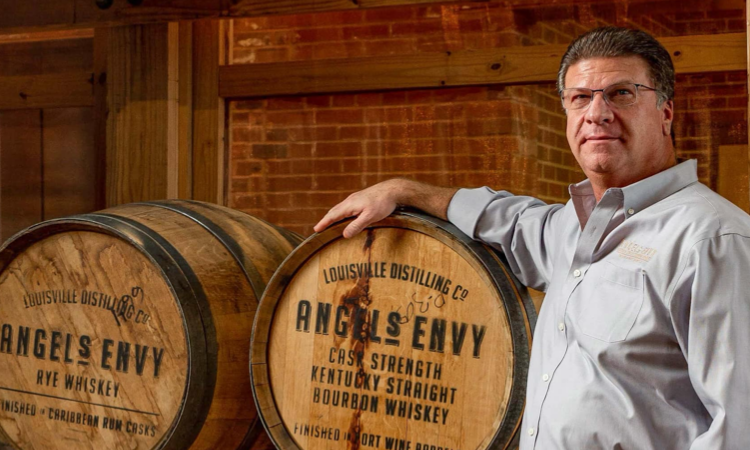
Wes Henderson reshaped American whiskey by pioneering the idea of “finished bourbon.” Wes took traditionally aged bourbon and gave it a second maturation in distinctive casks, such as port, sherry, and other wine or specialty barrels.
By making this secondary finishing commercially viable and popular with Angel’s Envy and later True Story, Wes opened the door for American distilleries to experiment with cask finishes—and greatly multiplied the flavor possibilities of American whiskey.
The Wes Henderson Story: A New Chapter in Kentucky Bourbon
“It’s always a good day to talk about whiskey,” Wes tells me. Wes grew up in the business long before he knew whether it would become his own.
His father, Lincoln Henderson, was a longtime master distiller who spent nearly his entire career at Brown-Forman, working on brands like Woodford Reserve. As a child, Wes hung out in Brown-Forman’s labs and distilleries. Years later, he co-created Angel’s Envy with his father.
“Dad spent pretty much his entire career after college in the industry,” Wes said. “I grew up going to work with my father on weekends, and spending time around the lab, in research and development, and just about anywhere around the company. A distillery was always a familiar place for me.”
Wes also traveled with his father to Jack Daniel’s and other distilleries in America, and grew a global perspective by touring distilleries throughout Canada and Europe.
Even so, he was a science kid who thought he might become a doctor. He kept a microscope in a bedroom closet that he had turned into a small lab, and he studied blood slides when he was still a boy.
Then another interest took over. Wes’s first real job came at fifteen as a radio DJ in a small AM station in Eminence, Kentucky. “My dad would drop me off; I would run the station all day,” he said. “I loved radio. I was good at it.”
For a while, that seemed like the future. He imagined a life in broadcasting, but marriage and adult responsibilities changed how he saw it. Wes said, “It’s a great life, but you’re only as good as your last ratings book.”
“My route back to spirits wasn’t a well-thought-out plan,” Wes said. “I just did this, this, and this, and it just so happened to lead back to whiskey.”
Building Angel’s Envy
The turning point came when Wes’s father retired from Brown-Forman. His father had survived melanoma, and Wes felt an urgency to build something with his dad while they still had the chance.
“When I started Angel’s Envy, the plan was to work with my father. I felt like if we were going to do something together, it was time to do it, or we might run out of time.”
The idea of father and son was to build a craft distillery where they could bring some shelved innovations to life. “We wanted to try things my father had worked on before that never made it out because the ideas were early, unfinished, or simply out of step with the market at the time,” Wes said.
“We chose the name Angel’s Envy as a playful twist on the ‘angel’s share,’ the portion of whiskey that evaporates from the barrel during aging,” he said. Wes liked the idea that what remained in the cask was so good, even the angels would envy it.
Wes said the brand needed a core product first. He still believes that is the smartest advice for any distiller. “Focus on one great product, pay the bills on that, build that brand, and that gives you the wherewithal to do the other stuff,” he said.
Angel’s Envy grew from a small craft project to a major bourbon success and one of the fastest-rising super-premium American whiskeys. The brand evolved from sourced, port-finished bourbon into a nationally distributed product with a dedicated Louisville distillery, strong critical recognition, and rapid sales growth.
Wes sold Angel’s Envy to Bacardi in 2015, about five years after the brand’s 2010 launch, when strong growth created broader distribution and capital needs. We told me he reached a point where he thought he might be done. “I hadn’t planned on doing anything else,” Wes said. “I planned on retiring when I left Angel’s Envy.” That retirement did not last long.
Breaking the Rules on Finishing
If one act defines Wes Henderson as a whiskey rule-breaker, it is his early commitment to secondary barrel finishing in American whiskey. In 2009, that move still struck many people as strange, unnecessary, or risky.
“It was unheard of for American whiskeys to be finished in secondary barrels,” Wes said. “That was a huge rule breaker.” He said many people did not understand what he was trying to do, and some dismissed the whole idea. “We had a lot of naysayers, but we just plowed through.”
He never treated finishing as a way to add dimension to already-strong whiskey. “I call it ‘bourbon and more,’ or ‘it’s not done until it’s finished,’” Wes said. “It’s adding additional dimension and additional depth to fantastic whiskey. You got a fantastic whiskey to start with.”
That approach had a broad effect on drinkers. Wes said finishing could soften a whiskey without stripping away complexity. He heard it again and again from consumers who told him Angel’s Envy was the first whiskey they ever loved.
“One thing with the Angel’s Envy port barrel finish, and with True Story and our muscatel finish—that finishing really softens the whiskey,” he said. “It softened it, but it didn’t dumb it down. It’s hard to make something approachable and still have depth and character.”
When I mentioned how common finished whiskey has become, Wes did not dodge the scale of that impact. “That rule that we broke changed the entire bourbon world,” he said.
Finishing now shows up across the market, from respected heritage names to newer brands trying to stand out.
He still likes the experimental side of whiskey. When I asked about more extreme ideas, Wes said they had thought about hauling barrels to the top of a mountain. He also said there is an Antarctica project in the works that he could not discuss in detail.
My Six Sons
Wes started True Story because he wanted to build something new with his six sons, just as he and his father had built a bond through whiskey. “I wanted to leave them a legacy that they could have on their own—that was a big driving factor.”
Wes’s sons now all work in and around True Story. One son, Kyle Henderson, is the senior vice president of operations. Andrew Henderson is the production manager, Connor Henderson is the processing supervisor, Spencer Henderson is an IT consultant, Christian Henderson is the processing operator, and Ian Henderson is their social influencer.
Several of his sons were firefighters, and Wes believes that background reinforces the kind of problem-solving a small company needs every day.
Wes said, “The boys have always wanted to get into the industry.” He also made clear that the whiskey business has room for many kinds of talent. Distilling is only one piece. There is blending, bottling, supply chain, shipping, logistics, sales, marketing, and operations.
“True Story is just the evolution of our family in this industry. It’s just the logical next step,” he said.
In addition to the family connection, Wes told me that he started True Story because he was getting bored. “I’m a creator, not a curator.”
At Angel’s Envy, he eventually spent much of his time protecting the craft brand from the habits of a larger company. He appreciated Bacardi and respected the people there, though that work no longer gave him the same sense of invention. True Story gave him a new place to create.
He said he has always believed bourbon brands should join the conversation only when they have something worth saying. “We agreed that we’re not going to say anything unless we have something to say,” he said. “I felt like we had more to say after Angel’s Envy. We just weren’t finished.”
Whiskey as a Social Force
The name “True Story” comes from what he believes whiskey can do socially. “There are so many stories inside a bottle of whiskey. You just have to open it and share it with your friends, and that’s where the magic happens,” said Wes.
“I don’t care if the stories people tell are true or totally made up,” Wes said. “As long as people are sitting down and talking and having great conversations, then we’ve accomplished what we set out to do. Whiskey is one of the few things that still draws people together.”
Wes talks about bourbon as a social force more than a product. He cares about the liquid, though he cares just as much about what happens around the pour.
The True Story bottle design also sparks social conversation. The bourbon comes in an opaque black bottle finished in white muscatel casks. The rye is bottled in white and is finished in amburana and sherry casks.
He likes the fact that both whiskeys give people something to talk about. “They’re fun whiskeys,” Wes said. “They’re something to talk about, too.”
Wes’s also bought an iconic landmark—a local castle—to create a bourbon-centric destination that showcases Kentucky hospitality, culture, and whiskey experiences.
“The ‘Kentucky Castle’ is a real castle turned luxury hotel, restaurant, and event venue in Versailles, near Lexington, Kentucky,” Wes said. He sees it as a place where bourbon hospitality can become part of the whiskey social fabric.
“Nobody had really incorporated lodging into a plan to build a distillery,” Wes said. He imagines people staying there for barrel picks, bourbon events, dinners, and longer weekends centered on whiskey and Kentucky culture.
“I want people to be able to experience not just our brand, but other great whiskies as well,” Wes said.
The Story Ahead
“I think that we definitely have some headwinds in the industry,” Wes said, “but I don’t buy into the idea of panic.” He pointed to changes in drinking habits, inflation, and price sensitivity among younger consumers with less disposable income.
“Premium products still hold appeal,” he said. “Although there is pressure once prices move past the range many people can comfortably absorb.”
Wes also thinks the market is still settling from the distortions of 2020 and 2021. “COVID made everybody crazy,” Wes said. “The industry boomed, production increased, more brands hit the shelf, and many people acted as if the growth would never cool.” He said he told liquor store owners to enjoy it while it lasted because it would not last forever.
Now he sees a correction. “Some of the recent drag comes from changed consumer behavior, and from the sheer number of brands trying to win shelf space at the same time. Consumers literally have too many whiskey choices,” Wes said. “For smaller brands, that creates a practical problem. The market gets divided across too many labels, and it becomes harder to achieve the volume needed for long-term success.”
“The brands that survive will be the ones that continue to deliver quality, clarity, and something distinctive,” Wes said.
It’s Not Finished Until It’s Finished: A True Story
The Wes Henderson story is not finished yet. With Angel’s Envy, he bent the old rules by making secondary barrel finishing part of the modern American whiskey landscape.
With True Story, he’s building a family legacy, promoting the value of whiskey as a conversation catalyst, and proving that in whiskey, the next chapter can matter just as much as the first.
Wes Henderson’s career proves that a “finished” whiskey can still surprise, and a so‑called final chapter can be rewritten. For Wes Henderson, this isn’t the end of the story; it’s the next true story he’s telling in Kentucky whiskey.