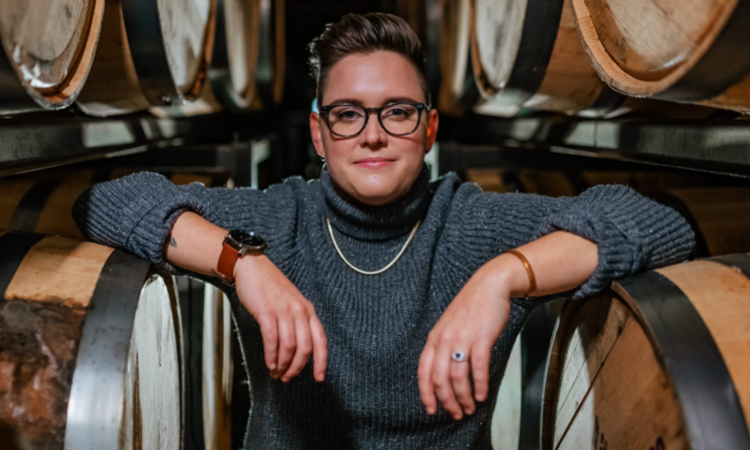
Master Taster Melissa Rift takes us inside Old Forester‘s 156-year journey of continuous production, from surviving Prohibition with medicinal whiskey licenses to modern innovations like rum cask finishes. She shares insights on developing your palate, the art of single barrel selection, and how one recipe can create an entire portfolio of expressions through masterful manipulation of maturation, batching, and proofing.
 Apple Podcasts
 Amazon Music
 Spotify
 YouTube
Read a Whiskey Rule Breakers book chapter about Melissa.
Read a blog post about Melissa.
Transcript
Randy Warren (00:06):
Welcome to Whiskey Shenanigans. I’m your host, Randy Warren. Whiskey Shenanigans, where we help our listeners experience the world of whiskey, every aspect of life, as if it was accompanied by a glass of bourbon. The sports world on whiskey. Basically every part of life on whiskey. Whiskey Shenanigans is about getting exclusive interviews from Bourbon Row in Kentucky, where we can learn about the secrets that make our favorite bourbons unique. We will get inside the hearts and minds of many distillers and help you understand what and how they’re achieving it. Whiskey Shenanigans is about going beyond boring podcasts featuring just tastings. Heck, what do you get out of that anyway? It’s about bringing on guests and experiencing the entire world through whiskey. But be warned, if you’re diving in and you want to participate in these riveting discussions, you will need to grab a glass or a dram and be prepared to be entertained.
(01:10):
All right, here we are, Whiskey Shenanigans fans. We are really, really happy today to be joined by Melissa Rift. And Melissa is one of the master distillers tasters at Old Forester. And
Speaker 2 (01:24):
So
Randy Warren (01:24):
We’re going to learn a little bit about Old Forester and what their innovations and rule-breaking is going on over there right about now. So thank you for joining us, Melissa.
Melissa Rift (01:35):
Yeah, thanks for having me. Excited to be here.
Randy Warren (01:37):
Yeah, it’s a pleasure. So jumping right in, how did you get started in this? Where did your journey lead you that ended up where you are now?
Melissa Rift (01:48):
Yeah, I have a really interesting, I always say non-traditional background in the industry because I’m one of those people that kind of fell into it by accident, ended up pulling that thread all the way to where I am today. I started as a tour guide on the Kentucky Bourbon Trail 10 years ago, and that was really when the trail was picking up at the time. There were new locations being added, major companies investing in home place experiences, and I just thought it would be a great part-time job on the side of my actual career I was working on. And it just really fascinated me. I always told people, it’s like going back to school, you’ve got the science behind it, you’ve got brand marketing, you’ve got legal, you study a little bit of commerce, and just every little facet of it was so interesting to me.
(02:35):
And so I ended up working in home place experiences for several years. I launched a single barrel program where I really built my network and came to understand the inner workings of the industry. And then Old Forester is one of my favorite brands for a long time because I live in Louisville and it’s very much a hometown hero brand for us here. And so when the position became available, it’s a very cross-functional position, master taster at Old Forester. And so it was just seemed like the right fit enough that I was like, oh, I should throw my name in the hat for that. And it was just one of those moments where it worked out.
Randy Warren (03:10):
Wow. And they picked you out of the hat. Look at that.
Melissa Rift (03:13):
They did, yeah. And it was awesome. That was in 2023, I believe. And it was a really interesting time for the industry. I had been selling single barrels for about three and a half years at that point, and it was so fun to get to now work inside a company and get to be in the room where it happens on a brand that’s so iconic.
Randy Warren (03:34):
Right. Wow. So when you do these single barrels, so people come out to Kentucky or did you send the stuff to them
Melissa Rift (03:41):
Or both? So when I launched the program, I was in charge of designing the experience of coming to a home place and picking a single barrel. So that was very fun for me because I’m very hospitality driven coming from the original side of being a tour guide. And I really like to design experiences to help people get into the product intimately. So that was such a great experience. But then actually about six months into that program I started running was COVID, and we did not have a sample kit program set up because we were going to kind of ease into that as time went on. But pretty quickly, it was one of those things during COVID that I was like, all right, I got to figure this out. And don’t tell the TTB, but I’m filling samples in my garage, trying to get these single barrels out to people, dropping them off on people’s porches.
(04:27):
And we really grew the program immensely during that time. And that really gave me internally feel like I had the legitimacy to actually run and operate programs and influence the direction of a brand and the selling of a product. So it was pretty formative. Yeah. I
Randy Warren (04:43):
Didn’t drop a barrel off on a porch.
Melissa Rift (04:45):
Not a barrel. A little sample kit. Yeah, yeah, yeah. No, I was getting samples because folks were still working in fulfillment centers and things in the alcohol industry. So I was getting samples and I was putting them down into little sample bottles and packing little kits like you do when you get. Yeah, exactly. Exactly.
Randy Warren (05:04):
Exactly. Yeah.
Melissa Rift (05:05):
So it’s one of those things, and a lot of what I’ve done in this industry is a need arises or something that could be evolved in the industry. And it’s like, all right, cool, let’s figure it out. And I get to collaborate with really awesome people all the time around that, and that’s part of what makes it fun to work in bourbon.
Randy Warren (05:20):
I’m interested in this single barrel, the experience of it. When you designed it, what did you add to the flavor of coming to Kentucky? And what did you design it as? I’m curious.
Melissa Rift (05:32):
Yeah, so I was working on a program that didn’t have a warehouse to go stand in. And so a lot of traditional single barrel programs, you’re standing in the warehouse where that barrel age, you’re thieving out of it, you’re getting this tactile experience. And we didn’t have that. Our single barrel selections were going to be hosted in the visitor center, which is very modern. And so I kind of tapped into the fact that we work a lot with the bartending trade and how you can dial in a hospitality experience of a restaurant or a bar with the right lighting and sound and ambiance and things on the table available to you. So I had a tablescape with some sensory elements. We were tasting different recipes with different mash bills and yeast strains. So I had a choose your own adventure process that I designed where it gave people a lot of feeling of choice.
(06:17):
And when you’re coming to pick a single barrel, that’s what you want. Is you want to put your name on this product, you want to feel like you had a role in shaping it. And so that was very successful. And I think it kind of made up for the fact that we didn’t have that authentic warehouse moment.
Randy Warren (06:32):
Speaking of mash bills and yeast strains, so Old Forester, you guys have a lot of expressions. So what’s your strategy with mash bills and yeast strains? Use just one yeast strain and then you have different mash bills that you play with? Or tell me how you guys do
Melissa Rift (06:49):
It. Great question because this is one of my favorite things to humble brag about Old Forrester. We have one recipe. One yeast strain, one mash bill. So it’s pretty simple to understand. What we do that’s a little bit different than some other brands across the category for bourbon is we do have, I say, a pretty healthy portfolio for a brand of our size. We have a lot of options when it comes to Old Forester, everything from our 86 proof, which is insane value for flavor. Both if you’re getting a bottle at the liquor store or in a bar, it’s a favorite for a premium well because it delivers on flavor and structure, but at a crazy friendly price point. And then we’ve got craft series where we explore different flavors and textures. We’ve got highly sought after limited edition things that drop the same time every year.
(07:36):
So I like to call us corn dog decaviar, which is my favorite kind of term for our brand. That’s great. Covering all. And very few brands do all of that under one trademark. So a lot of companies will have those little segments of the industry under totally different brand identities. And I always say you can be any kind of consumer, whiskey drinker or not, and plug into the Old Forrester universe and find something to love wherever you’re at.
Randy Warren (08:02):
But it’s interesting though, it’s one recipe, but it’s all these different bottles. So what’s different about each of the bottles? Is it the maturation? Is it the techniques?
Melissa Rift (08:14):
So one thing I’ll say about that first is that we are a brand, we’re the founding brand for Brown-Forman, and we’re a company that’s been around making American whiskey for 156 years and counting. And so I always tell people the one recipe thing really goes to show how much we’ve come to intimately understand our ingredients and our craft over time. And having worked at the company about three years now, not coming from a science background, our company is incredibly scientific. They really understand how to optimize flavor out of ingredients and also how to manipulate flavor out of ingredients. So the levers that we pull to affect flavor maturation is a super big one. High age, more four to six year age range sections of the warehouse. Maturation environment is really what we would call it. We are the only company that uses a heat cycling technique in our warehouses for 100% of our inventory.
(09:14):
So in the wintertime we use steam in our warehouses so that we continue to get flavor development through the winter years, not to speed anything up, but just to optimize flavor. And so maturation is probably the biggest lever we can pull. Batching practices. So where we’re batching from, but also how we’re batching. Bottled in bond is going to be a more narrow snapshot of time range than something like our 86proof. Proofing. People always want to talk about proofing like they’re fans of big high octane or that’s not for them. The way I always describe proofing to people is it’s the last decision we get to make on a product before it becomes what it is. And so once the barrel’s done aging or whatever those other levers are that we pulled, we get one more to say, this is where we want to dial this flavor in.
(10:00):
So there’s lots of things at our disposal. And Old Foresters, we’re a brand that’s never been interrupted since 1870. We have the only continuity of our kind in the industry. So our master distiller and I have to be really careful about, we don’t want to just throw out a new mash bill for Old Forester all of a sudden. We have a crazy continuous identity as a brand. And so pulling those levers in a thoughtful way is part of how we do what we do.
Randy Warren (10:24):
So as I look through the portfolio of bottles and whatnot, you guys have all these different bottles and they have dates on them.
Melissa Rift (10:33):
What’s
Randy Warren (10:33):
With the dates?
Melissa Rift (10:34):
Yeah, we call that the Whiskey Rose series, and that is a series of bottles that we started putting out really in response to the kind of bourbon Renaissance we’ve been lucky to be enjoying for the last several years.Because again, we’re a brand that was founded pre-prohibition. We’ve had two major bouts, if I would say decimating conditions in the industry prohibition, and then the ’80s through the early 2000s where consumer taste preferences changed. So we’ve seen the worst of it and we’ve seen some real golden eras in the ’50s through the early ’70s. So when the brand was really trying to revitalize in this new age of bourbon enthusiasm, we have a lot of history to talk about, and history’s always been a way that our consumers connect to us. And we also have that expertise in manipulating flavor. So the series is four expressions that we use as a storytelling opportunity to build that emotional connection with us, but they’re also four completely different flavor and texture expressions so that any type of drinker can, like I said, plug in.
(11:37):
Or if you’re like me, I like all of them and I really change my preference based on the weather or the time of year or my mood. So it’s a really fun playground for whiskey drinkers, and it’s just chock-full of history about the brand.
Randy Warren (11:52):
And the dates are something that happens significant on those dates.
Melissa Rift (11:56):
Yeah. We start with our founding date. Great place to start, right? 1870. Place to start. Yeah. We follow that with Bottled in Bond, which was really revolutionary for the entire industry. It was also the first time we introduced a new proof point because we started as a 90-proof spirit and then Bottled in Bond requires 100 proof. 1910 is the third expression, and that really gets to a story that’s so unique to us because it was our ingenuity coming out of a fire at our facility. And it tells a story of double barreling, which is also a fun modern day innovation, but something that happened to us by accident way back in pre-Prohibition era. And then 1920 really tells a story of Prohibition. And I mentioned our uninterruption in the industry. I mean, critical to that is the way that we were able to make our way through Prohibition without interruption.
(12:43):
And so that expression, that’s actually our bestseller. People love the Prohibition story. There’s so much storytelling in there, but it’s also an overproof expression that is incredibly sippable. And so each of these, the flavor really aligns with the story as well, which is what is really fun about it.
Randy Warren (12:58):
And you’re absolutely right. I mean, people want the story. They want to know. They want to know what’s the story behind this. So when you tell these stories and when you taste your product with customers, what kind of responses do you get? I mean, do you get any weird comments like, “Oh, that tastes like, I don’t know, chocolate covered strawberries dipped in red socks.” I don’t know. What?
Melissa Rift (13:24):
Sometimes, yeah. And particularly for me, so I used to facilitate a tasting room all the time. So I love hearing flavor notes from consumers. It keeps my vocabulary fresh and it allows me to look at things in a new light sometimes. And also my background is in human development and family therapy. So I love a good chat session around a flight of whiskey. Definitely people have their own ways of looking at it, but I’m honestly always just tickled because I always encourage people. Part of my mission taking on this role was to help people take a little pressure off of themselves. And so I set the tone in a tasting experience for this is a safe space. Everybody’s just going to say what comes to mind and we’re going to use this as a little experiment. And so it’s fun. A lot of people come up with a lot of nostalgia, which is always really interesting to see what they might be picking without realizing they’re picking it out.
(14:19):
So that’s really fun. But we do an experience with this series called Taste Through History where we weave the flavor exploration with the storytelling. And I’ve been doing it till I’m blue in the face for almost four years now, and it’s so fun every single time I do it. And it can be a 10-minute pre-shift with service industry, and it can be a two-hour dinner with flavor pairings and courses. So it’s just such a fun, like I said, playground to get to be in.
Randy Warren (14:48):
So what would you say, I mean, from the whiskey rule-breaking point of view, what would you say is the most rebellious thing you guys have done?
Melissa Rift (14:59):
Yeah, I was thinking about this because I saw this question in your email ahead of time, and it’s so interesting, a question like this for Old Forester, because I already mentioned the responsibility we have carrying this brand forward. And so I think that sometimes you could look at a brand like ours as relatively risk averse, but I really think that we’re just very thoughtful about both. We do have one recipe, we have one core flavor profile. It’s really propped up by our balance of grains. We have proprietary yeast that brings a lot of fruits and florals forward. And then the way that we treat our barrels, we amp up the sweet aromatics with the heat cycling. We don’t want to lose what people like about that by trying to innovate for innovation’s sake. But we do have the 117 series, which is kind of our low-stakes playground where Caleb, our master distiller, and I get to come up with some new flavor expressions.
(15:56):
One of my very favorites we’ve done is a rum cask finish. And not to say that nobody else in bourbon’s done a rum cask finish, but it is a little off the wall for a brand like ours. And it was really cool because getting into the story behind everything, Caleb Trigo, our distiller I just mentioned, he had just joined the brand as Assistant Master Distiller. So it was a big moment for the brand. He’s been at our company for 15 years, I think. Started as an engineering co-op. He’s done lots of different things at the company and process engineering. So when people think about distillers, he’s actually a science person unlike myself. And he’s just the greatest guy, awesome to work with. And he had just finished a project integrating Diplomatico Rum into the Brown-Foreman portfolio because we just acquired them. And Diplomatico is such a great rum brand.
(16:47):
I mean, beloved by bartenders, awesome expressions. And so we put our heads together and we thought, okay, we’re known for tropical fruit flavors, these bright citrusy flavors. Let’s get some essence of rum. We finished for about six months so we wouldn’t overpower the core Old Forrester flavor. And we both just thought it turned out fantastic. So that’s one of my very favorite things we’ve worked on.
Randy Warren (17:09):
Wow, that is very innovative, and that is really cool. I mean, it’s one of the levers you can pull, the little finishing of the barrel and whatnot. So have you had an experience where customer tried it and gave you feedback?
Melissa Rift (17:26):
Yeah, we walked it around quite a bit. This expression is typically only sold at our home place, but I was pretty excited to share it with people. So I brought it to whiskey club things I was going to. I brought it down to Tales of the Cocktail to taste with some bartenders. A lot of trade folks I tasted it with really liked it. In a world where we get to make any product we want and any volume we want, I would love to make a trade-specific expression for summertime and punches and tiki drinks, but we all have to play within the parameters of the world we live in. But yeah, it was really well received. I think people really liked the take on Old Forester with the rum, mirroring those flavors.
Randy Warren (18:06):
I would love to try some of that. I got to find, are there any out there still?
Melissa Rift (18:11):
Yeah, that was at least two years ago, so not much. I mean, unless people have been hanging onto it and wanting to trade it around or something. But that’s the thing about 117 series is they’re kind of one-off expressions. So once we make them, we make them. And
Randy Warren (18:25):
When they’re gone, they’re gone. When
Melissa Rift (18:26):
They’re gone, they’re gone. You
Randy Warren (18:27):
Got to hang on to a little bottle of it though, right?
Melissa Rift (18:30):
I do. I have to say between you and me and everybody who listens to this podcast, I was just thinking today I need to be better about cataloging some products that I’ve been really excited to work on because I’m always cracking them opening a taste with people and I’m not very diligent about it. So that’s on my growth plan. Yeah,
Randy Warren (18:47):
Because you want to go 10 years on the road, look back at all this portfolio that you’ve been working on, not just because you put so much effort into it, but because, wow, look at these ideas. Yeah, true. Look at these records that we brought forward. Look at all the things that people we’ve been giving the public and whatnot. So it’s kind of cool to be able to –
Melissa Rift (19:09):
Yeah, very cool. Very cool.
Randy Warren (19:12):
So how about I always think that America and bourbon have kind of grown up together. I mean, we’re approaching the 250th anniversary, blah, blah, blah, and that’s really cool. And bourbon’s gone through a whole many cycles that we’ve already talked about and everything from prohibition to when bourbon was out of favor and then it was in favor and then it was out of favor and then it’s in favor. And it couldn’t have been any more in favor than during COVID. Everybody stayed home and it’s like, “Bourbon, this is great.This is fantastic stuff.” And now it’s like, oh, it’s evened off a little bit and pulled back a little bit. And there’s been a lot of articles about the glut and all that kind of stuff. But the culture and bourbon go together, right? Don’t you think? I mean, how do you see them interacting with each other?
Melissa Rift (20:04):
Yeah, it’s interesting you bring up that kind of trajectory of bourbon and that it’s so intertwined with the country. A thing that I say all the time, if anybody’s ever sat through tasting with me, is that Old Forester’s history is bourbon history, which is also US history. There’s so many things that the country and the industry always pushing each other forward. And Brown-Foreman has been a front row seat to that, especially because the bottling of Old Forrester really changed the game in packaging and consumer protection really went on to inspire Bottled and Bond Act. And then Brown-Foreman and the Brown family were really integral in instituting regulatory practices inside the industry, safe consumption, communication within the industry. The whole reason we have such a protected spirit in bourbon where you can’t put any additives to change it, you’re only getting these flavors from these natural ingredients is because of companies alongside companies like Brown-Foreman over the years.
(21:05):
And so it’s something we’ve been so invested in. And whenever people start to talk about the tough times that we’ve been looking at lately, the changes in the industry, I always get really corny and inspirational, but it’s something that I really feel within the walls of our company that we’ve been through times like this before. We’re primed to be agile. We listen to our customers and our distributors and our folks in the trade and we try to respond and we try to move at the pace of their culture. Now we’re in an aged spirit, which makes moving at the pace of culture pretty tough. I think that’s where you see these slinky effects because we’re making a spirit we can’t necessarily respond in real time with. But the thing that big successful American whiskey companies that have made it through these cycles have been able to do is have ingenuity and resilience and perseverance and figure out how to continue to move with that culture at the pace that they can.
(22:02):
So I don’t know if that answers your question, but that’s kind of where it feels like we are right now.
Randy Warren (22:07):
Yeah, it kind of does. I mean that talks about when it goes in and out of favor and all that kind of stuff. And I think that I’m a finance guy and that’s my background. My background’s a finance guy, hedge fund manager and all that kind of stuff. So okay, fine. That’s not a fun industry, I got to tell you. Yours is a fun industry. Your industry is all about friendship and whiskey has this American culture thing of being like, “Oh, let’s sit down and let’s talk this over and let’s have a glass of bourbon.”
Melissa Rift (22:43):
Yeah. Well, and you’re absolutely right. I guess so far I talked about the culture of the industry and its arc, but what’s so cool about the culture of whiskey and American whiskey and really beverage alcohol in this country is that it is so intertwined with hospitality. And deep down, there’s a real love for hospitality, I think, in our culture. And if you look at the way we always look at old brand ads for Old Forester and campaigns, and we were really plugged into hospitality for a long time, both how you host guests at your house. We had little how-to guides and things like that. And then really post-prohibition, tapping into cocktail culture and bartenders. And that’s such a big part of what we do now today as well. And so that’s part of why people get into what we do is sitting down, sharing stories, feeling a sense of hospitality, hosting others.
(23:36):
That’s the connected part of our culture that everybody’s craving.
Randy Warren (23:41):
That’s for sure. And even on TV, you watch Yellowstone and they always, at the end of the day, sitting back in a rocking chair on the porch with a glass of bourbon and being like, okay, so what are we going to do about this new problem that we got?
Melissa Rift (23:56):
Yep, exactly.
Randy Warren (23:58):
So it’s very interconnected and very intertwined with America and everything like that. And that kind of makes it fun. It makes it interesting. Do you guys have anything special for the 250th or just everything’s special?
Melissa Rift (24:14):
I think for the 250th, we did maybe a single barrel selection and we’re having something at our place. To be honest, we’ve got so many balls in the air. I don’t have that completely front of mind, but we’re doing a little celebration, but mostly we’ve got some other innovations coming up this year. We’re pretty hyped about working on some launch plans for that.
Randy Warren (24:34):
What do your customers often ask you? What are their questions? When they come and they’re doing a tasting with you or whatever, what questions do they have?
Melissa Rift (24:46):
Well, first and foremost, everybody wants to know how you become a master taster. And I always tell people I don’t have a good answer for that because I didn’t really mean to become one. So I just kind of kept following my instincts and staying curious in the industry. So that’s the question I get asked the most. But pertaining to the products and the process and the flavor, I mean, a lot of people want to know how you develop your palate
(25:12):
To be sharper. People have a lot of questions about what can I do to be a better taster? How do I notice more of the nuances in the whiskey? And to that, I mean, I always tell people I’m very flavor curious. I like to try new things. I’m a big foodie. So I think staying curious from a flavor and aroma perspective is just giving yourself that exposure is great. But when it comes to sitting down with whiskey, I mean having, like I said earlier, the environment, having something kind of tulip shaped, whether it’s a Glen Karen or something else you want to use. So you get those aromas, sipping water in between, having a bland snack, or even just, it doesn’t even have to be that focused. You could just be sitting around a campfire with friends, but dialing in your environment to make sure that you’re present and that you’re paying attention to flavor.
(25:59):
And then I think come up with your own process. I taste kind of the same way every single time I’m tasting something new so that you level the playing field for everything. But I think people, they have to keep an open mind and see what comes to mind rather than trying to force a tasting experience.
Randy Warren (26:14):
How do you taste? You say you taste the same way every time. What’s your process?
Melissa Rift (26:20):
So I trust my nose a lot more than my palate, to be honest. Evidence has led me that way in things that I’ve done over time. And so I do a lot of nosing before I even sip. And I don’t swirl before I nose to begin with. Elizabeth taught me that. Actually, you’re going to release a bunch of volatile compounds if you just pick it up and swirl it right away. So I always pick it up and get a good nose. I’m somebody that sticks my nose all the way in the glass and breathes through my mouth because I have to get super close to it to get everything. And I’ll do that a couple times and then I’ll swirl it and I’ll do it a couple more times. I have a word association process where I’ll just try to completely clear my mind and then just see what jumps in.
(27:02):
And I usually start with fruit and sweet aromatics just because those are easier for me to latch onto. And then I’ll look for more earthy woody things underneath. So that’s kind of my train of thought that I use. And then I’ll start to sip. I always do a little Kentucky chew. I find that that’s helpful for me. Drink a water in between and then go back to the nose.
Randy Warren (27:23):
Yeah. And so one of the things that I have learned, I guess for me anyway, is take some time. Don’t do this quick. Take some time. Open the bottle, pour it. Don’t be like, okay, now let’s do it. Slow down. Let it breathe. Give it some time. Set it aside for 10 minutes. Go do something else. Come back 10 minutes later. You get a whole different set of flavor notes and smells out of it than you did 10 minutes earlier as it’s just breathing. And I don’t know. I do anyway. I get a whole different set of flavors that come out. It’s really amazing.
Melissa Rift (28:05):
Yeah. Yeah, absolutely. And I always talk about oxidation when we talk about whiskey aging in a barrel. It just creates all these flavor compounds. But I mean, it’s oxidizing in the glass as well. And so your ethanol is dissipating a little bit. And yeah, you’re going to get candy-like notes. I mean too, if you’re somebody that isn’t super into high-proof stuff, I really don’t love super high-proof stuff. And so adding a cube, adding a drop of water, seeing how it changes. Yeah, it’s really about just taking your time and looking at it at a bunch of different angles and being curious is what it’s about.
Randy Warren (28:43):
So you guys just have this one match, it just occurred to me when you were talking there that you don’t have a rye then, or do you have a rye? We
Melissa Rift (28:50):
Do. Sory, I guess I should say we have one bourbon mash bill that most of our portfolio is built off of, but we do have a rye. I’m actually obsessed with our rye. My coworkers give me a hard time all the time because they’re like, when you talk about Old Forester rye, you’re just glowing. But I do. I love it so much. I think it’s unique. And the unique flavor elements of Old Forester that we bring to a rye, just I call it the cat for dog lovers. It’s like anybody who thinks they’ve been put off by rye whiskey before has to try ours, in my opinion.
Randy Warren (29:23):
It’s a consistent theme. You always hear people say, “I don’t like rye. I don’t like rye. I love bourbon ray.”
Melissa Rift (29:28):
Yeah, it’s a bad rye for sure. Yeah.
Randy Warren (29:30):
Why does rye get such a bad rap? I don’t know. Well,
Melissa Rift (29:32):
It’s a spicier grain. I tell people when we’re talking about bourbon, we use 72% corn, 18% rye, 10% malted barley in our bourbon recipe. And 18% rye is just enough to add texture because we want to be a cocktailing bourbon as much as we want to be sippable neat. And 18% is that sweet spot for a little bit of spice and backbone, but it’s not what the flavor’s about because we’ve got fruits and florals coming from our yeast. We’ve got candy notes coming from Summer barrels, and we want all of that to be in harmony. Our rye whiskey uses 65% rye, 20% malted barley, and 15% corn. So a lot of people who’ve had rye modern day have had really high rye content rye whiskeys. Nothing wrong with that. But if you think about the pepperiness, the backbone 18% is bringing to bourbon. If you’re drinking 95% in your whiskey, you’re looking for that peppery flavor.
(30:26):
Ours is a little bit more, like I said, in harmony because it’s 65% rye, you’re getting the herbs and the aromatics and the backbone. But we also use quite a bit of malted barley, which gives it this kind of malted milk chocolate undertone. And then you’ve got our fruity floral yeast strain where you’re getting apricot in the mix as well. And then you’ve got our barrels, which are giving vanilla and candy notes. And it’s just like, to me, it reminds me of root beer or birch beer. Some people will say it’s got a kind of dried apricot and honey thing going on. So it’s just very different for rye whiskey. And I think that’s why a lot of people don’t like rye and why ours is very appealing.
Randy Warren (31:03):
I was talking to one distiller not too long ago who was like, a few years back, I tried to create a rye bourbon that tasted like those. They used to sell when I was a young kid, little candies that looked like root beer barrels.
Speaker 2 (31:20):
Oh, elite.
Randy Warren (31:21):
They looked like a barrel and they were root beer. They tasted like root beer. And it’s like you try to create a bourbon that tasted like that old flavor that brings people back like, “Oh gosh, this tasted like those candies that I used to have when I was 10 years old at the candy store or something like that.” It’s wild.
Melissa Rift (31:42):
I love that. We’ve got to sit one of those next to Old Forester rye and see if we can pick out the, what is it? Sasparilla?
Randy Warren (31:49):
Yeah. Yep, for sure. I bet you will. I mean, that’ll be a great compliment. It’d be like, oh, it’s like tastes the same. This is it.
Melissa Rift (31:58):
Yeah, I know, Randy. Now I’m thinking a root beer finished Old Forester rye. That’s our next risk that we’re going to take. Okay.
Randy Warren (32:06):
Root beer float, rye float.
Melissa Rift (32:09):
Yes.
Randy Warren (32:10):
Rye float with vanilla ice cream. That’s something you could sell in the store when people come in and the experience like, “Hey, we do root beer float? We do rye float.” That’d be
Melissa Rift (32:24):
Cool. Yeah, I’m going to send them my thoughts.
Randy Warren (32:28):
Really neat. So I think we’ve covered everything. Anything else? If you wanted to tell 10,000 or 100,000 people one thing about Old Forester, what would it be?
Melissa Rift (32:43):
One thing about Old Forester, I think that one of the very coolest things about our brand is that continuity, that we were founded in 1870, first bourbon to ever be commercially packaged in glass bottles, and we’ve literally never stopped selling our products since then. And that is just a wild story of making it against all odds and still family-owned company 156 years later that’s now acquired and grown brands that are sold all over the planet. I mean, it’s just an incredible story of resilience and Old Forester started it all. So I think that’s –
Randy Warren (33:22):
There must be an outlaw story of how you accomplished continuing to sell it during Prohibition, right?
Melissa Rift (33:29):
We had a medicinal whiskey license. So we were founded by a pharmaceutical salesman. So by the time Prohibition rolled around, they applied for that license. We were able to continue the brand trademark all through that 13 years. And because the government, by the end of Prohibition, had been granting those six companies with licenses the right to meet certain production quotas because the country was running out of medicinal whiskey, we had aged inventory that was then ready to hit shelves coming out of prohibition. Now the other five companies that had medicinal whiskey permits, they don’t exist anymore. And so we’re the only ones that legally made it through that time period that they’re still around to tell the story today, which is pretty crazy.
Randy Warren (34:11):
Tell the listeners about medicinal whiskey because we all want an excuse.
Melissa Rift (34:16):
Yeah, right. Medicinal whiskey, I mean, if you think about the history of beverage alcohol, alcohol was considered medicine thousands of years ago. And as it made its way across the globe and people would apply fermentation distillation practices to the ingredients they had available to them, that’s where you’ve got gins and you’ve got brandies and you’ve got rums. And whiskey really took off in the United States. And so it was obviously produced for people to drink at bars, just the same, but there was a real medicinal side of the industry. And in fact, pharmaceuticals back in the 1800s were mostly opiates and codeine and whiskey. So medicine looked different altogether back then. And prohibition came along outlawing recreational consumption. And so everybody went to their doctor and they got a prescription for whatever. We always say headaches and hangnails. But medicinal whiskey was mostly used for anti-inflammatory purposes.
(35:11):
If you had a headache, which is funny because sometimes you get a headache, stomach aches, pain management, just anything you could think of, medicinal whiskey. And then obviously as we see the United States push forward into the next century, you lose medicinal whiskey after a while.
Randy Warren (35:30):
Right. And even moms would take a little whiskey and put it on the two-year-old – The teething. The teething and stuff like that. Yeah, absolutely. I think people have forgotten about that, but that probably makes. I mean, how much sense does that make? The kid is suffering from. It’s a little bit of a painkiller. A
Melissa Rift (35:49):
Little dumbing sensation. A little
Randy Warren (35:51):
Numbing sensation, it’s not a big painkiller, and then they’re just small children. So just rub a little bit on there and it’s amazing.
Melissa Rift (35:58):
Yeah, absolutely. I mean, I’m not condoning that, but that is what people historically did. Yeah.
Randy Warren (36:05):
Seems like a good idea to me. I think we should go back better.t do some research to prove that that’s a useful technique.
Melissa Rift (36:13):
Well, and even something like the mint julip. The mint julip has a history in horse farms because it was a morning restorative. I always remind people folks didn’t have coffee and an ibuprofen in the 171800s. Mint is a very energizing herb. And so when you’ve got your whiskey, you slap your mint, you express those oils, and you throw it in a cocktail together, it wakes you up in the morning and it kind of soothes your aches and pains. So that’s a good example of medicinally how whiskey would’ve been used.
Randy Warren (36:42):
Right, right. That’s pretty cool. I mean, I think I still stick to my coffee though.
Melissa Rift (36:46):
Yeah. I mean, we’re so lucky these days.
Randy Warren (36:49):
I know, right? I drink the coffee in the morning and then later I come back and drink it again in the afternoon, whatever. And then that gets me through to five o’clock where it’s whiskey time.
Melissa Rift (37:00):
There you go. Well, hope you will enjoy some Old Forester.
Randy Warren (37:04):
Absolutely. Well, thank you so much for being on the show, Melissa. It’s been a real pleasure, and it’s great to get to know you, and it’s great for everybody to get to know the brand.
Melissa Rift (37:13):
Yeah, thanks so much for having me.
Randy Warren (37:15):
We love it. Fantastic. Welcome once again, Whiskey Shenanigan fans to the shenanigans portion of this episode. We’re going to talk today about whiskey that drinks above its price. This is what we all want, right? We want to pay a certain price, but get a better value. We want a better product in the glass, and we don’t want to overpay for it. We want a good low price and a great product. That’s what we want when we buy anything, a car, a bottle of bourbon, whatever it is. We’re looking for bourbon that punches above its class. So the idea of whiskey that is better than its price tag, it kind of sits at the intersection. We’re talking about economics, we’re talking about perception, we’re talking about the craft of making it. It’s not about finding something cheap. It’s about discovering this bottle, this intrinsic quality, this flavor density, this balance, this structure, the finish that outpaces the market price assigned to it.
(38:32):
In finance terms, it’s mispriced. In whiskey terms, it’s a rare find. Not so easy to find these days. Historically, these bottles were easier to find because the bourbon market was less efficient. 10 to 15 years ago, demand hadn’t yet caught up to supply and pricing lagged behind quality improvements that were happening across all the distilleries. As production techniques improved, better barrel management, more consistent mash bills, tighter distillation controls, the average quality began to rise. But pricing didn’t immediately follow, and that gap created a certain amount of value, and it was easier to find urban that was drinking above its price tag. Today, that gap has been arbitraged away. Online retailers, secondary markets, even local stores have become far more sophisticated. Pricing is no longer based purely on just cost plus. It’s based on perceived scarcity and demand elasticity. If a whiskey develops a reputation, even informally among enthusiasts, it gets repriced quickly.
(39:52):
What used to be a $60 sleeper now becomes $120 allocated bottle almost overnight. The market corrects itself aggressively these days. This is why true overperformers are increasingly difficult to find, not because they don’t exist, but because the feedback loop between the enthusiasts, the retailers, and the pricing is now virtually instantaneous. A good review, a Reddit thread, or a YouTube tasting can move price dramatically in real time. And yet despite this efficiency, there’s still some really good bottles out there that punch above their weight class. A couple of simple examples, and we could do more of these, but a couple of simple examples. Buffalo Trace, it remains one of the clearest examples of value in the category. It’s not rare, it’s not overly priced, and it’s typically priced accessibly for everybody. But in the glass, it delivers a level of balance, caramel, sweetness, softness, spice, a rounded mouthfeel.
(41:02):
It exceeds expectations at its price point. That’s what we’re looking for. Another one which will surprise you because it surprised me, this wild turkey 101 bourbon has long been a benchmark for value. At 101 proof, it offers structure, intensity, and many higher, even better than a lot of higher priced bourbons. The profile, bold oak, baking spices, and a signature wild turkey richness feels intentional, feels complete, not compromised for cost. Then there’s the Elijah Craig portfolio, I’ll call it. Particularly Evan Williams and Elijah Craig Small Batch Bourbon and all of its other brands within the Elijah Craig universe. These bottles often deliver a mature oak influence, layered sweetness. They suggest they should be priced higher. These brands benefit from scale and barrel access, allowing it to offer quality that smaller producers would struggle to match. Your craft distillers, for example, are going to struggle to get their prices down.
(42:19):
In a craft distillery bottle, you might be paying $60 for something that you could get from Elijah Craig for 30. Interesting thought. And it’s all because of scale. The answer lies in these structural advantages that some of these larger distillers have. Large established distilleries, those with the deep barrel inventories, long production histories. They can afford to price certain expressions below their perceived value. They’re not optimizing for maximum margin with every bottle they sell. They’re managing brand equity, volume, and long-term positioning in the marketplace. A bottle like Wild Turkey 101 isn’t meant to be scarce. It’s meant to define the brand. That creates an opportunity for you, the consumer. Contrast that with newer or highly allocated brands where scarcity is the strategy. In those cases, pricing is often forward-looking based on hype and projected demand rather than on quality. The result is a market where many bottles are fairly priced or even overpriced relative to what’s actually in the glass.
(43:38):
This brings us to the broader market dynamic, the suggestion that with bourbon demand softening slightly now, value should be improving. We should start to see the prices of something that was allocated starting to fall back under $100. Something that used to be 200 is now 150 and so on and so forth. In theory, this should be happening. If demand declines while supply remains high and supply has remained high, urban producers have been laying down barrels aggressively for the last few years. Then price should be facing some downward pressure. But in practice, the adjustment is uneven, let’s call it, if it’s happening, but it’s uneven. Premium allocated segments tend to hold their pricing just because of the collectors that really want to grab them.
(44:39):
The downward price pressure shows up more in the mid-tier and the entry premium categories where competition is fierce and consumers are a little more price sensitive, and the distillers know that. That’s where value hunters should focus. The modern better than its price whiskey is less likely to be a unicorn and more likely to be a reliable, widely available bottle from a major distiller. One that hasn’t been pulled into a hype cycle. It’s the bottle that delivers consistency, structure, flavor integrity without the narrative inflation that drives the price up. Ultimately, the search for value in whiskey mirrors any efficient market. True mispricings are rare and short-lived, but enduring value, the kind that shows up every time you pour a glass and you think to yourself, “Huh, wow, this drinks above its price. It’s out there, folks. It still exists. It’s gaining momentum.” It just requires a shift in your mindset away from those bottles that are scarcity driven and towards more substance, away from the hype, and towards what’s actually in the glass.
(45:53):
And when you find it, the conclusion, it’s pretty simple and it’s deeply satisfying. And that’s shenanigans for today. Thanks for joining us, everybody.
Speaker 2 (46:09):
What is interesting and what I’m always drawn to, if I watch the Kentucky Derby, I’m always drawn to the story of somebody that made it there against the odds. In bourbon too, and I think what I love about it, there are these wonderful, beautiful stories from these families all across Kentucky in how their brand survived, how it’s evolved, how it’s changed. And then the cool thing is that, and which I wasn’t prepared for until I met my first master distiller, I realized, oh wow, all they want to do is tell stories. And they’ll unlock every ancestry discussion you could ever want to hear. I