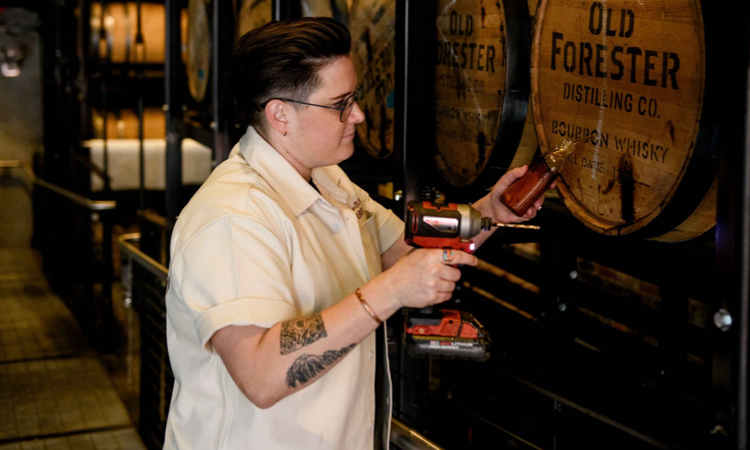
Old Forester has been part of America’s whiskey landscape since 1870.
“Old Forester’s history is bourbon history, which is also U.S. history,” said Melissa Rift, Old Forester’s master taster. “The brand has been a close observer of American whiskey culture and has endured every major cycle the industry has faced.”
That is why I think Old Forester deserves to be called an OG of American whiskey. OG began as shorthand for “Original Gangster,” and it now describes an original, respected figure that helped shape a field. Old Forester fits the term because it helped establish how Americans came to buy, trust, and enjoy whiskey.
History in a Glass
George Garvin Brown founded Old Forester in 1870. He sold bourbon in sealed glass bottles at the source and put his personal guarantee on every bottle. At the time, whiskey often traveled in barrels, and its quality could and usually did vary before it reached the customer.
Brown founded the company as J.T.S. Brown and Brother. In 1872, he hired a man named George Forman (no relation to the American heavyweight boxer, or his relations), who rose from salesman to partner. The firm adopted the Brown-Forman name in 1890, placing both men’s names on the company that Old Forester had already helped establish.
Old Forester survived Prohibition through a medicinal-whiskey permit, which allowed the company to retain its trademark and maintain aged inventory for the years after repeal.
“Our continuity gives the brand a perspective few American whiskeys can claim,” Melissa told me.
One Bourbon Recipe, Many Directions
Old Forester has a simple foundation. Its bourbon portfolio comes from one mash bill and one yeast strain. Most brands would see that as a narrow lane. Melissa sees it as a deep well of possibilities.
“We have one recipe, one yeast strain, one mash bill,” she said. “It is pretty simple to understand. We have everything from our 86-proof, which is insane value for flavor, to a craft series where we explore different textures, to limited-edition releases that drop at the same time every year.”
She calls the range “corn dogs to caviar.” A drinker can find an everyday pour, a bottled-in-bond expression, a higher-proof release, or a bottle made for collectors under the same Old Forester name.
The variables come later in the process. Warehouse location, age, batch composition, and bottling proof all influence the final whiskey. Old Forester also uses heat cycling across its warehouse inventory during winter, using steam to maintain conditions that support flavor development.
“Maturation is probably the biggest lever we can pull,” Melissa said. “Proofing is the last decision we get to make on a product before it becomes what it is. Once the barrel is done aging, we get one more chance to say, ‘This is where we want to dial this flavor in.’”
A Master Taster’s Unexpected Path
Melissa started as a Kentucky Bourbon Trail tour guide about a decade ago, at a time when more distilleries were building visitor experiences. That part-time job led to work in hospitality, then to a role developing a single-barrel program. In 2023, she joined Old Forester as a master taster.
“I have a really interesting, non-traditional background in the industry,” Melissa told me. “I was one of those people who kind of fell into it by accident and ended up pulling that thread all the way to where I am today.”
Her background in human development and family therapy has shaped her work. She understands how people respond to a tasting, how they describe flavors, and how a welcoming setting can help someone feel comfortable with whiskey.
“I love hearing flavor notes from consumers,” she said. “It keeps my vocabulary fresh and allows me to look at things in a new light sometimes.”
Melissa spent several years designing single-barrel experiences before she arrived at Old Forester. During the COVID shutdown, she adapted a program built around in-person visits by assembling sample kits and delivering them to participants. That experience taught her how much hospitality matters, even when the setting changes.
Learning to Taste
Melissa has spent plenty of time around people who think they need a trained palate before they can enjoy whiskey. She likes to take the pressure out of the process.
“I set the tone in a tasting experience that this is a safe space,” she said. “Everybody is going to say what comes to mind, and we are going to use this as a little experiment.”
Her own tasting routine begins with the nose. She smells the whiskey before swirling the glass, then returns to the aromas after she has taken a sip. Fruit and sweet notes often come first for her, followed by woodier or earthier notes.
“I trust my nose a lot more than my palate,” she said. “I do a lot of nosing before I even sip. I will do that a couple times, then swirl it and do it a couple more times. I clear my mind and see what jumps in.”
Along Whiskey Row
Melissa’s nose knows where to begin. The Whiskey Row series lets her trace those aromas and flavors through Old Forester’s past, offering drinkers a way to taste the stories behind the brand.
Each whiskey carries a date tied to a pivotal point in the company’s story, along with its own proof, process, and flavor profile. Together, the series turns Old Forester’s history into a lineup of distinct whiskeys. Each expression was developed to carry a date tied to a key point in the company’s story, and its own proof, process, and flavor profile.
The 1870 Original Batch, for example, recalled the blended whiskey style associated with the brand’s founding. The 1897 Bottled in Bond honored the federal standards that helped establish consumer confidence in American whiskey. The 1910 Old Fine Whisky drew from an accidental double-barreling episode connected to a fire. And the 1920 Prohibition Style reflected the higher-proof whiskey Old Forester sold under its medicinal license during Prohibition.
“Our Whiskey Row lineup uses history to create four separate expressions and four great stories,” Melissa said. “The flavor aligns with the story, which is what is really fun about it.”
“We also have the 117 Series, which is kind of our low-stakes playground,” Melissa said. “The team and I get to come up with some new flavor expressions.”
One of her favorites was a rum-cask-finished release. The project began after Brown-Forman added Diplomático rum to its portfolio. Melissa and her team saw a natural connection between rum’s tropical character and Old Forester’s fruit-forward yeast profile.
“We are known for tropical fruit flavors and bright citrusy flavors,” she said. “We thought, let’s get some essence of rum. We finished for about six months so we would not overpower the core Old Forester flavor.”
The release earned strong feedback from bartenders and whiskey fans. These are limited runs, so the bottles disappear quickly, but their value goes beyond scarcity. Each release helps Old Forester learn more about what its house style can do.
Frequently Asked Questions with Old Forester’s Melissa Rfit
What is the best way to store an opened bourbon bottle?
Keep bourbon upright in a cool, dark place away from direct sunlight and large temperature swings. Unlike wine, bourbon does not improve with long exposure to oxygen. A partly empty bottle will slowly change over time, so secure the cap tightly and consider finishing it within a reasonable period if you want to preserve its original character.
Does a higher proof always mean a better bourbon?
No. Higher proof can create a fuller, more concentrated flavor experience, and some drinkers enjoy that intensity. Proof also affects balance. A lower-proof bourbon may present sweetness, fruit, or oak with greater ease. The best choice depends on the flavor you enjoy and the way you plan to drink it.
Why use a Glencairn-style whiskey glass?
A Glencairn-style glass has a wider bowl and a narrower opening. That shape gathers aromas and directs them toward the nose, which can make it easier to identify scents before sipping. It is useful for focused tastings. A rocks glass works perfectly well for a relaxed pour with ice or a cocktail.
What makes a single barrel bourbon different?
A single-barrel bourbon comes from one individual barrel rather than a blend of multiple barrels. Each barrel develops its own personality based on its location in the warehouse, its wood, and how it aged. That means one single barrel can show more spice, fruit, oak, or sweetness than another from the same brand.
The Old and the New
Melissa sees hospitality as a central part of the Old Forester story. “Bourbon brings people together at a bar, around a dinner table, at a distillery, or beside a campfire.” That tradition has shaped the firm’s advertising and visitor experiences for generations.
“Sitting down, sharing stories, feeling a sense of hospitality, hosting others, that is the connected part of our culture that everybody is craving,” Melissa said.
The Old Forester brand has stayed recognizable because it protects a flavor profile people know. Melissa Rift helps carry that identity forward through sensory curiosity, experimentation, and hospitality. Her work reflects the brand’s enduring approach of respecting the whiskey’s history, listening closely to the people drinking it, and looking for the next worthwhile idea.
For the full story, join Melissa Rift and me on the Whiskey Shenanigans podcast.
And for more conversations with fascinating people in the whiskey world, see our Instagram @whiskeyshaniganspodcast