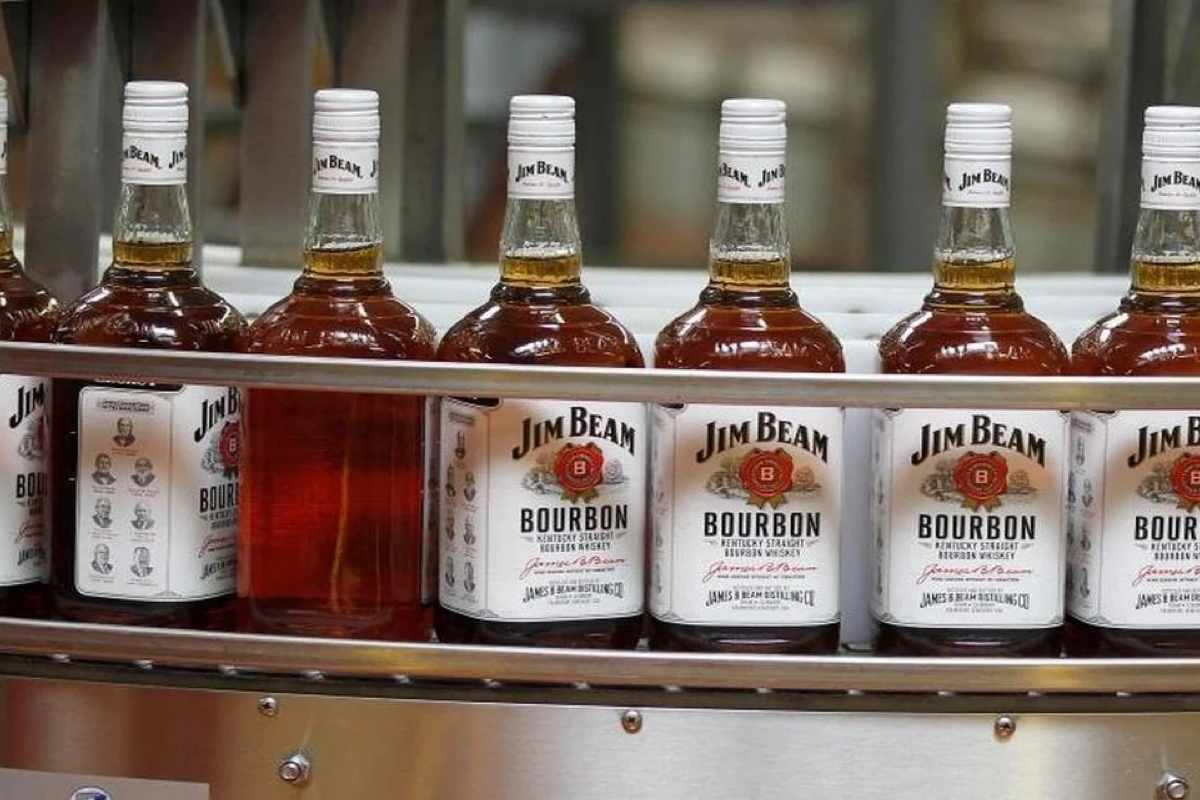
What could cause Jim Beam and other major producers to slow down or pause some production? Tariffs, cannabis, and Gen-Z are often cited as some of the reasons that spirits consumption is down in 2025.
According to stats in my last article, “The Benefits of Tariffs on the Bourbon Market,” the issue of tariffs seems to be a total excuse and red herring.
What does the Jim Beam slowdown mean for you, the whiskey enthusiast?
For most, tariffs rarely show up as a line item on your receipt, but they do shape what ends up on the shelf. When tariffs fall in big global markets like India, large producers have a incentive to ship more barrels overseas. This can tighten domestic availability even if total production stays high.
At the same time, when foreign whiskeys face higher tariffs coming into the U.S., it can move some enthusiasts from imported Scotch to American whiskey.
The Jim Beam Slowdown
Jim Beam is shuttering a large distillery in 2026. Jim Beam is no craft distiller. The name is known worldwide.
So, apparently, this major producer believes there is a current glut of whiskey on the market and has taken drastic action to help relieve it by cutting production. The Kentucky Herald-Leader reports that the industry has pulled back 55 million proof-gallons, about 28% through August 2025.
Not only Jim Beam (owned by Suntory) but, other major names such as Jack Daniel’s and Brown-Forman have announced production pauses.
The particular distillery affected is the Clermont distillery, which also produces other major brands, including Basil Hayden and Knob Creek.
While Canada is often cited as a problem area, spirits consumption in Canada is insignificant. Juxtapose that against the lowered tariffs in the largest whiskey-drinking country in the world, (India) and any unbiased human would conclude that tariffs are a tailwind and not the widely reported headwind.
Are people switching to cannabis? Is Gen-Z getting healthier and unwilling to drink alcohol? Does alcohol in general have an image problem? Have distilleries such as Buffalo Trace blundered by building up a mystique about Blantons, Pappy, and Col Taylor by restricting distribution?
While the cause is intriguing, the result is simply depressing for the industry as a whole.
Is What’s Bad for the Producer Good for You?
Perhaps it’s too early to tell. You might be impressed by how Buffalo Trace restricted distribution to create mystique, generate buzz around their brands, and lift prices.
For many enthusiastic whiskey drinkers, the tariff story becomes one more variable in your equation, as global demand, export economics, and brand strategy get factored into what’s available at your Saturday morning store run.
When producers can profitably move abroad, they can afford to be choosier about which accounts get allocated stock. This is one reason why you might see a wall of bottom‑shelf labels but not your favorite single barrel.
But now that consumption has fallen, shouldn’t we all be able to easily find and purchase online or locally plenty of those brands at reasonable prices? Currently, no.
I recently checked with my local Total Wine, and they literally had zero bottles of anything produced by the Buffalo Trace distillery, owned by Sazerac. The no-inventory was big:
- 1792
- Ancient Age
- Blanton’s
- Bowman Brown
- Buffalo Trace
- John J Bowman
- E.H. Taylor
- Eagle Rare
- Early Times
- Elmer T. Lee
- George T. Stagg
- Kentucky Tavern
- Old Rip
- Sazerac Rye
- Van Winkle
- W.L. Weller
Closing Call
If you’re a whiskey lover, you’re facing an unusual situation. Major distilleries like Jim Beam are pausing production. Sometimes you can’t find your favorite bottles on store shelves or online.
Whether it’s tariffs, cannabis, or changing tastes, the real impact on you remains the same: fewer choices even as Kentucky warehouses sit full of aging whiskey.
See our full podcast lineup on whiskeyshenanigans.com. And for more conversations with fascinating people in the whiskey world, check us out on Instagram @whiskeyshenaniganspodcast.