WHY BUFFALO TRACE DISTILLERY IS A RULE-BREAKER
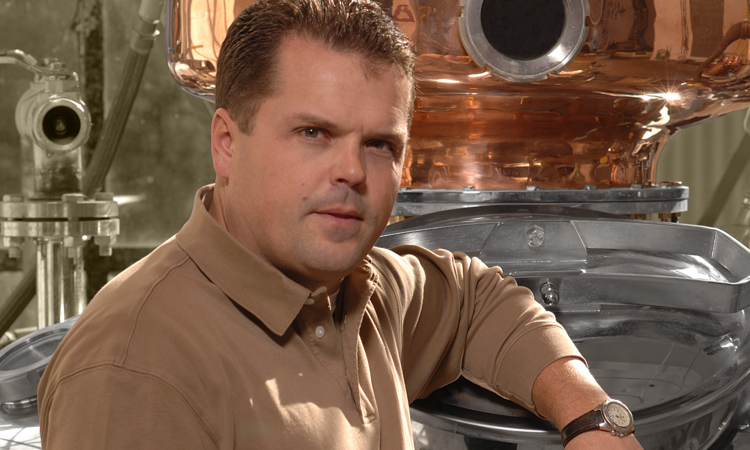
The Master Distiller at Buffalo Trace Distillery, Harlen Wheatley, is a tireless experimenter. He believes that whiskey should always evolve in modern directions—while honoring the traditions and roots of American whiskey.
Harlen Wheatley at Buffalo Trace is a calm and methodical flavor engineer who has helped turn one of America’s oldest distilleries into a long-term experiment in what bourbon can be.
Harlen entered the whiskey world in 1995, at a time when bourbon was not yet popular. “I started in the industry right out of college,” he said. “Back then, only six or seven distilleries in the whole country made various whiskeys, and people were looking for business.” The cocktail boom had not arrived. Many customers still needed someone to explain what bourbon was.
Building an Experimental Bourbon Empire
Harlen remembers hauling a sample case from bar to bar and introducing a brand that is now a powerhouse name.
“We’d go around and say, ‘We’ve got this new bourbon called Buffalo Trace,” he said. “Bars would tell us that they didn’t need any more bourbon. So we’d move on to the next place and get excited if we sold a couple of cases.”
The industry eventually caught up with what Buffalo Trace was building. As bourbon demand surged and cocktail culture became a thing, his suitcase samples felt like the start of something much bigger. As Harlen put it, “We had big plans to expand, and luckily the industry followed along. People started appreciating bourbon, understanding the history and the connection to the country, and all the things they value when they buy a good whiskey.”
Today, Buffalo Trace is a global name with roughly 770 employees, a broad range of brands, and a master distiller who treats experimentation as a daily responsibility. “We know everybody here plays a part,” Harlen said. “We’ve got a lot of really talented people, and the hard work pays off.”
The Trail of the Buffalo
Buffalo Trace Distillery stands where herds of buffalo once crossed the Kentucky River, leaving a visible path that settlers followed west. That trail, or “trace,” gave the distillery its name and still shapes how the team thinks about history and place.
“Before 1999, when you came to the distillery, many people really didn’t know what they were looking at,” Harlen said. “We didn’t have a flagship brand. We had a lot of different logos and labels, and nothing that represented the distillery.”
The team went back into the archives to find out what had originally drawn people to this site. “We looked at the history and realized this distillery exists because buffalo crossed the Kentucky River here and forged a trail,” he said. “People settled along that trace. One of the first settlements in Kentucky, Lee’s Town, was right here. The first thing they did was put up a still, as any good settlement would, and the rest is history.”
He described Buffalo Trace as a “working national historic landmark.” The site has produced whiskey for more than 240 years and continues to add new buildings as part of its latest expansions.
“We really haven’t changed since the 1700s in one sense,” Harlen said. “We’re still expanding, still growing. We built a couple of buildings last year with our latest expansion, and we intend to keep going.”
Honor Tradition, Embrace Change
“Buffalo Trace Distillery is defined by our motto—Honor Tradition, Embrace Change,” he said. “This drives our commitment to making good whiskey, and we still think the best whiskey is yet to be made.” In other words, he believes their finest bourbon is somewhere in the future, not in the rearview mirror.
The distillery uses a single yeast strain for all its spirits. That’s the traditional side of that motto. “One of the things we don’t do at Buffalo Trace is change our yeast,” Harlen said. “We only have one yeast that we use for all of our whiskeys and vodka.”
They also standardize their barrels. “We use a number-four char barrel with six-month-aged wood, and we keep that consistent across the labels,” he said. For Buffalo Trace, number four char runs for about fifty-five seconds with open flame on the inside of the barrel. That level of char helps pull out vanilla tones and other flavors as the whiskey ages, extracting character from the oak.
Buffalo Trace experiments with variety, patience, and a willingness to tackle long-shot projects.
They run twelve different mash bills and more than forty-eight varieties of whiskey. “We realized early on that not everybody likes rye bourbon,” Harlen said. “Some people prefer wheat bourbon. Some people like rye whiskey. We wanted something that represents each category and subcategory.”
That philosophy created families of brands rather than a single flagship. “Take Pappy Van Winkle,” said Harlen. “Using a single recipe, Buffalo Trace releases a series of age-stated expressions from ten up to twenty-five years.”
The Weller line, another wheated bourbon, is around seven years old. Those related recipes translate into different labels and flavor profiles through aging alone.
“Brand loyalty starts with the juice,” Harlen said. “It’s about making consistent, high-quality whiskey. A close second is the brand story and making sure what we share with the world is authentic to the history of Buffalo Trace.”
A Four-Thousand-Barrel Experimental Whiskey Program
Buffalo Trace holds approximately four thousand barrels of experimental bourbon and whiskey inventory. The scale alone makes this one of the most ambitious whiskey labs in the world.
“We don’t say a lot about the future because we’re trying to keep our competitors guessing,” Harlen said. Still, he gave a sense of the scope. “We look at everything from recipe to distillation to aging techniques, different types of wood, and every environmental factor you can imagine,” he said.
They track roughly 450 experimental ideas. Twice a year, a group of about forty people sits down to review the list. “If someone comes up with something we aren’t doing, we put it on the list,” Harlen explained. “Every six months, we look at all of it as a group and say, ‘That sounds interesting. Let’s move it up to number two.’ Then we put it into the schedule and get it into production.” The program’s motto is simple: Always have something in the hopper.
Some of those experiments sound like controlled chaos. “We’ve done some crazy experiments,” he admitted. “The one we talk about quite frequently is when we tried to make alcohol from corn stalks. What a disaster that was.” That experiment did not produce a new release, but it gave the team data and a story that captures how far they are willing to push.
The brewery Dogfish Head inspired one of Buffalo Trace’s more historic experiments. The brewery had studied hieroglyphics on the pyramids that described beer-making and attempted to brew something in that ancient style. “I saw that and thought, ‘Why not try something similar with bourbon?’” Buffalo Trace tracked down an original strain of emmer wheat that dated back thousands of years and distilled bourbon from it.
They have also created a hopped bourbon, which gave the whiskey a subtle hoppy note that beer fans could appreciate. “With all the different hops, there are millions of combinations. We picked some pretty traditional hops for the first run, but you could spend a lifetime working through the options.”
For Harlen, every experiment must have a purpose. “We ask what the purpose of the experiment is,” he said. “Either we learn something that makes us better distillers, which is a plus, or we learn something about flavor, and maybe create a new flavor.”
Buffalo Trace’s scale also shows up in their aged inventory and blending practices. “We have some of the oldest barrels in the industry, stretching from ten to twenty-five years, and are exploring ultra-aged products. It’s a lot of responsibility and cost,” he noted. “The warehouses are heated and have multiple floors, which helps create a broad range of flavor outcomes.”
They do not rotate barrels. “We want a variety of flavor,” Harlen said. “If you rotate, you tend to make everything taste the same. Plus, with millions of barrels, it’s not practical.” Instead, they use precise selection and blending. “If you pull two or three hundred barrels to make a batch, you can’t take everything from the same floor,” he explained. “You want a good mix so that when you blend, you create a balanced bourbon.”
He knows these warehouses well. When the team needs to build an Eagle Rare batch or a specific Pappy expression, Harlen can point to the right section of the right rickhouse.
Then their tasting panel steps in. It takes about a year to qualify for that panel, and candidates must pass demanding tests. Each taster gets scored on sensitivity to certain flavors. “Some people are better at picking up vanilla, for example,” he said. “Others miss that note. So if we’re looking for strong vanilla, we may not use the person who struggles to detect it.” Every single-barrel release must earn unanimous approval from the panel before it gets bottled.
The American Buffalo
Harlen sees whiskey as part of the fabric of American life. He pointed to whiskey’s role from the earliest settlements onward, when whiskey was part of frontier life, agriculture, and everyday trade.
“There are countless examples of whiskey’s influence on American culture, going back to the beginning of US settlement and the development of this country,” he said.
Whiskey contributes to public revenue through taxes and supports thousands of jobs. “Whiskey-making continues to be a great example of how we can honor a great piece of American history and culture,” he added.
The biggest shift he has seen since his early days in 1995 is scope. “The industry has become much more global than it was when I started,” Harlen said. “We look at opportunities across the globe now instead of just Kentucky.” Consumers can also now choose from many more styles and brands. “There is much more variety for people to enjoy. It’s an exciting business,” he told me.
Those changes create challenges for new entrants. Harlen does not romanticize the business. “I would suggest anyone entering the whiskey business approach with caution,” he said. “It’s important to have a solid business model and plan. And as always, you must have good people to support you.”
For Buffalo Trace, that long view is possible because of the ownership structure. As a privately held Sazerac company, the distillery does not chase quarterly numbers in the same way a publicly traded company might. That gives them room to hold barrels for decades, to keep thousands of experimental casks in play, and to reinvest in infrastructure.
Harlen still enjoys whiskey the way most of us do: at the end of a long week, with a game on the television. “Friday nights are usually interesting because it’s been a long week,” he said. “We like to make some interesting cocktails. I usually use Buffalo Trace or Eagle Rare as my go-tos.”
He mentioned a favorite drink in his house, which they call a bourbon Godfather, built from bourbon and amaretto. His wife also makes a superb Old Fashioned based on a recipe she picked up at a Marriott hotel in New York City. “It’s the best Old Fashioned I’ve ever had,” he said. “The key is the simple syrup and a ratio that lands just right.”
Buffalo Trace’s story also includes moments where whiskey had to take a back seat to survival. I happened to visit the distillery just before a historic flood hit the area. Harlen described the aftermath. “It was the worst flood we’ve ever seen in all our history,” he said. “Nearly every building on site had five or six feet of water. Some structures saw water all the way up to the rafters.”
The team had to rewire the entire distillery and rebuild the gift shop and several other buildings. The main office building became unusable, and staff continued working remotely while repairs continued. Hundreds of workers came together to bring the distillery back online.
Even in that chaos, the focus on visitors and hospitality never disappeared. Harlen told me they were running partial, reservation-only tours within about two weeks. They set up a temporary gift shop. “In my opinion, we got back pretty quickly,”
Final Thoughts on the Whiskey Connection
Whiskey connects history, community, and livelihoods. It also connects people across the tasting table.
Harlen has poured whiskey for movie stars, athletes, and musicians, and one conversation stands out. “I remember doing a personal tasting with Kurt Russell and being impressed with how well he knew his whiskey,” Harlen said. “He had good taste.”
Harlen and the team at Buffalo Trace honor the distillery’s story while pushing bourbon into new territory, one thoughtfully chosen barrel at a time. Experimentation is their defining edge, and they work from a belief that the best whiskey still lies ahead.
Listen to a podcast featuring Harlen.