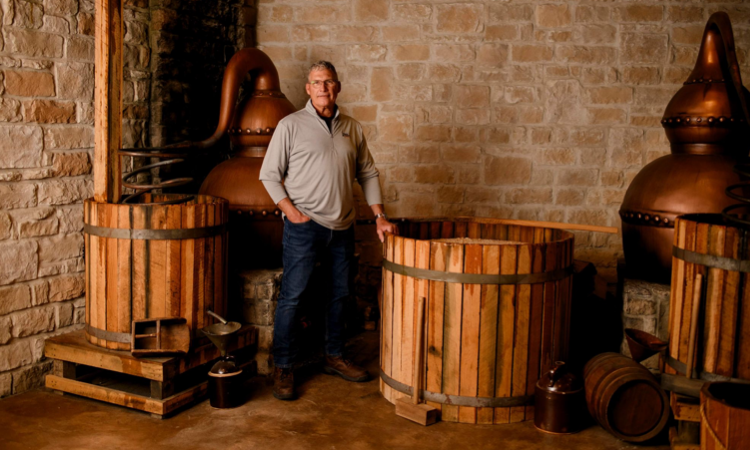
Join Whiskey Shenanigans as Jodie Filiatreau, the artisanal distiller at Evan Williams, shares stories about how “one barrel a day” became the firm’s philosophy for creating unique tastes through small-batch experimentation.
 Apple Podcasts
 Amazon Music
 Spotify
 YouTube
Transcript
Randy Warren (00:06):
Welcome to Whiskey Shenanigans. I’m your host, Randy Warren. Whiskey Shenanigans, where we help our listeners experience the world of whiskey, every aspect of life, as if it was accompanied by a glass of bourbon. The sports world on whiskey, basically every part of life on whiskey. Whiskey Shenanigans is about getting exclusive interviews from Bourbon Row in Kentucky, where we can learn about the secrets that make our favorite bourbons unique. We will get inside the hearts and minds of many distillers and help you understand what and how they are achieving it. Whiskey Shenanigans is about going beyond boring podcasts featuring just tastings. Heck, what do you get out of that anyway? It’s about bringing on guests and experiencing the entire world through whiskey. But be warned, if you’re diving in and you want to participate in these riveting discussions, you will need to grab a glass or a dram and be prepared to be entertained.
(01:10):
I’m really glad that you could join us today. We’re really honored to have you. Just wanted to get some thoughts, ask you a few questions and get some thoughts on what you guys are up to there. And as you know, we’re working on a book and it’s about innovation and whiskey rule breaking. And so I sent you the first question and that’s what’s the craziest, most rebellious thing you’ve done within whiskey tradition, maybe finishing a whiskey in some strange way or taking a barrel to the top of Mount Everest or anything crazy like that to try to create a taste – That’s
Jodie Filiatreau (01:53):
A good question.
(01:55):
I guess the one thing that was kind of rebellious is we did so many mash bills here, which is we did about 24 different mash bills here for everything from a bourbon mash bill that were. And we’re working on pot steel, so that was kind of something that was pretty new at the time too. So that was something kind of out of the norm. But we did everything from a bourbon mash, just regular bourbon mash bill all the way up to an American single malt, rye malts. We took out the rye in our bourbon mash bill and then added flavored roasted malts. So we can do a whole lot of different things here as opposed to Burnham where they’re doing 1300 to 1500 barrels a day. We’re doing one barrel a day, so it’s a whole lot easier for us to experiment and do different things.
(02:47):
So that’s one of the things that has been a lot of fun to do.
Randy Warren (02:53):
Yeah. I guess just explain briefly to the audience if you’re talking to them, you’re part of Heaven Hill, which is got a lot of brands. Connor O’Driscoll is the distiller up there at Heaven Hill and he’s got to produce a lot of barrels every year. But you’re the artisanal distiller, so that means you’ve got a limited number that you’re producing. Tell us about that.
Jodie Filiatreau (03:23):
So being at Heaven Hill, like I say, we have our six main core styles of whiskey that we make, but here at the Bourbon Experience, I’m the artisanal distiller at the Evan Williams Bourbon Experience. So we get to make one barrel a day on pot steels by hand. Everything we do here is all by hand. We make all of our cuts on the steels by hand. We dump the grain by hand. So it’s truly a handmade product that we get done, but we’ve been tasked too with doing some innovations. So we’ve actually done, like I say, some very interesting experiments that we’ve done here. Some of the mash bills that we’ve done have carried over to the grain to glass brands that we’ve come out with now. So it’s been pretty interesting.
Randy Warren (04:11):
Do you ever finish whiskeys in different barrels, like a second barrel or a double oak or a sherry barrel or anything like that?
Jodie Filiatreau (04:21):
I have done some different woods. I’ve done some chinkapin oaks. I’ve done some different char levels. Haven’t really done any cherry finished cast. That’d be something I like to do. I’ve been doing some number one chars, some toasted barrels, so just some different things with that. Some kill dried, some air dried. So that’s been some pretty interesting things to work around, to work with too. So that kind of makes it interesting.
Randy Warren (04:50):
Yeah, that’s cool. I mean, it’s kind of fun. You have a great job in that respect, right? I mean, it’s kind of fun to be able to play around with the different factors that make the whiskey and see what the result is.
Jodie Filiatreau (05:05):
It really is because just those subtle changes in the woods and the chars, it can make a big difference. We found out that a heavier char takes longer to age because it’s going to fight through that char and then takes a little bit longer to age. And some of the number one chars, they age a lot sweeter, but you don’t have quite the barrel notes that you get from the one char. So it’s a learning process. I mean, we learn every day. So that’s one thing that’s pretty cool about this business too, that you never stop learning. Once you stop learning, you lose it, but you always got to keep trying different things and trying to make the product better.
Randy Warren (05:47):
Yeah, that’s interesting. I was writing an article for our blog posts on artificial intelligence and whiskey, and it’s right along the lines of what you’re talking about there. It’s like, well, AI is another tool and it can help us because we know the things you just said, we know what you just said, we know what things are going to have certain effects. And now we write about that and AI picks up on it. And then you say to AI, “Hey, what if I start the temperature two degrees lower and just gently let it rise over a period of time? What kind of changes would we expect to the flavor profile that we’re going to get and things like that? It’s kind of interesting.
Jodie Filiatreau (06:30):
Yeah. Well, AI, you think about it, so AI can help you on your. What I think about is AI can help you so much on your record keeping, on what you did this day, that day, where you made your cuts, what was the proof points that you made? And they can help you run your trends. What was the weather on such and such a day? How did the weather change? What’s the weather trend going? So all that can play into the different aspects of what you’re doing. But you know as well as I do though, but bourbon is such a. Wood is a natural product and your chart of barrels, you can have from the same trees, put it in the same rick, same high, same right next to each other, and the whiskey’s going to taste different. So that variable is what makes it so much interesting.
(07:21):
And just like people’s different taste profiles, you can have somebody has a different. They’re looking for something a little bit different than what the next guy’s looking for. So all that kind of plays into the finished product also.
Randy Warren (07:37):
You ever get any weird reactions from people with different experiments? You say, “Hey, try this.” And what do they say? Any weird reaction?
Jodie Filiatreau (07:46):
Yeah. Some people want you to try other products, which that’s fine, but then you taste something and sometimes it’s good and sometimes it’s not quite what you think, but you try to keep a good expression on your face because you don’t want to taste it and then you don’t want your face to drop. You have to play that role also. You don’t want to tell somebody it’s not good, but you’re probably not going to buy a bottle of it.
Randy Warren (08:20):
That’s true. Yeah. I took a shot at making some on my own. This is my mash bill and I had somebody out in Nebraska distill it and they sent it to me at the end of last year and I’m like, “It’s not terrible.” And then I took it and I tried to finish it a little bit. I put some sticks in it and just playing around with it to see what I could do. That stuff makes a difference. It’s amazing. Every little thing matters, like you’re saying. Every barrel is different. Every piece of wood is different. Everything is different, but it’s just really interesting to toy around with it. I ended up with something I thought was pretty decent, but I didn’t want to tell people it was decent. I’m like, “Just try this.” And they’re like, “Wow, that’s pretty good.” And that’s the reaction that you’re looking for.
(09:15):
That’s pretty good. I like that.
Jodie Filiatreau (09:16):
Yeah. You don’t want to tell them if it’s your baby that you made, but you just want to try it and then you get their honest reaction and then you can go from there. And that’s fun too.
Randy Warren (09:28):
Yeah, get their honest reaction. That’s exactly it. So do you ever have any really good conversations over a good whiskey with friends or some things that you’re doing and something unforgettable, maybe a special moment or anything like that?
Jodie Filiatreau (09:45):
One time we were up here while I was up in the retail shop and I was talking and actually a distiller from Scotland come in. I forget his name right off the top of my head. But anyway, we sit there and we talk for about 45 minutes just on what we did with used barrels. I’ve never met this gentleman, but here we had common ground where we could sit there and talk and discuss that for a good 45 minutes just back and forth. The people that you meet in this industry is really very amazing the people that you meet doing this. I’ve met people from like say Scotland, Ireland, France, then we’ll come in and we’ll just have me talking and come out that. We talk about say a product or a way or a technique of distilling and they say, “Have you ever tried this or have you tried that?” And it’s really cool, the give and take and the part that you can share with people in this industry.
(10:48):
It’s really amazing that you have that camaraderie.
Randy Warren (10:53):
You probably get into some good conversations at Whiskey Fest every year. Do you go to the Bourbon Fest?
Jodie Filiatreau (10:59):
Yeah, the Bourbon Festival in Bardstown, the Kentucky Bourbon Festival, we always have a booth there. So you get into some very good conversations there with different people. And you get to see some different distillers that you don’t get to see all the time or some that they’ll come together there and say, “Hey, try this, try ours.” Then you’ll swap stuff back and forth trying it. So it’s pretty interesting how we get together to do all
Randy Warren (11:24):
That. Yep. So whiskey and bourbon is pretty symbolic or pretty tied to American culture. And what are some of the ways that you see that changing and some trends that are happening? I mean, they’ve grown up together. The United States, the country has grown up with bourbon and with whiskey, and it’s been so instrumental in the movies and in the TV shows and everything else and it marks important moments, but trends are always shifting. And what do you see happening in the culture as it relates to that?
Jodie Filiatreau (12:07):
The one thing I really see now here at Williams Bourbon Experience is people are looking for an experience. They’re looking to go out and spend a weekend hitting all the different bourbon places or all the different tastings, but they want to come in and go in and spend three days and hit it all. And people are so knowledgeable nowadays. They really are very knowledgeable on the process, upon the products, and they throw you some really good questions out there. So you have to be on your toes when you’re answering questions because it’s all on the internet so they can go back and double check everything, double check all your answers to make sure you’re right or call you out on it. But people really do want an experience. They want to come in, try the products, go through events. But now back years ago, people were just.
(13:07):
They would go and get a shot and a couple shots and they were happy, but now they want to really immerse theirself in the products and the cultures.
Randy Warren (13:19):
And the bourbon trail has been huge in that. It
Jodie Filiatreau (13:23):
Really has.
Randy Warren (13:25):
Last time I was there, I mean, it was interesting. I compare Nashville to the bourbon trail and it’s like, okay, down there in Tennessee and Nashville especially, all the brides go down there to have their bridal party, their big kickoff and everything like that. And the men do too sometimes, but a lot of the men go up to the bourbon trail. Let’s
Jodie Filiatreau (13:51):
Go
Randy Warren (13:51):
Up here. This is the experience that I’m looking for.
Jodie Filiatreau (13:54):
Yeah. They want to hit the bourbon trail and they’ll do multiple distilleries in the three or four days. I mean, they try to hit them all and that’s a long weekend. That’s a lot of. You have to be in pretty good shape to hit all those in a two or three day weekend by the time you’re on the road and hitting and slipping on it and taking the pour. It makes for a big weekend if you can hang in there because we’ve had some people come in, they’ve been out that first day, they’ll come in that next morning and they’re not too keen on taking that first sample of the morning till they got to work their way back into it. So you see a lot of that sometimes.
Randy Warren (14:40):
And the Evan Williams bourbon experience is, I mean, it’s fantastic. I mean, if people haven’t been there, if you’re listening to this and you haven’t been there, you got to hit that one. That one is so good. I mean, it gives you the whole history of how did Louisville even happen? I remember you guys talking about there was some rapids and people had to get off their raft and bring their product into Louisville and carry it across on the ground and then put it back on the raft after the rapids. And so Louisville kind of sprung up from that whole thing that was happening way back there. I mean, it’s kind of cool. Evan Williams really goes through all of that.
Jodie Filiatreau (15:22):
Yeah. So we give you the whole history of how Louisville got started, how prohibition played a part in it. But the only impediment on the Ohio River was the Falls of Ohio. So like you said, they would have to come in on their kill boats or flat bottom boats, and they’d have to either pull in and stop and wait for the water to get up to shoot the rapids, or they’d have to unload it, take it around the falls and load it back up and put it on the river again. Evan Williams, he was the wharf master and they were taxed on coming into the port, so they had to pay a fee. So that’s how they generated money for the city of Louisville to grow. But Evan Williams was first licensed distiller in the state of Kentucky. We talked about his history, talk about how it was in the 1800s.
(16:13):
I always love this tour because if people take this tour first, it gives you such a history and such a starting point, a good base for all the other tours that are out there. So it’s a good tour to start with and get the history and then build on the other tours.
Randy Warren (16:30):
That’s exactly what I did. It was the first place I went and I was shocked. I called ahead and I wanted to talk to you, and then I got there and you came out and you’re like, “Hey, are you Randy Warren?” I’m like, “Yes, I
Jodie Filiatreau (16:44):
Am.” There’s not too many distillers that won’t sit outside and talk to people. A lot of times you can’t get one to shut up.
Randy Warren (16:55):
This industry is full of just great people who just want to help and want to talk and want to share a dram.
Jodie Filiatreau (17:03):
Yeah, most definitely. And they’re happy to share a dram with you and let you taste some of the things they made and see if you like it. So that’s a fun part of it too.
Randy Warren (17:15):
What’s your favorite story behind Evan Williams or around surrounding Evan Williams?
Jodie Filiatreau (17:21):
Oh, that’s a good question. I guess when we had the fire back in 1996 at the Heaven Hill, we were there that day, but I think the thing that always strikes me as such a great. The fire was horrible, don’t get me wrong, but the aftermath afterwards that the people coming together and helping all the other distilleries coming together and helping us out there after the fire that day, I think that’s one of my favorite highlights. How did they
Randy Warren (17:54):
Help out?
Jodie Filiatreau (17:56):
Well, they asked us, “What do you need? I mean, do you want us to make your whiskey for you? Do you need equipment? What do you need? How can we help you out?” And I always say GM and Ford’s not going to do that. Pepsi and Coke’s not going to do that. But this industry is such a close-knit industry and everybody knows everybody in this industry, and it’s not a cutthroat industry. I mean, the marketing people want to make their sales, but do good. But the people that work in the industry, they’ll help each other out. And if you have something that you need a process that’s not going right, you could call somebody up and say, “Hey, have you ever had this problem?” And they’ll talk about it and figure out what’s going on. So I think that’s one of my most favorite stories out there about how the industry came together and helped us out there after we had the fire.
Randy Warren (18:53):
That’s amazing. I mean, you’re right. I mean, this is a great industry full of great people. And what are some of the unique values that define Evan Williams?
Jodie Filiatreau (19:07):
Evan Williams, I think we call it a bourbon done right because it’s longer, stronger. It’s five to six years old. It’s 86 proof. And it’s got a great taste profile, but it’s got a good price point also. So it’s a good bourbon that it doesn’t break your bank, but it’s got a great taste profile. And I think that’s something that we strive for too. And our bourbon experience down here, we’re the first ones back on Whiskey Row and we’re very proud of that. So that was Harry Shapiro’s brain child to bring a tourist center and distilling back here on Whiskey Row. So we were very proud that we were the first ones back. And just to see, that was in 2013, but to see how the Whiskey Row has grown and boomed over the years, it’s really amazing that you can spend all day just on Main Street going to the different places down through there.
(20:11):
So it’s its own little Whiskey Row type of thing. Its own little tourist section in Louisville right now that you can go to. I mean, there’s so many things that popped up now ago and it’s phenomenal.
Randy Warren (20:26):
Yeah, it is amazing. It’s a fun place to go. I mean, it really is. I mean, the whole fact that there’s this whole experience and there’s all these different distilleries to visit and things to learn, things that you can’t see, you’re not going to see them at the total wine store, you’re just going to see the bottles on the shelf. There’s so much more to know and so much more to learn about it and that sort of thing.
Jodie Filiatreau (20:50):
Yeah. And Louisville’s a great destination because you’ve got so many things to do. You got great food here, you got great sports, you got basketball, you got Churchill Downs. I mean, it’s just a fun place to come and visit and hang out and do things.
Randy Warren (21:04):
Did your horse win last weekend?
Jodie Filiatreau (21:07):
No. I really used to really get into it, but anymore, the Derby is such a. You never know what’s going to happen in it because the favorites hardly ever win, but there’s always an outlier that comes through on that Derby day. So it’s kind of a crapshoot when you get in there in the Derby.
Randy Warren (21:36):
Yeah. When I was there last year, I went to the Kenaland races, which kind of leads up to the Derby, and you watch some of the horses run and it’s like, oh, well, I can see a lot of betters are coming here to see the best horses that might make it into the Derby and see what does that horse bring that other ones might not or whatever. It was really, really fascinating, but the Derby is a fun time for sure in Louisville and everybody’s big time party time.
Jodie Filiatreau (22:06):
Yeah, the atmosphere is really cool. So it’s just a great atmosphere. You got all those people down there and they’re having a good time. They’re all dressed in some crazy wall colors and clothes, and it’s really interesting. It’s really cool.
Randy Warren (22:22):
How does Evan Williams go about building brand loyalty?
Jodie Filiatreau (22:28):
Well, we’re out there promoting it and we have a great product at a great price point. And then people respect that and they like it and they try it and that’s their go-to. So they become brand loyal and we do a good job with that. We’re out there promoting it and talking about it and doing tastings and
Speaker 3 (22:53):
Providing
Jodie Filiatreau (22:53):
It. So it grows and then people kind of word of mouth too. So try this. And then they’ll try and say, oh, this is great. And it doesn’t hurt to do some blind tastings every now and then to taste that and they’ll think, oh heck, that’s amazing. So it’s part of it.
Randy Warren (23:13):
And product and price are, those two create the value, right? I mean, it’s so interesting, I think, to find a brand like Evan Williams, Elijah Craig, where the product is probably better hitting above its price point. It
Jodie Filiatreau (23:29):
Could
Randy Warren (23:30):
Be more expensive product, but it’s not. It’s keeping the price down, and so you’re getting just a tremendous value in the glass. It’s incredible.
Jodie Filiatreau (23:40):
Right. And it’s a great tasting product and it doesn’t break the bag. Nowadays, people appreciate that quite a bit.
Randy Warren (23:47):
There’s not a lot like that. I find there’s way too many allocated bottles and this, that, and the other thing where it’s like, oh, I can buy anything I want. I can buy any allocated I want on these online retailers, but they charge me $250 for a bottle and it’s like, is that worth it? Undoubtedly, it’s not. I mean, it’s probably very good, but like anything else, there’s these diminishing marginal returns. As you go up in price, does it really get that much better?
Jodie Filiatreau (24:19):
Right. And we’ll have releases every so often and people will come out there and wait. They’ll start camping out like five o’clock at night as soon as the Heritage Center closes and then they’re sitting out there on that sidewalk all night long to the next 10, 15, 12 hours, 12, 15 hours. Man, I like bourbon, but I’m just not going to do that. I’m just not going to do it. A lot of people do it. Only thing about secondary market, it kind of limits what the average person can pay for a bottle of great bourbon. It kind of hurts that, but people will pay it. So I guess it drives the market sometimes, but I just think it’s kind of cutting out a part of the population out there.
Randy Warren (25:16):
Right. That’s why I think finding products that are better than their price
Jodie Filiatreau (25:21):
Is
Randy Warren (25:22):
Really cool and actually more fun than just hunting bottles that are really expensive. It’s like, well, anybody can buy that if you just have to have money. I
Jodie Filiatreau (25:34):
Always tell people too, try it all. I mean, try everything from the top shelf to the bottom shelf because you never know what you’re going to like. Hopefully you like ours, but if you don’t, that’s great. Just go out there and try something else because you never know what you’re going to like and you want to kind of keep expanding your taste profile and you’ll be surprised some of the bourbons out there that are not expensive bourbons, but more middle of the road are fantastic. So try it all.
Randy Warren (26:06):
Try it all. Absolutely. I’m on a journey to try it all.
Jodie Filiatreau (26:11):
There you go. Yeah. There you go.
Randy Warren (26:14):
Each one. And then when I think I’ve got major progress made, then I find a whole bunch of more brands and there’s just so many craft brands out there too.
Jodie Filiatreau (26:24):
Right. Yeah.
Randy Warren (26:27):
And they’re not really priced well. I mean, they’re priced pretty high because I think that the craft industry, they have to price it high. They don’t make enough volume to get their price down.
Jodie Filiatreau (26:38):
Right. Yeah. Kind of like mine, kind of like our bourbon, the bourbon experience, that’s a lot of work goes into it. So you have to account for your time and work and everything. So it is a little bit on the higher side of it, I think.
Randy Warren (26:53):
Right. Fantastic. Well, listen, I don’t want to take up any more of your time. I so much appreciate you coming on and having a little quick chat and going through some of these things. We’re writing a book and we want Evan Williams and Elijah Craig and Heaven Hill to be in it. And so we’re going to work on that.
Jodie Filiatreau (27:13):
I appreciate it. Yeah.
Randy Warren (27:17):
Welcome once again, Whiskey Shenanigan fans to the shenanigans portion of this episode. We’re going to talk today about whiskey that drinks above its price. This is what we all want, right? We want to pay a certain price, but get a better value. We want a better product in the glass and we don’t want to overpay for it. We want a good low price and a great product. That’s what we want when we buy anything, a car, a bottle of bourbon, whatever it is. We’re looking for bourbon that punches above its class. So the idea of whiskey that is better than its price tag, it kind of sits at the intersection. We’re talking about economics, we’re talking about perception, we’re talking about the craft of making it. It’s not about finding something cheap. It’s about discovering this bottle, this intrinsic quality, this flavor density, this balance, this structure, the finish that outpaces the market price assigned to it.
(28:29):
In finance terms, it’s mispriced. In whiskey terms, it’s a rare find, not so easy to find these days. Historically, these bottles were easier to find because the bourbon market was less efficient. 10 to 15 years ago, demand hadn’t yet caught up to supply and pricing lagged behind quality improvements that were happening across all the distilleries. As production techniques improved, better barrel management, more consistent mash bills, tighter distillation controls, the average quality began to rise, but pricing didn’t immediately follow and that gap created a certain amount of value and it was easier to find bourbon that was drinking above its price tag. Today, that gap has been arbitraged away. Online retailers, secondary markets, even local stores have become far more sophisticated. Pricing is no longer based purely on just cost plus. It’s based on perceived scarcity and demand elasticity. If a whiskey develops a reputation, even informally among enthusiasts, it gets repriced quickly.
(29:49):
What used to be a $60 sleeper now becomes $120 allocated bottle almost overnight. The market corrects itself aggressively these days. This is why true overperformers are increasingly difficult to find, not because they don’t exist, but because the feedback loop between the enthusiasts, the retailers, and the pricing is now virtually instantaneous. A good review, a Reddit thread, or a YouTube tasting can move price dramatically in real time. And yet despite this efficiency, there’s still some really good bottles out there that punch above their weight class. Couple of simple examples, and we could do more of these, but a couple of simple examples. Buffalo Trace, it remains one of the clearest examples of value in the category. It’s not rare, it’s not overly priced, and it’s typically priced accessibly for everybody. But in the glass, it delivers a level of balance, caramel sweetness, softness, spice, rounded mouthfeel.
(30:59):
It exceeds expectations at its price point. That’s what we’re looking for. Another one which will surprise you, because it surprised me, this wild turkey 101 bourbon has long been a benchmark for value. At 101 proof, it offers structure, intensity, and many higher, even better than a lot of higher priced bourbons. The profile, bold oak, baking spices and a signature wild turkey richness feels intentional, feels complete, not compromised for cost. Then there’s the Elijah Craig portfolio, I’ll call it, particularly Evan Williams and Elijah Craig Small Batch Bourbon and all of its other brands within the Elijah Craig universe. These bottles often deliver a mature oak influence, layered sweetness. They suggest they should be priced higher. These brands benefit from scale and barrel access, allowing it to offer quality that smaller producers would struggle to match. Your craft distillers, for example, are going to struggle to get their prices down.
(32:17):
In a craft distillery bottle, you might be paying $60 for something that you could get from Elijah Craig for 30. Interesting thought, and it’s all because of scale. The answer lies in these structural advantages that some of these larger distillers have. Large established distilleries, those with the deep barrel inventories, long production histories, they can afford to price certain expressions below their perceived value. They’re not optimizing for maximum margin with every bottle they sell. They’re managing brand equity, volume, and long-term positioning in the marketplace. A bottle like Wild Turkey 101 isn’t meant to be scarce. It’s meant to define the brand. That creates an opportunity for you, the consumer. Contrast that with newer or highly allocated brands where scarcity is the strategy. In those cases, pricing is often forward looking based on hype and projected demand rather than on quality. The result is a market where many bottles are fairly priced or even overpriced relative to what’s actually in the glass.
(33:35):
This brings us to the broader market dynamic, the suggestion that with bourbon demand softening slightly now, value should be improving. We should start to see the prices of something that was allocated starting to fall back under $100. Something that used to be 200 is now 150 and so on and so forth. In theory, this should be happening. If demand declines while supply remains high and supply has remained high, urban producers have been laying down barrels aggressively for the last few years, then price should be facing some downward pressure. But in practice, the adjustment is uneven, let’s call it. It’s happening, but it’s uneven. Premium allocated segments tend to hold their pricing just because of the collectors that really want to grab them.
(34:36):
The downward price pressure shows up more in the mid-tier and the entry premium categories where competition is fierce and consumers are a little more price sensitive and the distillers know that. That’s where value hunters should focus. The modern better than its price whiskey is less likely to be a unicorn and more likely to be a reliable, widely available bottle from a major distiller, one that hasn’t been pulled into a hype cycle. It’s the bottle that delivers consistency, structure, flavor integrity without the narrative inflation that drives the price up. Ultimately, the search for value in whiskey mirrors any efficient market. True mispricings are rare and short-lived, but enduring value, the kind that shows up every time you pour a glass and you think to yourself, “Huh, wow, this drinks above its price.” It’s out there, folks. It still exists. It’s gaining momentum. It just requires a shift in your mindset away from those bottles that are scarcity driven and towards more substance, away from the hype and towards what’s actually in the glass.
(35:51):
And when you find it, the conclusion, it’s pretty simple and it’s deeply satisfying. And that’s shenanigans for today. Thanks for joining us everybody.
Speaker 3 (36:07):
I let them kind of ask whatever they want, but my overlying purpose every time is to have them leave there with this sense of empowerment. That’s always what it is. I always want them to leave there with this simple message that they can do it as well. And it’s achieved by taking it from the foundation, layering that first layer. And then by the third one, that’s where we really kind of turn it up a notch. And by the third one, it gets a little more out there, a little more creative. And we do all that without ever changing the structural, the measurements.