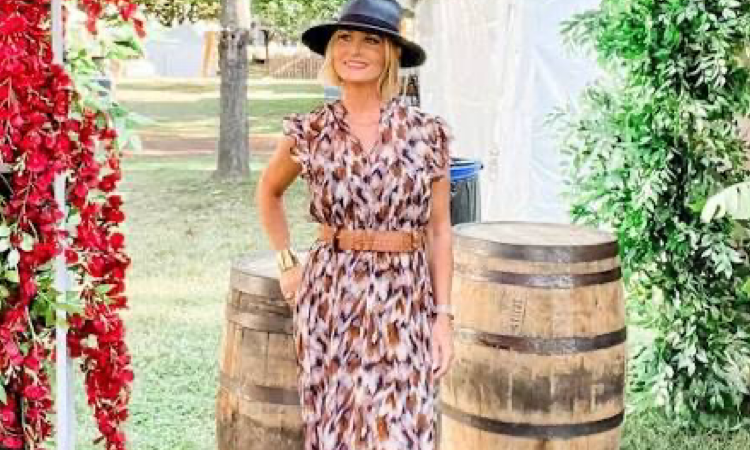
Claudia Coffey, host of The Best Bet podcast and Kentucky Derby Insider with Churchill Downs covers bourbon and horse racing across the Commonwealth. In this podcast, she previews the Kentucky Bourbon Festival’s 35th anniversary this fall.
 Apple Podcasts
 Amazon Music
 Spotify
 YouTube
Transcript
Randy Warren (00:06):
Welcome to Whiskey Shenanigans. I’m your host, Randy Warren. Whiskey Shenanigans, where we help our listeners experience the world of whiskey, every aspect of life, as if it was accompanied by a glass of bourbon. The sports world on whiskey, basically every part of life on whiskey. Whiskey Shenanigans is about getting exclusive interviews from Bourbon Row in Kentucky, where we can learn about the secrets that make our favorite bourbons unique. We will get inside the hearts and minds of many distillers and help you understand what and how they are achieving it. Whiskey Shenanigans is about going beyond boring podcasts featuring just tastings. Heck, what do you get out of that anyway? It’s about bringing on guests and experiencing the entire world through whiskey. But be warned, if you’re diving in and you want to participate in these riveting discussions, you will need to grab a glass or a dram and be prepared to be entertained.
(01:09):
All right, Whiskey Shenanigans fans, we are here again and we are very excited to have with us today Claudia Coffey. And Claudia is a journalist, a personality, a major figure in Kentucky, doing a lot with bourbon and a lot with horse racing. And what are other specialties that you do? And welcome by the way. Welcome, Claudia.
Claudia Coffey (01:34):
Thank you, Randy. Oh, thank you so much. I think you nailed it. I mean, from bourbon to horse racing to. I love stories across the heartland and I think that more and more Americans want to hear those stories that are happening well outside of our cities, what normal folks are doing and what they’re exploring because
Speaker 3 (01:53):
There’s a lot of stories to share.
Randy Warren (01:55):
There are a lot of stories. And so how did you pick these topics? I mean, great topics, right? I mean, fun topics.
Claudia Coffey (02:08):
I lived kind of that journalism route where I lived in a number of different states covering news in Arkansas, New Orleans, Milwaukee, Washington DC, and then came back to Kentucky, which is my home to take a news job here. And over the course of working in news, these were the things that slowly started kind of bubbling to the top over the last decade, I would say. I mean, horse racing in Kentucky has always been obviously well known. Everybody knows the Kentucky Derby, but I will say over the last 10 years, especially the last five, the bourbon trail and bourbon became the big, big storylines that began emerging. And I think for me, what is interesting and what I’m always drawn to, if I watch the Kentucky Derby, I’m always drawn to the story of somebody that made it there against the odds. In bourbon too, and I think what I love about it, there are these wonderful, beautiful stories from these families all across Kentucky in how their brand survived, how it’s evolved, how it’s changed.
(03:15):
And then the cool thing is that, which I wasn’t prepared for until I met my first master distiller, I realized, oh wow, all they want to do is tell stories and they’ll unlock every ancestry discussion you could ever want to hear about what so-and-so made back in the kitchen or how this recipe and this mash bill came to be or how we stumbled upon something by accident that happened to be something that turned out really, really great. So I think it’s being in love with the stories that are told out there and bourbon, and I don’t think people realize that, I think they’re catching onto it. Bourbon lovers, they love the stories attached to it and there are a lot of them in Kentucky and surrounding the brands.
Randy Warren (04:04):
And fortunately for people like us, there are a lot of. I mean, these guys are very willing to tell their stories. They’ve got a lot of them and it’s a very open community and people help each other in this community. Whereas I came from the finance community and it was like dog eat dog, who’s going to win the race, who’s going to make the most money, who’s going to do. So this is something different for me.
Claudia Coffey (04:31):
Just a typical week, this has truly happened. In one week, I emceed an event with Four Roses master distiller, Brent Elliot, and afterwards he’ll hang out and we’ll talk about other things. He’ll share with not just me who you think, oh, she’s the MC, of course he’s going to show this, with kind of a group gathered of what he was planning to do for the summer and going to the grandkids’ volleyball tournaments and what he expects Gallo to bring to the table with that new partnership. And in that same week, I was down in Bardstown, Kentucky, and on my way out of town, I sent a text message to Fred No with Jim Beam and I said, “Hey Fred, I’m just driving through town. I know you’re going to get mad if I don’t say hello.” He’s like, “Well, just come on by the house.” And that’s normal, right?
(05:22):
He was setting up for an event and he just wanted to tell me about the event and what was happening that night, but they know that more than anything that their authenticity and their transparency that sells the brand. And especially during these tough times within the bourbon industry, they realize that that’s so important now more than ever. And also in that same week, it was National Bourbon Week and there was a foodie event in Bardstown and literally you walk into the room and you’re counting, I’m like, “Oh my goodness, there are 12 master distillers under one roof and they’re all milling about and they’re talking and they’re eating and everybody can just walk right up to them and no pretense, but happy to discuss business and see what you’re enjoying and answer any questions.”
Randy Warren (06:12):
That is really cool. It reminds me of when I interviewed Connor O’Driscoll, he was like, “One day I was just a guy and the next day I’m a rockstar master distiller and I’m like, Why do you want my autograph? I’m just doing my chemical engineering thing here and what’s the big deal? But it’s a big deal. People love it.
Claudia Coffey (06:36):
It is. I think the one thing, you mentioned Connor and his personality in so many of the others, there’s no big attitude with them. There’s something so laid back and so approachable that they welcome all questions for people. They welcome that conversation. He said to me one time, he said, “I’m so busy trying and testing things all day. It’s really nice to interact with humans and be ablab if that’s really their job.”
Randy Warren (07:09):
That makes sense. Yeah, for sure. Yeah. I actually am going to do Brent Elliot next at three o’clock. Three o’clock is Brent Elliot’s time slides, the last one he had left before he leaves for his daughter’s volleyball.
Claudia Coffey (07:26):
Tell my son hello and the podcast. I’m trying to shuffle him on in the next month or two.
Randy Warren (07:33):
Yep. He’s a busy guy. It’s really interesting. Like I said, my very first interview was at Evan Williams and it was Jodi Filiatro. And then my next one was Harlan Wheatley,
(07:48):
And then it got hard for a while. It was like, oh, I was trying to get these guys to come on. Nobody’s answering. And Four Roses, I was chasing Brent for a year before he finally. I started like, oh man, I’m going to give up. But I didn’t want to give up. We’re finishing up this book that we’re doing called Whiskey Rule Breakers. And so a lot of the interviews are focused around what kind of innovations you’re doing and that sort of thing with the master distillers. And I really wanted Four Roses to be in it. I’m like, “I love their product. I just legitimately love their product. It’s one of my favorites.” And I’m like, “Man, I really would love to get that.” I’m really excited to finally talk to him today.
Claudia Coffey (08:37):
Yeah. Oh, you’re going to love it. You’re going to love it. I mean, he’s so open about all the fun things that they’re getting ready to develop that he’s so excited that he’s working on. So I think that they’re really going to lead the way moving forward with some really great products.
Randy Warren (08:53):
Yeah, definitely. I saw you were out at Scott Neal’s place at Horse Soldier. Tell me, what did you see? I mean, I saw some video and I was like, “Wow.”
Claudia Coffey (09:04):
Wow. Wow, wow, wow. Wow. I’m going to go back down there. Scott and team invited me back down for the grand opening this week, so that’s my next stop. I mean, I have been to plenty of distilleries and have met plenty of people, and I can tell you, I have never seen a distillery quite like this. It is massive in size, but if you’ve been to Scotland to tour anything over there, you will find some similarities where it almost sits down in the earth, part of it. The backdrop, and there’s just all this glass and it’s very modern, it’s very open, it’s very airy, but the front part of it, when you walk in, it meets modern with very welcoming, and they have an area where you can just sit and have a drink and it’s a great big fireplace and the whole backside is glass overlooking Lake Cumberland.
(10:07):
It’s in a place and a space that is completely unexpected, but the sheer scope of that, and I’ve heard that from many, many people that have done preview tours, it’s just unlike I think anything that folks have ever seen. If they’ve done the typical Kentucky Bourbon Trail, this is totally different. It’s like the Blackberry Farms of Bourbon. So it has resort that meets bourbon and their beautiful story is intertwined throughout. So there’s lots of nods to their veteran history throughout. So the number 12 with the 12 soldiers that are friends and founded it is kind of weaved throughout. It is very, very impressive and they’re very passionate about it. They have about 20 minutes away, a flagship restaurant that’s attached to it. So you can go to the restaurant in the city, come out to the farms, view the lake, but they wanted it there because they wanted those repeat visitors because you read the headlines, of course, that bourbon and a downturn, but people are still coming to the Bourbon Trail, but they wanted to make sure people came back specifically to Horse Soldier, and they realized they had that massive number of visitors that come to Lake Cumberland every year.
(11:30):
For your viewers and listeners, Lake Cumberland, it has more shoreline than Florida.
(11:39):
Yeah, it just winds around everywhere. It’s massive and it sits over Kentucky and Tennessee. And so you’ve got these little city hubs on the edge of it, and Somerset, Kentucky, which is in Kentucky, it’s one of the larger, more developed cities with a lot of infrastructure, restaurants, boutiques, like a traditional main street and a lot that’s happening there. So that’s not too far. This is a little bit further off in the county. So it attracts people from multiple states that will go to Lake Cumberland. So that was their strategic thing of why they wanted to hub it there because they realized, oh, the experience is what’s going to get people to come back. A lot of people will go to the Bourbon Trail, but I think there’s a drop off of 60% of people won’t return if it’s maybe not their thing. Our bourbon enthusiasts will seek out the Kentucky Bourbon Festival and bourbon and beyond, but the person that maybe thinks, “Oh, this is on my bucket list,” may check that off the list once and never return.
(12:44):
So what was key for the horse soldier team was how do we get them to come back? How do we get them and then how do we expand to lodging? How do we expand to broaden that bigger experience? I mean, bourbon lovers, they want an experience and they’ll travel to the ends of the earth to get it and to far flung places just to experience something, just to have a conversation with someone that’s unique and they have just seemed to nail it. It’s really hard to impress the New York press.
(13:18):
They had all these reporters from New York and all these different bourbon publications down there last week. In my preparation to go meet the team, they said, Claudia, they said the same thing you said that they’ve. We impressed the New York media. And I’m like, that’s saying a lot right there that they couldn’t believe it, but it’s like a $200 million facility. It’s grand in size. It’s massive and it’s storytelling on the inside. Again, we talk about storytelling, it’s just woven throughout, and I believe they’re going to have a couple of special releases happening this week out there, so that’ll be fun to see.
Randy Warren (13:58):
Yes. The 250th that he’s coming out with, that’s on my list. I got to get me one of them.
Claudia Coffey (14:07):
I’ll try to grab an extra one for you, but I think that was on my list too. Can anybody pass me
Randy Warren (14:13):
A bottle? Yeah, right. Get me one of those. That would be nice. I think for Father’s Day, my son said, “I looked up a couple of bourbons that you mentioned, and I think he said that one was $1,000.” So he’s like, “I didn’t buy it for you.” Wow. I’m like, “That’s okay. You don’t have to buy it for me. I can buy it for myself.”
Claudia Coffey (14:35):
Yeah. It’s an interesting time in bourbon and it’s an interesting time for them to develop at that location. So I was just excited to see what the future holds for them because their strategy is very different from what other people are doing.
Randy Warren (14:50):
Yeah, it’s very unique, and the story is unique and just kind of love it. Like you said though, so many of these. I mean, we did Michter’s not too long ago and talking to them, their story is unique as well. I mean, they emphasized over and over again that cost is not an option. We are making the best bourbon that money can make. We’re doing the very best job we can, and if there’s something that needs to be done and it costs money or if there’s something with the barrels or something with the whatever, we spend it and we do it because it’s going to make the product better. And it’s like, that’s so cool.
Claudia Coffey (15:30):
Yeah. And I think too, I mean, while we kind of settled into this post bourbon boom normalization, there seems to be the story of the consumer and specifically bourbon consumers in the US are still willing to spend a lot of money for these experiential trips. And that seems to be what is the focus of Horse Soldier Farm. They’re really narrowing in on that. And you look at the great example, not only of people returning to Lake Cumberland and buying up property and visiting that specific area, but when it comes to bourbon and people going to the Kentucky Bourbon Festival, I mean, that is a festival that over the past five years has sold out in minutes. In minutes. I received a text from the COO this year after five minutes, he said, “We’re done. That’s it. They’re sold out.” I though, Mike, five minutes.
Randy Warren (16:31):
Yeah, I know. I was able to get in, in that five minutes and buy some, get my tickets. I also applied for a press pass, but I didn’t follow up on that. I got to follow up on that, but I’m in. So it’s like, “All right, good.”
Claudia Coffey (16:47):
Yeah. And this year they even added. I mean, that just shows that for premium tricks like that, people will pay. They had special packages this year that were racked up in the luxury August watch. Did you see those?
Randy Warren (17:04):
Yes.
Claudia Coffey (17:06):
Did you get one of those?
Randy Warren (17:07):
No, I did not.
Claudia Coffey (17:08):
Okay.
(17:10):
I can’t afford that. I’m just open for a press pass. They wrapped up, what, 15 to $24,000 per package, and that was sold out within what, 10, 15 minutes. And that was just something that they though, let’s just try this. Let’s see if there’s the interest out there. So after that, they’re figuring out, okay, what are people coming for? What can we do to. Every year you go, they step it up another level. You can tell they really do. I can only imagine what the day after debrief looks like because you see it in action the moment that you step onto the property, whether it’s been rearranged, whether it’s more accessible, whether there’s parking, whether there’s. They added lockers last year. So when people are getting their bottles, they have a safe place to store everything and it was just so easily accessible. There were these double, triple decker structured houses with music that they added where people, after they walked the grounds, they could go relax in certain areas and visit hosts and enjoy a different side of it.
(18:25):
It was very interesting how they tweaked it last year, so I can only imagine. And they want people to get what they pay for.
Randy Warren (18:32):
Absolutely. So tell me more about your experience with the Bourbon Trail. I mean, you’re heading down that road already in some of the common TV.
Claudia Coffey (18:41):
Yeah. I love the fact that they’re opening up the southern end of the trail, and I think most people will assume the Bourbon Trail is just kind of around. It really depends on where you want to go. And I love that the Kentucky Bourbon Trail, they just launched this. Beginning of the year, I should say, they launched this new kind of design your own experience on their app to make it more accessible that you can enter in information based on, I want to focus on Louisville one day, Barbstown another day, and I want to dip into maybe some other areas that other people don’t talk about so much. Maybe I want to go up to Northern Kentucky to check out the beeline up there right across the river from Cincinnati, and then go over to Cincinnati to spend the day and take in some baseball if you’re up there during the summertime and enjoy something different, or football if you’re up there during fall during Bourbon Heritage Month.
(19:34):
And so that’s the thing that I just really enjoyed about it is that the Kentucky Bourbon Trail folks have really responded to how can we appeal to people that want to see it all? And everybody has different experiences and they want to maybe visit different parts of the Commonwealth to add on a different experience. We have people that come in with their families that are like, “Okay, mom and dad want to go do this or dad wants to go do this. Where can the kids go?” I think the app allows you to pick different things that would be appropriate for other people to do just different things, whether it’s a girls’ trip, a guy’s trip, a newlywed trip. I think there’s just something for everybody. I love getting out of. I know everybody likes to come to town and go to Bardstown, Kentucky because you’ve got them all.
(20:24):
You’ve got all the heavy hitters, I think within 12 square miles of each other. So you can do a lot of damage there, a fewils are a lot. But it’s like venturing out to places that are just a little bit off the beaten path. I mean, I think Horse Soldiers addition to the trail, it’s not officially on the trail yet, but I know their applications has been sent in. I love that, that it’s taking you into different parts of the Commonwealth to see what the beautiful state has to offer. So that’s been really exciting. Northern Kentucky area, the beeline is kind of buzzing with activity up there with their smaller distilleries, but there’s just a place for everyone and something different to do, whether it’s going to. Buffalo Trace is super popular for that very traditional tour. Folks love to go to Maker’s Mark to dip their bottle in the wax, but then wrap it up with a visit to Whiskey Thief where people rave about how laid back it is that you can seed your own whiskey and sit on the patio furniture out back and you feel like you’re in your uncle’s backyard, literally.
(21:34):
Very, very simple, very, very no pretense at all, nothing corporate about it. It’s really pared down that people like the variety of experiences. And that has really changed with all the additions every year to the bourbon trail. I would say the last three to four years, the whole map of it and the level of experiences, because it’s all about experiences, has completely changed.
Randy Warren (22:02):
Right. Yeah. I actually, I went to Scotland about two or three years ago, three years ago I guess now, and it was my second time there. The first time there I went to play golf, that was a while back. Second time I went with a guy who doesn’t play golf and our wives, and we went over there and I’m like, “Okay, so Mel, what do you want to do? How about if we just go to a whole bunch of distilleries and try all these scotches? Because he likes scotch. I like scotch. Let’s go try them all.” We just traipsed all around Scotland and we went to as many distilleries as we could get to and tried as many different scotches as we could try. But it was a job, right? I mean, maybe they have something like a bourbon trail now, but they didn’t have it then.
(22:49):
Because then when we went to the bourbon trail about 15 months ago, it was so much easier, so much easier to get around, so much easier to see things. It’s not just a distillery and it’s not just a gift shop. It’s an experience that’s being set up at all these different distilleries, as we’ve used that word a hundred times here, but it is true.
Claudia Coffey (23:13):
I mean, I’m a food person and it’s like show me a great place to eat. And I love that so many of these places now have incredible restaurants that are not only attached to the distillery, but they’re also in partnership with recommending places and they’re nearby towns. So you feel like you can go out and explore a little bit of what their community is like.
Randy Warren (23:34):
Yeah, we were in some restaurant, some little. Oh, well, I guess I should say we started in Louisville, fly into Louisville, so everybody starts in Louisville, I guess. Did a bunch of distilleries in Louisville, and then we decided to get out of town and go towards Lexington. We got about two thirds to three quarters of the way there, and we found an Airbnb on a horse farm, and it was so beautiful. Now this was actually then, it started to rain. This was during the flood that flooded Buffalo Trace. That’s when we were there. We’re in this house and the pasture is beautiful and it’s leading down to this creek and way down there, 200 yards away, you can see this three post fence, and you can see the creek is raging by as the rain is coming in. Starts going up the fence, and now you can’t see the bottom post anymore, and you couldn’t see the second post.
(24:35):
You couldn’t see. The whole fence was gone as the whole floodplain was just flooding. And we called the owner and we’re like, “Is there a second way out of this place? Because that river there, that is crazy.”
Claudia Coffey (24:51):
There was no getting out. I mean, the damage, that was right around the Frankfurt area.
Randy Warren (24:55):
Yeah, it was something. It was really something, but it was so beautiful. I got so many great photos of horses and everything up close. Then we were in this restaurant nearby, I don’t even remember the name of it, and the waitress like, “Are you guys here for the Kenaland races?” I’m like, “What? Never heard of that.” “Oh, you ever been to the Kenaland race? “”No.” “Okay. How do we go to that? “And it’s like,” Well, it’s tomorrow. It’s over here. “It’s like,” Oh, okay. “So we went to that and it was like,” This is amazing. This is so much fun. “We just had such a ball. And while we were out in that area, we went to Bullet and we went to Maker’s Mark and as many as we could hit. It was just great. What a great experience though, to go to all these places, see all these things.
(25:47):
Kentucky’s a beautiful state. I’m from Pennsylvania, and Pennsylvania is a beautiful state too, I will say. But Kentucky rivals it, maybe beats it, maybe not. I don’t know. Tennessee is also a beautiful state, but some of the ones you hear about like, oh, California’s beautiful. No, it’s not. It’s all brown except for that one mile next to the beach.
Claudia Coffey (26:11):
There’s just a lot of weedy in the rural areas of Kentucky, and you realize what’s really sitting there. There’s so much happening with the distilleries and with infrastructure and with growth that you’re like, oh my God, it’s just peaceful and beautiful is what I always hear people say. It’s just beautiful that literally you imagine seeing the horse farms off to your right and left and they come here and they’re like, oh, it’s true. It’s true that we’ve got horse farms with millions of dollars in horses on both sides of the roadways going in and out. And the
Randy Warren (26:41):
Stables were just gorgeous. They were like mansions, like people living in these beautiful mansions, but they were for the horses were like, “Is that for the horses?” Yeah.That’s a barn. Yep. That was quite an eye-opening. Wow. But I guess if you’ve got a horse that’s a potential winner for the Kentucky Derby. When we were at Keenaland, one of the horses that won, I think maybe even two of them got entered in the Kentucky Derby because they did so well at Kenaland. And so that was kind of neat because we didn’t have tickets to the Kentucky Derby. That was going to be a little bit later, but Kenolan races is kind of a lead up to them.
Claudia Coffey (27:27):
May of the qualifiers. And then this fall, Keenland is hosting the Breeders’ Cup, which is kind of the Olympics of horse racing. So the Kentucky Derby is part of the Triple Crown of US horse racing. The Breeders’ Cup are the international races and they select different tracks around the United States to host every year. And so Lexington, Kentucky gets the honors this year on the heels of their massive renovations. So the visitors that are coming over from Scotland and Ireland and just overseas from the West Coast to the East Coast descending upon to see who will be the world grand champions, if you will, of horse racing.
Randy Warren (28:08):
Right. Neat. Yeah. Actually, I interviewed a guy from Johnny Walker this morning over in Edinburgh. I had to get up early because that’s halfway through his day already.
Claudia Coffey (28:19):
Halfway through his day. He’s like, “Hurry up before I go back to bed.”
Randy Warren (28:23):
Hurry up. Yeah, exactly. But it’s fun. I love Scotland, but Kentucky is more beautiful.
Claudia Coffey (28:33):
Well, we love that you love our state. Absolutely. More gifty that people keep coming back and visiting, and hopefully we’re offering more and more to bring people back, whether it’s horses or bourbon. Yeah,
Randy Warren (28:44):
I’m going to keep coming back. In fact, I’m coming to the Bourbon Fest this year. I’m also planning on doing a barrel pick at Heaven Hill the end of next month.
Speaker 3 (28:57):
Okay.
Randy Warren (28:58):
So we did a podcast with a restaurant group in Washington DC, and they were like, “You’re going to do a barrel pick at Heaven Hill? We’ll take all the bottles you can give us.” So it’s like, okay, because I didn’t know what to do with 180 bottles of really great whiskey, because I can’t sell them. I don’t have a license. But it’s like, “Hey, you guys can take care of them, take them off my hands. That’d be great.”
Claudia Coffey (29:28):
A lot of places in DC that are doing that right now. Yeah.
Randy Warren (29:31):
Yeah, that’s pretty cool. So hopefully those guys are going to come out and join me for the barrel pick. So you could join too.
Claudia Coffey (29:41):
There we go. I just went to a barrel pick at Four Roses with the Kentucky Bourbon Festival. They invited me. I’d never been before, and it was just the wildest experience. It was like no pressure. We’re selecting two that will It’ll be the official Kentucky Bourbon Festival. They go around to all the distilleries, the majors, and select a barrel or two, and Four Roses offer two. And you’re with your team, your esteemed colleagues that know far more than me and can do that because I was just like, “Just pick the best. I don’t want to bring the team down. Just pick the best.” Because it all tasted wonderful. So it was really, really hard.
Randy Warren (30:29):
Yeah. I mean, besides this year of talking to distillers and all of this, I mean, I’ve spent a decent amount of time nosing some whiskeys and trying to get better at that and trying to like, “Hey, what am I really smelling here?” And I’ve got a little smelling kit and got all the different herbs and spices that I can. Train yourself so that you can recognize it.
Claudia Coffey (31:01):
Can you imagine? I mean, that’s what the master distillers have to do all day, smell all that.
Randy Warren (31:07):
Yeah. But it’s fun to do. Yeah. It’s fun to do.
Claudia Coffey (31:12):
Confusing.
Randy Warren (31:13):
And they always say there’s no wrong answer, but I feel like there sometimes is, but there’s no wrong answer. There’s no bad whiskey. There’s only better ones.
Claudia Coffey (31:24):
Well, you’re coming at a good year. It’s the 35th anniversary of the Kentucky Bourbon Festival, big year. So they’re expanding that Distiller Rose series. And so you will get to witness the people lined up, and you may be one of them, and I’m going to look for you, that are lined up in the morning and they are lined up for blocks before the gates open. And when the gates open, people start running because they’re wanting. And so it’s like adult Disney World for bourbon. And when the gates open, people start just taking off. And you witness it every single morning to get in line for the special releases and every tent is booked up and I guess that’s a different pass. And it is every year I just stand there in front of the gates and take video because it’s just the sights of the halt.
Randy Warren (32:15):
Yeah, it’s amazing. And you know what? You mentioned it’s like Disney World for bourbon enthusiasm. And that actually occurred to me as well. I was like, you know what would be fun would be our book is coming out this summer, and we’ve interviewed all these master distillers, what if we left a little space where people could go around to the master distillers and get their signature in the book on their chapter because each chapter is a master distiller chapter. And then whoever gets them all first wins like Horse Soldiers 50th anniversary bottle or something like that. Randy. Something really special. So that’s what we’re going to do. We’re going to do that. It’s a little scavenger hunt just for fun.
Claudia Coffey (33:05):
People will do it. They will. They love a bourbon scavenger hunt.
Randy Warren (33:10):
I know. I love a scavenger hunt. In fact, my kids love scavenger hunts so much that even when they were little kids, we used to do it every Christmas. The last gift was always the best gift. And so I would hide them and I would give them clues and they would have to go find each clue and eventually they would find their gift. And so now they’re all grown and we still have to do a scavenger hunt every year. Oh wow. Because it’s just fun.
Speaker 3 (33:38):
You give them something to look forward to every
Randy Warren (33:41):
Year. That’s right. Give them something to look forward to and something to do on Christmas day.
Speaker 3 (33:46):
Right.
Randy Warren (33:47):
And now they’re all getting married. The in-laws are like in-law children, my son-in-law, my daughter-in-law, they’re all loving it too. They’re like, “This is great.” It’s a draw. You can get all your relatives to come visit you for Christmas. Now, maybe some people don’t want that, but I do. I want them all to come.
Claudia Coffey (34:08):
Well, you’re going to have a good time here this
Randy Warren (34:10):
Fall. Absolutely. Definitely. Well, listen, we really appreciate you coming on. And after we stop recording, I want to get your phone number so I can communicate with you at Urban Fest and maybe even for the barrel pick if you’re interested and whatever, because it’s a friendly kind of place.
Claudia Coffey (34:32):
Absolutely.
Speaker 3 (34:33):
Thank you so much for
Claudia Coffey (34:34):
Having me. Good luck with the book.
Randy Warren (34:36):
Yeah, thank you. Thank you for being on. All right, here we are again, Whiskey Shenanigans fans. Today we’re going to talk about barrel finishing. Is barrel finishing innovation or overkill? In the past year, I’ve interviewed for Whiskey Shenanigans podcast, really dozens of master distillers, including Buffalo Trace and Bullet, Heaven Hill, Rebel, Jeffersons, Four Roses, Johnny Walker, Michter’s, Glen Fittich, Woodford, Maker’s Mark, and so many more. Why do we talk with these people? To find out about the innovations that they’re working hard on and get a glimpse at what new things are coming soon. For each and every one of them, or I should say each and every one of them, is working hard to bring you new expressions and the trends are constantly changing. Ultra aging techniques are abounding, but finishing techniques are still very important. It appears that buyers are not experiencing what some might call novelty fatigue, but rather look forward to and even covet the continuing parade of new releases and new expressions.
(35:57):
And Kentucky is happy to oblige.
(36:01):
What is finishing? There are specific requirements for whiskey, as you probably know by now, to be called a bourbon. And one of those requirements, by the way, is not that it has to be made in Kentucky. Common misconception doesn’t have to be made in Kentucky, just has to follow the requirements. Since the requirements include a prohibition of any kind of additive, the one tool left in the toolbox, and by additive, you can’t add honey to your whiskey and call it a bourbon. Honey bourbon. You can call it honey whiskey, but you can’t call it honey bourbon because it’s not a real bourbon if you add something to it like that. You can’t add vanilla. So since requirements include a prohibition to additives, the one tool left in the toolbox for the distiller is creating a fully compliant bourbon, then dumping the barrel out into a second barrel.
(36:59):
Due to regulations, you cannot just skip the first barrel, you have to do the first barrel because the first barrel is what allows you to comply with the regulations and actually be able to call it a bourbon. In order to be called a bourbon, that first barrel has to be brand new, unused, American oak. But wait, once the first barrel maturation is complete, the requirements have now been met and it is officially a bourbon. Now, after the initial requirements have been met, you can take your official bourbon and dump it into a second barrel for what they call finishing or further maturation. And the key is that this second barrel does not have to be brand new American oak. It could be a barrel previously used to age other alcohol such as Oluroso sherry or Pedro Jimenez sherry or port Mediera or Marsala, red wine, rum, cognac, even champagne.
(38:04):
Almost all the master distillers that I’ve talked to on the podcast are using some kind of finishing technique. For example, if you’ve been listening, you’ve learned that Jefferson’s ocean is not a gimmick. It actually works. It’s not really barrel finishing, but it is part of the maturation process and it is unique to Jefferson’s. If you’re not familiar with their story, it’s interesting. They take their barrels on a journey on the ocean, just like the old days when barrels moved from Kentucky down the Ohio River into the Mississippi, all the way down the Mississippi and around the Gulf, up the East Coast to major population centers in Washington DC, Baltimore, Philadelphia, New York City, and Boston. Jeffersons reproduces that journey and then they add to it. After New York City, they sail back down the East Coast through the Panama Canal and up the West Coast, across the Pacific, all the way to places like Singapore, and then back again.
(39:03):
The agitation of the ship movement adds to every drop in the barrel, becoming more exposed to the barrel wood, and the changes in climate as it moves around across the equator add to the whiskey breathing in and out of the wood and picking up more and more colors and flavors. One distillery that stands out, because they don’t really do barrel finishing in secondary barrels is four roses. They already have five yeast strains and two levels of rye in their mash bill, so they have the ability to create 10 different recipes or 10 different flavors within their core offering. So you might conclude, well, they don’t really need to do additional finishing because they can get all the flavors they need from these 10 different recipes that they’re working with. However, they have an anthology series, which is an ultra aging technique that brings you 20 plus year old bourbons.
(40:04):
Rebel bourbon produces what they call blood oath, which is the master distillers packed with you, the customer, to bring you something unique each year that you will love. He’s not going to tell you all the details about it. He’s not going to give you the mash bill and all the how wine. Trust me, that’s what the pact is. I’m going to bring you something great and you’re going to love it. And the results have been outstanding. And if you can get some blood oath, I’d recommend you picking some up. Whiskey Shenanigans has even tried finishing. We created a recipe and we had it distilled, short aged and shipped to us. Then we finished it in the same style that Maker’s Mark finishes their barrels by adding staves into the wood, that means additional slats of wood into the barrel.
(41:06):
Those staves can be different types of wood. They’re not additives. We’re not adding vanilla or some flavor. We’re adding wood to the barrel and that wood can stay there for one, two, six, up to maybe nine, 12 weeks. And you got to keep tasting it all this time until it’s just right. So they start with standard maker’s mark, then add staves to it. Whiskey Shenanigans distilled our own recipe and then we added a stave to it, which is something you can buy off the internet, a corkscrew stave that doesn’t take up much space and gives you a lot of surface area and is a new American Oak stave. Turned out real nice. Thus, finishing has become a pretty significant tool to bring you new flavors for existing bourbon products. Some of these turn out to be exceptionally good and become limited additions, rare and incredibly valuable.
(42:12):
There you have it Whiskey Shenanigans fans. It’s pretty straightforward. Finishing is a real deal. Everybody’s. Well, not everybody. The vast majority of these people are doing it and that’s because it’s adding flavor. It’s changing a whiskey. It’s maturing that whiskey. It’s bringing out new flavors that weren’t there before. So enjoy.
Speaker 3 (42:37):
The first one was a four grain, so that was very new to the whiskey world, but he really, really freaked people out when he finished our Woodford Reserve bourbon in a Chardonnay barrel, a Chardonnay wine barrel. How dare he do such a thing. And it started this trend of being leaders in that innovative space for the bourbon world, and it really opened the door to all the distillers that are out now. We’ve got craft distillers that are pushing the envelope, but it was all about just, I mean, at the heart of it, creating beautiful, elevated, limited offering of a whiskey. So just an expression of Woodford Reserve that’s limited, sort of experimental and pushing that envelope of flavor, and it’s a tradition we’ve carried o