There is an upheaval in the bourbon marketplace. Much has been written about the “glut” of bourbon. There are roughly 16 million barrels of bourbon aging in rickhouses in Kentucky alone. That equates to roughly $22 billion in aging whiskey, enough to last a decade. Keep in mind that distillers pay a property tax every year on the value of the barrels in their rickhouses.
During the pandemic, distillers ramped up production to aggressively meet surging demand. Buffalo Trace, for example, recently completed a $1.2 billion expansion that doubled its annual production capacity to over 500,000 barrels.
So, you might expect prices to collapse. But distilleries are not new to this boom-and-bust game. They have a plan.
Regardless of planning, perhaps the good times are gone for bourbon distillers for a while. The last time bourbon went out of favor, it languished for about 30 years.
Perhaps the greatest impact may soon appear in the secondary market. The most sought-after bottles have always been available on the secondary market at prices that far exceed MSRP (Manufacturer’s Suggested Retail Price). The secondary market is overripe for an implosion. Why would an enthusiast pay hundreds of dollars for a Blanton’s Gold? If you’ve never really had a great bourbon, then perhaps you’ve had a great wine, and you can compare great wine to ordinary grocery store wine. A great bourbon is very fine to enjoy slowly, with friends, at a wedding, or when celebrating any occasion. But now, perhaps enthusiasts don’t have to overpay.
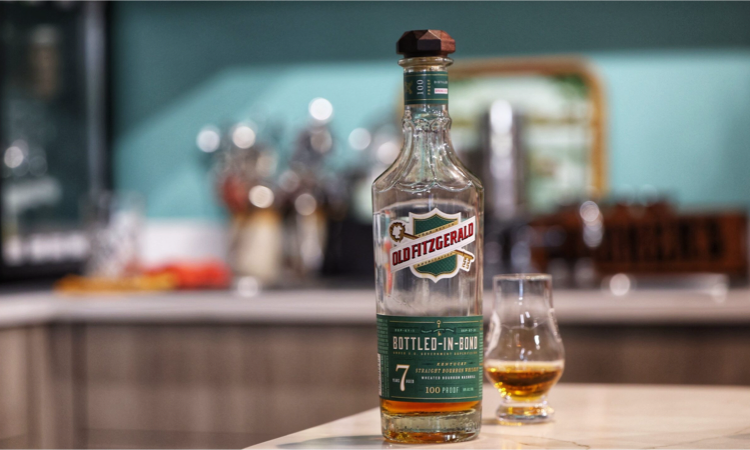
Recently, I found a bottle of Old Fitzgerald 7-year-old bottled-in-bond in my local store. This was a rare, and maybe even a unicorn bottle, until recently. That’s right. Can you hear the ominous music beginning to play?
To make matters worse, all this soft demand comes at a time when distillers’ costs are rising. There is a scarcity of new American Oak barrels from cooperages, which is driving up barrel prices. Ingredient costs are rising, and so are labor costs.
But hold on one minute. Distilleries like Buffalo Trace utilize careful planning for their production and maturation. Buffalo Trace produces Pappy Van Winkle, which is still carefully rationed.
One card the distillers have to play is to idle production. Jim Beam paused operations for all of 2026 at their flagship campus in Clermont, KY. But this isn’t likely to become a regular thing for major distillers.
Another card the distilleries play regularly is to distill “new make” or “white lightning” but then spread out maturation among their brands. At Heaven Hill, for example, they typically pull barrels at 4 to 7 years old. But they let those same barrels mature for more than 8 to 12 years, and it becomes a different spirit, which they brand as Elijah Craig. Furthermore, those long-aged barrels will be tested, and when they are absolutely perfect (10+ years old), they may become part of Parker’s Heritage brand.
And the ultra-aging statements are naturally gaining popularity. Before the 2020s, you rarely ever saw a bourbon over 12 years old. Sure, there were a few. Consumers generally labeled those older bourbons as “over oaked,” “tasted like licking a baseball bat.” Thus, the vast majority of bourbons were younger, and most were significantly younger than 12 years. Times are changing. To quote Nicole Austin, Diageo’s Director of American Whiskey Liquid Development & Capabilities, “just because YOU can’t create a great bourbon over 12 years old doesn’t mean that no one can create a great bourbon over 12 years old”. And now, to reduce the glut and control prices, distillers are aging their barrels longer.
This may beg the question of where in the python will the bulge grow biggest, that part of the aging in the 6 year, the 8, the 10, 15, 20. Somewhere in this supply chain we will see a bulge and prices will fall the most. Even now, we see more core offerings becoming widely available for around $24 to $40.
As an enthusiast eager to get my hands on those rare and unicorn bottles, I’m also curious as to how long it will take for the bulge to appear. There is a source named the Bourbon Brown Book that tracks and publishes secondary-market prices for rare bottles of bourbon. According to comparisons between the 2021 and 2024 editions, it is clear that prices are falling by about 9 to 11 percent. The 2026 version reported a sharper fall in secondary prices. It suggests that the hype is fading and prices may stabilize or even decline further, although gently. While the future is always unclear, it has not been fully revealed when the best bottles will drop into the MSRP range. But as consumers, we can be hopeful that we will see more great bourbons at reasonable prices.