WHY ANGEL’S ENVY IS A WHISKEY RULE-BREAKER
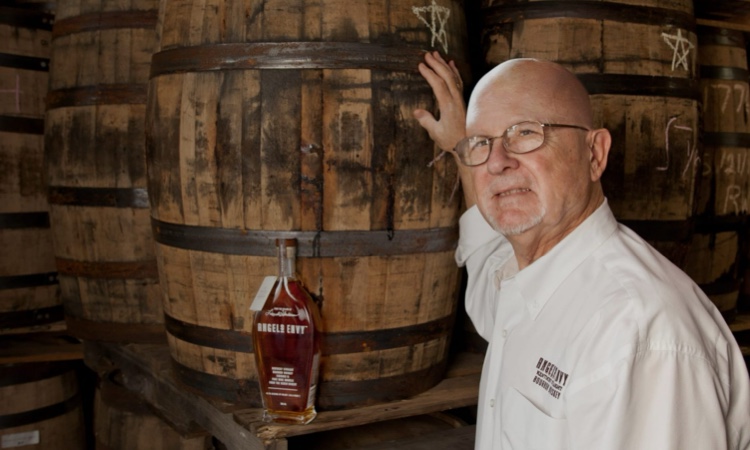
Lincoln Henderson, who founded Angel’s Envy, believed his whiskey was so good that the angels were envious of what was left behind. The angel’s share is whiskey lost to evaporation during aging. As master distiller, Owen Martin’s role is to keep earning that envy with every release.
Owen Martin grew up in Kansas City with a fascination for how small changes transform a finished product. Before he ever worked with a Kentucky mash bill, curiosity carried him from Kansas to Scotland and then to Colorado.
Why did whiskey appeal to him in the first place?
“I’ve always loved understanding how things are made and how small changes can completely transform a finished product,” Owen told me. “That led to a degree in mechanical engineering from the University of Kansas, and I eventually studied brewing and distilling at Heriot-Watt University in Edinburgh, Scotland.”
“I’ve been fortunate to learn from a lot of talented people throughout my career,” Owen told me. “Every distillery I’ve worked at has showed me something different, whether it’s fermentation, maturation, blending, cask finishing, sensory evaluation, or time in the cask. You can do everything right in production, but once the whiskey goes into a barrel, time becomes your partner.”
Rebellion in a Cask
Rule-breaking is brewed into Angel’s Envy’s origin story. The brand was one of the first in Kentucky bourbon to finish whiskey in a secondary cask, and many in the industry rejected the idea outright when it first appeared. Owen inherited that legacy and has spent his career pushing it further with every new release.
“Cask finishing means aging whiskey a second time, in a barrel that once held something else,” Owen explained. “By law, bourbon must first mature in new charred oak. Most bourbon stays in that same barrel until bottling. Angel’s Envy takes the whiskey out early and transfers it into a different cask, most famously one that previously held ruby port wine, for several more months.”
Port itself comes from Portugal; a fortified wine aged in wood for years before it ever reaches a barrel Angel’s Envy can use. Those staves soak up years of dark fruit, caramel, and spice from the wine, and bourbon pulls all of that back out during finishing. Pairing a Kentucky spirit with a European wine tradition was not a pairing many bourbon drinkers had seen before Angel’s Envy tried it.
“Aging whiskey twice, first in new charred oak, then in the port cask, gives the finished bourbon a layered character that a single barrel never could reach on its own,” Owen said.
“That second barrel adds notes of dried fruit, baking spice, and wine sweetness, on top of the vanilla and caramel bourbon already pulls from new oak. At the time Angel’s Envy started, almost no one in Kentucky bourbon touched their whiskey after that first barrel. Scotch and Irish whiskey makers had used the technique for decades. Bourbon had not.”
Every year spent in either barrel comes with a cost. Five percent of the whiskey evaporates annually—a loss distillers have long called the “angel’s share.” Owen’s team treats the extra time in a port cask as an investment rather than shrinkage on a spreadsheet.
“Uniqueness is central to the Angel’s Envy DNA, since we were one of the first in Kentucky bourbon to use a finishing cask,” Owen said. “It was radical at the time. In some circles, it was outright rejected. The industry has since come around to the idea.”
Subverting expectations, for the brand and for the industry, is the part of the job Owen enjoys most.
An Angel in Every Bottle
Angel’s Envy was founded in 2010, when renowned master distiller Lincoln Henderson was convinced to come out of retirement by his son. Henderson, who retired from Brown-Forman in 2004 after a nearly 40-year career, wanted to build something of his own.
Lincoln had spent nearly four decades at Brown-Forman, where he helped create Woodford Reserve and Gentleman Jack. Wes pulled him back into the business six years later, betting that his father’s long-held idea for port-finished bourbon deserved a real shot.
Angel’s Envy became the only project Lincoln built on his own terms. The Hendersons introduced the first bottle in 2011, and, well, enthusiasts and beginners loved the new spirit.
The name behind the brand carries its own bit of mischief. “Lincoln used to joke that after creating such a great whiskey, he’d earned his angel’s envy instead of the traditional angel’s share,” Owen said.
The angel’s share is a real part of the whiskey business. Every barrel loses a portion of its contents to evaporation each year, and distillers have called that loss the angel’s share for generations.
Lincoln built his father-son project around a different idea. After tasting the finished bourbon, he decided the whiskey left behind in the barrel had become the better half of the deal. The angels could keep their share, and he would keep his envy of what remained.
That small linguistic twist of became the brand’s identity. The name captured Angel Envy’s approach to whiskey, a mix of respect for tradition and a willingness to reframe it, and has helped build its identity on creating a new angle on an old craft.
Angel Envy’s integration of tradition and mischief remains the idea behind the brand. Every bottle carries a piece of the original fun inside it, proof that there seemingly is an angel in every bottle.
These Angels Don’t Watch the Clock
Age statements continue to be a hot topic across American whiskey,
“Age is important, but it’s only one part of the story,” Owen told me. “A whiskey is ready when the flavor is right, not simply because it has reached a certain mile marker.”
Barrels age slowly in the rickhouse, and Owen does not rush that process. “A slow and deliberate pace lets the whiskey pull flavor from the wood gradually, through seasonal temperature swings and small amounts of oxidation,” Owen explained. “Aging builds balance and depth that a shortcut can never completely copy”.
At Angel’s Envy, his team takes pride in the brand’s first age-stated bourbon, the 2025 Cask Strength Bourbon, and its first age-stated rye, a Cask Strength released in 2026 that spent a combined 10 years in new charred oak and Caribbean rum casks. Owen plans to keep using age statements as one more way to tell his whiskey’s story.
Owen also connects the age-statement trend to the broader growth happening across American whiskey. “American whiskey has experienced incredible growth in the past twenty years, and with that we’ve seen more craft distilleries emerge,” he said. “Many of them are making exciting expressions that represent their unique terroir and point of view.”
As those craft producers grow, Owen noted, and their inventory mature, it makes sense for brands to celebrate when their barrels hit a milestone like ten years. “Trends will come and go,” Owen said, “but drinkers will always be on the hunt for quality, and age statements are one way to show it.”
Making whiskey requires long-term thinking, and that’s how Owen approaches buyer trust as well. The angels have never needed a number to know when a whiskey is ready, and neither does he.
An Angel’s Real Job: Bringing People Together
“Whiskey is about bringing people together,” Owen said. “Every bottle represents years of hard work, but the real payoff happens after it’s opened, when it’s shared around dinner tables, at celebrations, or between friends.
“I do this because I enjoy creating something that becomes part of those moments. Plus, I like the way whiskey tastes, so that helps”.
“The best whiskey experiences are those enjoyed with good company, and anytime that is represented, I’m happy,” Owen said.
“Some of my favorite conversations are with other whiskey makers when they talk about inspiration,” he said. “Our stories often start with someone asking what’s in the glass, and twenty minutes later we’re talking about family, travel, sports, or any other part of life. Whiskey is often the reason people slow down enough to have those conversations in the first place.”
Storytelling plays a role in how Owen thinks about the brand. “Storytelling helps people connect with what’s in the bottle,” he said. “One of my favorites is how Angel’s Envy helped change the cultural conversation around cask finishing. What started as something relatively uncommon has become an important part of modern American whiskey, and it’s exciting to continue building on that legacy.”
Earning Your Wings
“American whiskey has historically been a reflection of the people who made it and the places they are from,” Owen said. “Whether it’s Kentucky bourbon, Tennessee whiskey, or American single malt, everyone contributes something different.”
The industry has changed quickly during Owen’s career. “Consumers are more curious than ever,” Owen said. “People want to understand mash bills, yeast strains, barrel finishes, warehouse locations, and fermentation, details that maybe weren’t part of the conversation ten or more years ago.”
“Whiskey plays a role as the national spirit,” Owen said. “I love that I learn something new every year, and that the industry keeps evolving as new people bring fresh ideas into it.”
No one earns their wings in the bourbon business overnight, Owen says to newcomers hoping to break in. What should young people who want a career in the spirits industry learn to get started?
“Learn every part of the process, Owen said. “That means distillation, maturation, blending, sensory analysis, and even hospitality.”
“Great whiskey is made by people who never stop learning, and the more time you spend in this industry, the more you realize there is always something new to learn.”
A Finish with the Cask
Owen Martin continues the Angel’s Envy unique contribution of building every release around cask finishing, an idea the industry once dismissed and now embraces.
So, is Angel’s Envy the envy of the whiskey gods?
Since every bottle carries a bit of rebellion inside it, and proves that great taste and breaking tradition are not opposites, I’d have to finish with a yes.
Find out more about the Whiskey Rule Breaker’s book and get your copy.