
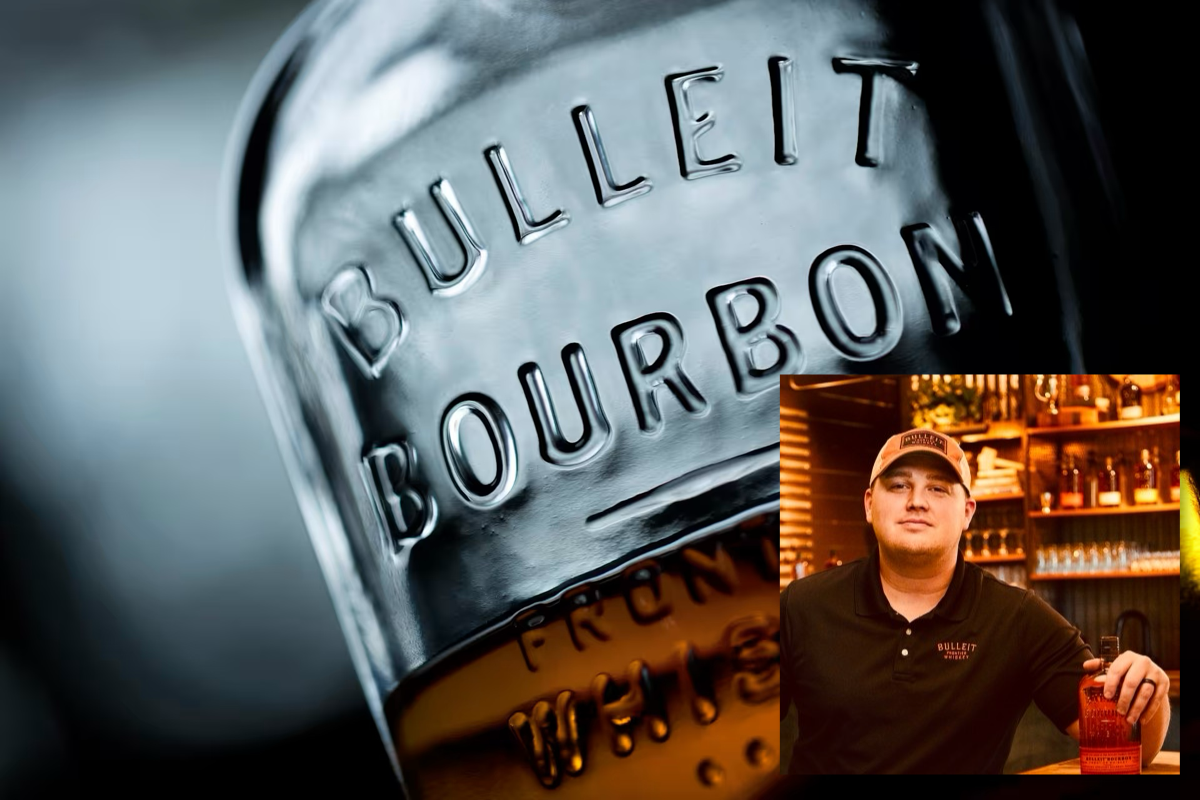
I recently had the pleasure of sitting down with Nathan Burkhead, the Maturation and Warehousing Manager at Bulleit Distilling Co., and let me tell you, this conversation changed how I think about modern whiskey making.
Nathan’s not a typical bourbon guy wearing coveralls and guessing at recipes. He’s part of a new generation that’s bringing Bulleit into the future while respecting the past.
Bulleit makes whiskey in Kentucky at two modern distilleries in Shelbyville and Lebanon, Kentucky. The company is famous for its high-rye Bulleit Frontier Whiskey, among other brands. Diageo, a large global alcohol company, owns Bulleit and provides investment and distribution support.
From Bathroom Cleaner to Bourbon Innovator
Nathan grew up in Kentucky, right in the heart of bourbon country. He had family members who were whiskey runners during Prohibition.
Nathan started at Jim Beam as a third-shift general helper, which meant cleaning bathrooms and doing whatever was needed to get his foot in the door. “I just wanted in, so I took whatever I could get,” he told me with a laugh.
He now manages millions of barrels of bourbon, working with master blenders and distillers, but he remembers where he started. He spent nearly eleven years working his way up through the industry before landing at Bulleit about four years ago.
The bourbon industry is changing, and companies like Diageo seek talented people who can bridge tradition and innovation.
This brings us to a key theme Nathan emphasized: balancing heritage and innovation as driving forces shaping Bulleit’s direction.
How Heritage Plus Tradition Equals New Direction
The company actively pushes for innovation. Nathan told me this was the first thing asked of him when he started. “Find a better way to do it.”
“Tradition is great,” Nathan said. “Tradition is what got bourbon to where it is. But the question now is, how do you make the industry grow for another century?”
Bulleit is constantly pushing out new ideas. They understand that tradition got bourbon to where it is. But tradition alone won’t carry it into the next century. The industry needs innovation, younger voices, new thinking, and precision technology, according to Nathan.
Bulleit isn’t disrespecting tradition; it’s proud of bourbon’s history. His own family includes whiskey runners from prohibition days. But he’s also committed to the idea that bourbon culture needs to evolve.
That’s what makes Bulleit stand out in a landscape of distilleries that compete on heritage and family history. Bulleit competes on heritage plus innovation, which means tradition plus technology, and respect for the past with an eye toward the future.
Technology That Looks Like a Refinery
Bulleit believes that technology is a prime ingredient of innovation. I’ve toured a bunch of distilleries, and walking into Bulleit or any modern Diageo facility feels like stepping into a different world. It’s not what I expected a bourbon distillery to be. Bulleit has 18 screens monitoring the still, mash containers, and the entire tank farm. About 98% of the operation is automated.
“We’re not wearing coveralls and batching in a back creek anymore,” Nathan said. He mentioned that his great-grandfather probably did exactly that. But today’s version of bourbon production looks like you walked into a gas refinery, not a historic distillery.
The still at Bulleit’s Shelbyville location runs 365 days a year at about 55 gallons per minute. It never shuts off. Nathan’s job is to keep the tanks empty so the still can keep running, filling roughly 50,000 to 60,000 barrels every year.
Is Bulleit’s automation and technology approach threatening traditional bourbon craftsmanship? No. Automation complements craftsmanship rather than replacing it, said Nathan. “Modern technology allows us to control variables precisely and ensure quality standards without relying on guesswork.”
Bulleit’s master blenders and distillers still make critical decisions about flavor profiles and product character. Technology simply removes the guesswork from fermentation, aging temperature, and production consistency while keeping human expertise central.
Stack Houses That Defy Warehouse Tradition
Stack houses are another ingredient of Bulleit’s innovative philosophy.
A stack house keeps the maturing process more controlled and consistent than a rickhouse. The temperature and humidity fluctuate more evenly across all the barrels. In a traditional rickhouse, barrels on the top floor experience more temperature variation than barrels on the bottom. In stack housing, you get more uniform conditions across the entire inventory.
“The first time I walked into a stack house, it was the city of barrels,” Nathan said. And he’s not exaggerating. These single-story warehouse-style buildings hold nearly 55,000 barrels each. The barrels stand upright, the bungholes at the top, stacked 36 barrels tall and 15 barrels deep in rows that stretch for hundreds of yards.
With stack houses, Bulleit can predict what its product will taste like seven years out with greater accuracy than in traditional warehouses. After aging, the product comes out more standardized, consistent, and knowable. It’s the opposite of how bourbon has always been stored.
While rickhouses are iconic, and often what people picture when they imagine Kentucky bourbon production. But stack houses are different.
A High-Rye Formula in a World of Corn
Another way Bulleit breaks tradition is its high-rye formula.
Most American bourbons lead with corn. But Bulleit chose the way of the rye. With rye, Nathan said, you get a characteristic spice at the finish without the harsh burn some rye-forward whiskeys deliver. It was a deliberate decision that positions Bulleit outside the mainstream bourbon conversation.
While other brands double down on heritage and centuries of corn-forward tradition, Bulleit said, “No, we’re going in another direction.”
A Younger Guard Leading the Way
Nathan himself represents a change. He’s relatively young for his position, and the master distiller at Bulleit, Courtney, is even younger than he is. Diageo is bringing in the next generation and letting them reshape how bourbon gets made.
That’s counter-revolutionary in an industry where you often find multi-generational family operations clinging to the exact same methods their grandfathers used. At Bulleit, youth is an asset, and new ideas are welcomed.
Experimentation is the default.
That’s not something you see at every distillery, where master distillers are often in their 70s or 80s, following in their grandfather’s footsteps. There’s nothing wrong with that tradition, but Bulleit is proving there’s another way.
Nathan said, “It’s not your grandfather’s bourbon
Five Most Asked Questions About Bulleit Whiskey
Why should I try Bulleit if I’m new to bourbon?
Bulleit’s high-rye profile creates a welcoming entry point for bourbon newcomers. It offers flavor notes that make neat sipping interesting without being overwhelming. The 10-year bourbon, whether you prefer it neat, on ice, or in a cocktail, especially delivers smooth character, vanilla, caramel, and subtle spice at an accessible price point.
What does “high-rye” mean in bourbon?
In bourbon production, “high-rye” refers to a mashbill where rye comprises a larger percentage than most traditional bourbons. Bulleit’s high-rye bourbon and especially its 95 percent rye expression deliver a spicier, more complex finish than corn-fed bourbons. The rye grain contributes spice, herbal, and floral notes that create a different drinking experience while maintaining smoothness and balance.
Are stack houses better than rickhouses?
Stack houses offer operational advantages over traditional rickhouses. They improve safety by using machinery instead of manual labor, and create more consistent maturation through even temperature and humidity distribution. However, “better” depends on your priorities. Stack houses deliver consistency and efficiency. Rickhouses offer historical authenticity and tourism appeal. Bulleit chose consistency and sustainability.
Why don’t all distilleries use stack houses if they’re more efficient?
Stack houses require significant capital investment in specialized equipment and building infrastructure. Many traditional distilleries also market rickhouse aging as part of their heritage story. Some master distillers also prefer the flavor variation that comes from rickhouse aging.
What happens to barrels after they’re used for bourbon?
By law, bourbon must be aged in new charred oak barrels, which can be used only once for bourbon production. Most are sold to Scotch whisky distilleries, where they’re prized for aging single malts. Others go to rum producers, tequila makers, craft beer breweries, or even hot sauce and maple syrup producers. Some are repurposed into furniture or decorative items.
Closing Call: Bulleit’s Bold Blend of Heritage and Innovation
Will the younger generation keep drinking whiskey? Nathan thinks the answer lies in meeting people where they are.
The industry has to adapt. As Nathan put it, “Tradition is great, and tradition is what drove this industry to where it is. We’re pushing to make this industry sustainable for the next 100 years.”
Nathan believes bourbon will always have its place, but that place needs to expand beyond the traditional neat pour. Bulleit is expanding into premade cocktails, ready-to-drink products, and working extensively with bartenders to showcase what bourbon can do in mixed drinks.
Shoot over to their website at Bulleit Frontier Whiskey for all things Bulleit, including tours, tastings, and history.
See our full podcast with Nathan Burkhead of Bulleit Distillery Co. at whiskeyshenanigans.com. And for more conversations with fascinating people in the whiskey world, check us out on Instagram @whiskeyshaniganspodcast