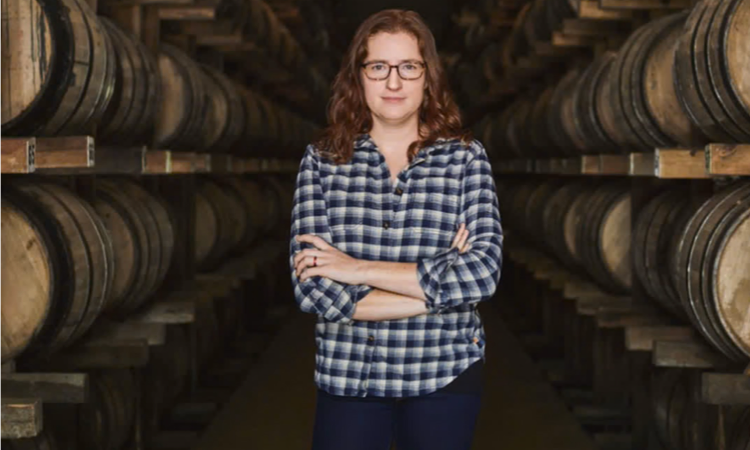
Nicole Austin left a dead-end engineering job in New York City’s sewers for a career in the spirits industry. In this episode, hear how she is now using chemistry to perfect ultra-aged bourbon with Diageo’s Blade & Bow brand.
 Apple Podcasts
 Amazon Music
 Spotify
 YouTube
Transcript
Randy Warren (00:06):
Welcome to Whiskey Shenanigans. I’m your host, Randy Warren. Whiskey Shenanigans, where we help our listeners experience the world of whiskey, every aspect of life, as if it was accompanied by a glass of bourbon. The sports world on whiskey, basically every part of life on whiskey. Whiskey Shenanigans is about getting exclusive interviews from Bourbon Row in Kentucky, where we can learn about the secrets that make our favorite bourbons unique. We will get inside the hearts and minds of many distillers and help you understand what and how they are achieving it. Whiskey Shenanigans is about going beyond boring podcasts featuring just tastings. Heck, when do you get out of that anyway? It’s about bringing on guests and experiencing the entire world through whiskey. But be warned, if you’re diving in and you want to participate in these riveting discussions, you will need to grab a glass or a dram and be prepared to be entertained.
(01:10):
Hello again, Whiskey Shenanigans fans. Here we are today with Nicole Austin of Diageo, and we are just so excited and very grateful to have Nicole on the program today. And welcome, Nicole.
Nicole Austin (01:24):
Thank you so much for having me. I’m excited.
Randy Warren (01:28):
It’s a pleasure. It’s a pleasure. So I thought we might start with a little bit about you so that our listeners can get to know you. How did you get going in this industry and how did you lead up? Tell them what you do now and how’d you get there?
Nicole Austin (01:46):
Yeah, it’s been a windy path. So my title now is Director of American Whiskey Liquid Capabilities and Development. What does that mean? Nobody knows, whatever I want it to mean. And my boss, but it’s reflective of, I have a pretty wide range of the types of projects that I work on now. So it’s not just Dickel and Cascade Hollow anymore. I’m involved with all of our American whiskey brands to a varying degree, which is pretty fun and exciting for me. It’s a very, very big playground to. It is. How did I get to here was in high school, I was very good at math and I was very good at science, which doesn’t sound like a problem, but I just desperately wanted to be good at art and music. All of my cool friends were good at art and music and I wanted to be as cool as them, but I was just a math nerd and no matter what I did, I couldn’t help it.
(02:55):
And so this for me is as close as I can come being good mostly at math to making art. And I think that’s what really brought me and drove me to whiskey. Unfortunately, no one mentions that as a potential career path when you’re in high school and in college, it’s not brought up. So I went to school to study chemical engineering because that’s what I was good at, chemistry and math. My guidance counselor very strongly implied, actually I believe outright stated that she didn’t believe I had the discipline to become a chemical engineer. And being the very defiant teenager that I was, I was like, “I’ll show you.” I think she might have just been really good at reverse psychology. She just bullied me into being like, “No, I’m going to be the best chemical engineer ever,”
(03:49):
And got me through a very difficult degree. And then I went into environmental engineering, which I thought would be very feel good, save the planet. I though I was going to really enjoy that. And then I learned pretty quickly that in New York City, environmental engineering is mainly wastewater treatment. And so I found myself being lowered into the New York City sewers and a Tyvek snoop. I was like, “Oh, I just made a wrong turn somewhere.” Not exactly living the dream, although I give great tours and I do have a favorite wastewater treatment plant in New York City. And every time on law and order, they find a body in the sewers. I’m like, “Oh, I’ve been there. I know where that is.” Oh man. Information that
Randy Warren (04:40):
Nobody knew it was.
Nicole Austin (04:41):
It’s a very insider view of the city for sure. But that was not speaking to me. And it was around that time that it occurred to me that my chemical engineering skills could be applied to whiskey. So I was actually in a bar being given a really impassioned discussion of whiskey by a really knowledgeable bartender. And he said how this particular whiskey was distilled. I set a real light bulb moment of like, oh, I went to school to learn how to distill things in the concept of jet fuel and it didn’t occur to me that I could use that same skill to make whiskey. So as soon as I heard that, I was like, “This is it. This is what I want to do.” It took a few more years to actually get into the industry. So the way I came in was through Kings County Distillery.
(05:34):
So they were the first distillery to be licensed in New York City post-prohibition, and that was the summer of 2010. So I’ve been in the business for 16 years now. I was their master blender from 2010 to 2016, but I still kept my day job. Our five, five gallon stills, we’re not paying anybody’s Brooklyn rents. And the way I became a full-time distiller was actually through Dave Pickrell hiring me, which was an incredible moment. He’s so knowledgeable. And so I got to really ride alongside him and help him be the Johnny Appleseed of crap distilleries all over the US. So that was an incredible real knowledge gain sort of masterclass in American distilling. And then I moved to Ireland. So I moved to Ireland in 2016 to be the commissioning engineer for Telemore Duke. I lived there from 2016 to 2018. I was living in Ireland when Diageo recruited me.
(06:38):
So in 2018, I moved to Tennessee to become the general manager and distiller, Cascade Hello Distillico. And I’ve been with Diageo ever since.
Randy Warren (06:47):
Nice. Nice. That is fantastic. All of a sudden we’re getting a little echo on me. Now it’s better. It just stopped. That’s amazing.
Nicole Austin (06:58):
I didn’t hear it.
Randy Warren (07:01):
So you mentioned that you’re in charge of American whiskey and that I don’t know that everybody who listens knows that Diageo has all these brands.
Nicole Austin (07:11):
Yeah. I work to varying degrees. So I am very involved obviously still with Dickel and all the brands out of Cascade Hollow. And then I work quite a bit on Blade & Bow now and things out of Stitzel Weller Distillery. That’s been a lot of my recent focus. And then a little bit I’m starting to get involved on Bullet and also I.W. Harper, which is an exciting little sort of auction forgotten historic brand that we have. So yeah, we have all of those American whiskeys.
Randy Warren (07:50):
Yeah. I mean, Rowe and Company, Orphan Barrel? The
Nicole Austin (07:53):
Rowe was Irish. I don’t really touch that one. Orphan, I don’t really get involved in. Also obviously Balcones is American Whiskey, but they have very much. I’m in a supporting role sometimes to help those folks navigate the waters of Diageo, but they’re pretty capable without me.
Randy Warren (08:12):
So tell everybody a little bit about Stitzel Weller. That’s a pretty good story.
Nicole Austin (08:17):
Stitzel Weller is an incredible place. I mean, as soon as my aperture was expanded a bit beyond Cascade Hollow, that was very much the first place I ran to. I was just so curious about it and has such a legend when it comes to American whiskey and the history of bourbon. And I was really curious to start to try and separate fact from fiction, tease apart what’s myth and what’s real and could I get to the bottom of what makes this place so special, which is really, it’s a futile effort because that’s the thing about whiskey. It’s a bit magic. It’s mostly magic.
(09:07):
And I’ve said that for years, I’ve acknowledged that, I’ve said that to people that I used to think this was 80% science and 20% art. And I now know that it’s the opposite, but still somehow I couldn’t help reverting to my engineer self when I first came to Stitzel. And it’s like, where is it? There must be some valve or a yeah strain or something somewhere that made this place so special and where is the secret? So I was just pretty curious and I’ve spent the last few years really digging into that, working on that. And also I was lucky enough to work with my good friend Nal Rothbaum, who’s a historian in whiskey. And he really helped me with what I consider to be the boring part of listening to hours and hours and reading through libraries. But thankfully he’s very intrigued at and very good at to help me in this process.
(10:03):
Sitzel, it’s a wild place. It really goes back pre-prohibition to the Stitzel family, which they were immigrants and they came over with already some distilling knowledge and with the intention to settle here and start distilling. And they started partnering with the Weller family. So this is a little bit kind of unknown piece, but the Stitzels were actually the producers and the Weller family were distributors and salespeople. So very common in that time, pre-prohibition all the way up into the 50s for American Whiskey brands to be more based on the sales side. So a distributor would own a brand or an individual retailer would own their own brand and then they’d go to these distilleries to supply their whiskey, but maybe no one knew the name of the distillery. That was not what they knew. So the Weller company goes to Stitzel to source whiskey and pre-Prohibition, they were working together quite a bit.
(11:03):
And then when Prohibition hit, Stitzel was one of the only families that retained a license to be able to distill. And so they sort of survived through Prohibition together and then made a deal during that time to join forces. So that’s when it became Stitzel Weller. And that distillery was the first to reopen post-prohibition and that was Derby Day of 1935. So it’s been Stitzel Weller Distillery since then. And there was a lot of really, I almost thought of it as a very crafty, artisanal, precious distillery. And one of the things that struck me the most is that that’s not its history at all. They almost were more of the MGP of their time. They were massive suppliers. When they installed their column still, it was the biggest in the country. They were scale suppliers of really high quality whiskey and they were sort of the place to go if you wanted to start a whiskey brand or buy whiskey futures, which was very common at that time, you sort of bought it when it was distilled and then it was your barrel.
(12:16):
They were the place to go and they were also the place to go if you were starting a distillery, say in the 50s or the 60s or the 80s and you needed advice, you needed to go to people who knew. And I really like that about that place. I like how much it’s touched so many brands and so many companies today. There’s brands that came out of Stitzel Weller Distillery that are owned by Sazerac and Heaven Hill and so many other folks. And I like that. It’s like a stewardship almost of a piece of history, almost a museum more than it is a physical working distillery. And it’s a big option.
Randy Warren (12:56):
And today it wasn’t still that much product. No.
Nicole Austin (12:58):
Again, we have a tiny little kind of research R&D type still and it also distills a small component of Blade & Bow. I have expanded that production facility, but it’s kind of funny. It’s more on the craft scale still. I’ve quadrupled the production from almost nothing to slightly less than almost nothing. We’re not exactly coming for Jack Daniels.
Randy Warren (13:28):
But I though it was pretty cool. Print me a bottle of Blade & Bow and I just want to tell people what’s on it. First of all, there’s a key that you open the bottle with the key, which is pretty cool, first of all. And it says on the back that the five keys of Blade & Bow once hung on the front door of Stitzel Weller Distillery. Heavy brass keys represent the five steps of crafting bourbon and symbolize the art of making the world’s finest whiskeys. So I thought that was really cool. And I thought, ooh, the five steps, if I had to boil it down to five steps, what would those five steps be because there’s a lot to it. I mean, we could be talking about yeast strains. We could be talking about all kinds of things. I’m like, well, the mash, the fermentation, the sting.
Nicole Austin (14:16):
Fermentation, distillation, maturation, and of course blending.
(14:24):
I think it’s a very common, maybe in the conversation about American whiskey, mashing and fermentation tends to get a really outsized part of the conversation. You talk a lot about mash bills, yeast strains. I think as a distiller, my point of view is that it has evolved over time to place less importance on what happens in the distillery itself. It’s a place that you can definitely get things wrong. You can absolutely make mistakes. That’s where you make good or bad whiskey. But I think the distinction between good and great really happens on the maturation and blending side. It’s that stewardship of the barrels, which barrels you put your whiskey in, where you put them, what AVV you put it in and how you treat those barrels and then which barrels you select to make your final project can just have a huge impact on whether something is truly great.
Randy Warren (15:27):
Absolutely. We did a podcast where we showed everybody a bottle of new make, just the white lightning. And then it’s like, okay, and then that eventually turns into this, which is just –
Nicole Austin (15:39):
They’re almost unrecognizable, the difference. And all of the raw materials are in there, definitely that distillate can be good or bad. It’s not neutral. It has a lot of character in whiskey by definition, but there’s also quite a bit of flavor development. I would say the majority of the flavor development that happens in that interaction of wood and spirit and time and oxygen.
Randy Warren (16:07):
Yeah, absolutely. And the master distillers tend to taste the new make, right? That’s kind of what they’re doing. They’re making the new make and then they’re sort of handing it off to maturation and saying, okay, now give this four years, give this six years, give this 10, 12, 20, whatever.
Nicole Austin (16:30):
It really varies from company to company. Master distiller is a term that doesn’t mean anything really. Every company uses it a little bit differently. So in some companies it’s as you described, the master distiller is in charge of the distillery and there’s a master blender who handles it afterwards. I would say that’s more common in scotch whiskey. But then in US whiskey and in a lot of other global whiskeys, I don’t call myself a master distiller really. I’ll sit across the whole thing. I’m doing the blending, I’m looking after maturation. I’m also making decisions about what types of bottles I want to go into, how I want the product to be presented and marketed. When you come out of craft, you’re end to end. I was also the master of toilet scrubbing. So you don’t distinguish in the same way. And I think it’s not as common to distinguish in the same way in American whiskey that folks tend to work across more pieces of it.
Randy Warren (17:44):
Right. Absolutely. It’s very interesting and it is definitely an art and a science. I came out of the finance industry and that’s definitely, everybody’s like, “Oh, it’s just numbers.” Well, for you, it’s just –
Nicole Austin (17:57):
There’s a bit of art on that side too, and I am deeply appreciative of the artists in my finance department.
Randy Warren (18:03):
Absolutely. And there’s the knowledge that gets passed down from people who know how to do it. And anybody can do it, right? Anybody can distill whiskey. Doesn’t make it good.
Nicole Austin (18:16):
That’s right.
Randy Warren (18:17):
Anybody can make a portfolio that doesn’t make it good. And then what do you do with it once you’ve made it? How do you mature it? How do you harvest it? Everything that goes into that.
Nicole Austin (18:30):
And look after the whole business because there’s nothing. It can’t only be about my personal dreams and wants. Whiskey is a funny business of time where the whiskey I’m blending with today was laid down many, many years ago and the whiskey that we’re laying down today is going to be relevant to products made many, many years from now. And so you’re always sort of working inside constraints that are never optimized. You never have the right amount of whiskey. That’s not a thing. You always have too much or too little of the thing that you need. So it’s always a bit of a balancing act and you have to learn how to manage all of
Randy Warren (19:13):
That. Absolutely. So because it’s art and it’s science and there’s a lot that goes into this craft and it’s a very traditional industry, but I mean, you’re breaking rules as you are just because you’re a woman in this industry. It wasn’t common at all in the past. Now it’s becoming very much more common, right?
Nicole Austin (19:38):
Women have always been a part of distilling. I mean, distilling actually originated really with women. I think the time period of our lifetimes saw a shift from, if not really the people who were physically in the distillery, at least the folks that we saw, the folks that we saw on maybe billboards or heard their names or their names were on a bottle or mostly men. But that was really kind of a blip if you look at the full history of distilling. Women have been a really big part of this industry for a very long time. I think specifically of Cascade Hollow, people used to ask me, “Oh, am I the first woman to run this place?” Actually, no. Augusta Dickel, after George died, in the early 1900s was looking after this place. Not only am I not the first person, I’m not the first person by 150 years, the first woman.
(20:30):
So I think that’s a misconception, I think. It’s just you’re seeing us out more.
Randy Warren (20:39):
Yeah. Yeah. And so I mean, we’re writing a book called Whiskey Rule Breakers. So what’s the most rule-breaking kind of thing that you’ve done? I mean, maybe you decided to try an experiment and take a barrel and put it in Mount Everest or something and let it sit there for 30 years in the ice cold and see what happens when it comes back. I keep bringing that up. Nobody’s picking me up on it so far, but.
Nicole Austin (21:14):
I mean, if you want to hike a 500 pound barrel off there, I think I’d be happy to donate one. I think most rule breaking. So two things, a couple things come to mind.
(21:31):
One from my Kings County days, I remember Colin coming back from a visit to Mass Brothers, the Chocotiers with a bunch of cocoa husks and was like, “We should distill these and we should distill these.” I’m like, “You can’t because there’s no sugar, so there’s nothing to ferment, but maybe we can infuse them.” So put a bunch of cocoa husks into some white whiskey and made this really almost a Morrow-like cocoa-y chocolate whiskey basically, which is just, I mean, highly irreverent. And it was actually really good. And this is going back, I think it was 2011 or 2012 or something like that. Then the other thing that really comes top of mind is I partnered with Social Hour and Tom Macy, which is an incredible RTD canned drinks company, but he comes out of the cocktail tradition. So he’s partnered with Julie Reiner, who is a legend, and he came out of Clover Club and they make really craft cocktail quality canned drinks.
(22:44):
And so I worked with him to make a canned cocktail, so a whiskey sour and a can from my 13-year-old bottled in bond. So I put 13-year-old whiskey into a canned cocktail, which was also, I think, pretty irreverent, pretty rule breaky, pretty different. But my thought is good ingredients make good cocktails. And especially at that time, I could really taste in a lot of them that it was
(23:11):
Not good whiskey. So that was, I think, pretty defiant, pretty rule breaky. And then obviously everything I did with Kuski Moon, I think that was my little kind of fun brand for my more odd or perhaps defiant releases. I can think of one in particular when everyone was obsessed with hazmat and kept always asking me which single barrels were the highest proof and that’s the one they wanted. And it got me a bit annoyed. I was like, “Do you want to maybe nose them? Do you want to pick the one you like the best? No.” And so I released a 15-year-old cast strength, but the funny joke was that it wasn’t whiskey because the caste strength was under 80 proof. So it was sort of playing with people’s expectations around around age and proof. So yeah, I can be a bit. I guess I’ve not lost the high school rebelliousness entirely, even though I am kind of a bougie suburbanite now.
Randy Warren (24:12):
Well, that is kind of fun. So are you still in Tennessee? Are you in
Nicole Austin (24:16):
Kentucky? I live in Kentucky now.
Randy Warren (24:18):
Okay. So you’re in Kentucky. So I happen to be in Hilton Head today, but yeah, I’m coming to Bourbon Fest, so that’s at least the –
Nicole Austin (24:27):
Wonderful.
Randy Warren (24:29):
I might be there earlier than Bourbon Fest, but I’m definitely coming to Bourbon Fest. But anyway, what about American culture, right? So whiskey is really important in American culture. I mean, we’ve seen whiskey in The Godfather, we’ve seen Whiskey in all kinds of shows like Mad Men, all kinds of things like that, and it kind of grown up with America. And so what are your thoughts on the culture and how Whiskey is changing it or interacting with it?
Nicole Austin (25:01):
I think that’s something I really love about American Whiskey is that it’s a productive place. It has to be made here. And so that’s, I think, really has always spoken to me. I find that just really interesting. It’s a type of manufacturing that really can’t be moved elsewhere, and it’s very much a product of the raw materials and the environment that it comes from. And it’s one of the few. Whiskey culture and cocktail culture are some of the few uniquely American culinary creations. So much else of what we have is borrowed and sort of evolved from an immigrant culture that came here and brought their food and their drink and it sort of evolved into something today. Whereas our style of whiskey making is really unique to this place, especially the new barrels, that’s not something that’s common in other global whiskey cultures and obviously our really heavy use of corn.
(26:04):
There’s a lot of things and rye that make American whiskey quite distinct. And so I kind of love that. It’s a product of this place and it’s a part of the history of this country. I find it very meaningful.
Randy Warren (26:22):
Yeah. I’ve been to Scotland a few times and I’m not sure that I can recall anybody ever offering me scotch in a cocktail.
Nicole Austin (26:30):
I mean, of course there’s some famous scotch cocktails and I love a high ball. They’ll certainly drink it in a high ball and that’s delicious. But crash cocktail culture, Julips and Manhattans and old fashions and the originals, those are mostly American creations. And I think that’s pretty interesting, especially considering how global all those two things have become.
Randy Warren (26:53):
Yeah. Speaking of Skyland, what do you think of the whole single malt, like American single malt? I mean, that seems
Nicole Austin (26:59):
To – I’m so thrilled. I’m so thrilled.
Randy Warren (27:02):
Okay. Tell me.
Nicole Austin (27:03):
I love it. I mean, those folks have worked so hard. I used to co-chair the legislative committee for the American Craft Spirits Association. And so I know exactly how much work it takes to get the code of federal regulations to change. And all those folks really got together and put in the work to make that happen. And I know personally from having swam in it, both in my role as president of New York State Distillers Guild and then also on the board of the American Craft Spirits Association, getting a bunch of craft distillers to agree on something and to come together in service of all is not an easy organizational feat. So I’m just so happy for them. They spent so much time, so much effort, so many years to making this possible. I think it’s pretty incredible what they’ve accomplished. So I hope the rest of the world appreciates it, but I respect it very much.
Randy Warren (28:05):
And are you involved in any of the making of any of these single malts or is Diageo involved in any of these single malts?
Nicole Austin (28:11):
There is. Yeah, of course Balcones. Obviously Balcones is one of the godfathers of American single malt. They’ve been making it for quite a long time. I think one of the most respected American single malts really exemplifying unique Texas terroir, which is I think what’s fun about American single malt. It’s not just scotch whiskey made somewhere else, but it’s our expression of a single malt whiskey, and I think Balcones really exemplifies that. And then of course Bullet released one as well, but I haven’t made either of those, but I’ve been very supportive like, “Yes, I want to drink that. Please make more of it.” That’s the extent of my involvement in those.
Randy Warren (28:54):
I’ll say it for the first time on here. Bullet sent me a bottle of that and it was fantastic. A little bit smokey, a little bit peaty, but still light and floral and really just a really nice drinking bottle. I was like, “This stuff is going to fly off the shelves.” It’s really nice. It’s a very big. People probably don’t know, but Bullet is owned by Diageo, right? Yes.
Nicole Austin (29:25):
Yep.
Randy Warren (29:26):
Yeah. Fantastic. So what about storytelling? I mean, in the brands that you’re associated with like Bladen Bow or whatever, we did a little bit of a storytell when we were talking about the history and the five keys and stuff like that. What’s your favorite story? You’ve been in this industry for 16 years, like you said. What’s your favorite story and how does it just play out?
Nicole Austin (29:54):
My favorite story, I think the story of George Washington and Mount Vernon is one that I always really enjoyed and felt very connected to. I was working with Dave Pickel. We did some distilling there, which was just an incredible honor. I didn’t know until I started working on that project that George Washington was a distiller. I though it was pretty interesting, the history, the way they’ve preserved it, and just feeling that connection to that American whiskey tradition that you were talking about earlier and running that distillery. The folks there have such a deep commitment to historical accuracy and they’ve really preserved not just the documents and the style, but actually the physical craftsmanship, the type of joints and the type of wealth to be period appropriate. So I thought that was really interesting. And there were a couple stories from that that stuck with me.
(30:55):
One of them was, of course, it was a bit scandalous to recreate a distillery and to acknowledge that one of our founding fathers was a distiller, especially prohibition and post-prohibition. Distilling had such this gangsterism association, this leftover from the Tommy Gunn days of. And there was a good story where the state of Virginia, when they were tunneling for an electrical project, went through this area where the distillery was, and we’re initially trying to cover it up like, “Oh, sweep it under the rug. We won’t talk about that part of our nation’s history.” And then there was a historian who spoke us and was like, “No, no, this is a piece of history and we need to preserve it.” But we almost lost that bit of our history and tradition. I think it’s emblematic of what we still have to restore as an industry here. Prohibition was a long time ago, but we’re still feeling the effects in terms of just the variety of what we have available.
(32:13):
The industry really tightened up and became a little more monotone. Bourbon became more one thing. And so that’s something that really excites me about craft whiskey. I think it’s restoring some of the diversity and regionality that American whiskey once had. And that really came front of mind to me when I was working there.You could see it, you could smell it, you could taste it, you can understand why he made the whiskey he made. And it’s not that different than how we make whiskey today. And that felt pretty exciting.
Randy Warren (32:45):
Right. That’s awesome. Yeah. I’ve interviewed a lot of craft distillers on this show over the years, or not years, 18 months that we’ve been at it. And yeah, they all have an interesting story. They all try to use mostly local flavors of grains and things like that. And some of that I think is really good. I won’t say which one, but I did run into one that was like, we just can’t get good corn here. So we get our corn from Iowa or Indiana or some Kentucky, someplace like that because the corn just isn’t as good or as sweet and the flavors. But then all the rest of it was all their own local grains and everything like that and their own distilling and their own maturation and they really do a nice job.
Nicole Austin (33:40):
Yeah. I mean, I came out of craft. I think there’s some beautiful whiskeys coming out of that space.
Randy Warren (33:47):
Yeah. And so what about Diageo? What are some of the key things that make Diageo Diageo?
Nicole Austin (33:58):
There’s things that I really like. When I started in the craft side, I never pictured myself coming to work for one of the big corporations, one of the big companies. I thought small craft distilleries would align most closely with my personal values and ethics. And there were things that I did quite like about them. There’s close relationships with your suppliers, close relationships with the whiskey itself, the feel, the taste, the smell, every detail of what’s going on there. But it wasn’t as actually artistically freeing as I had maybe imagined. On the one hand, you have a lower barrier for what you want to accomplish. At a small craft distillery, you can test something out that’s maybe only a couple of cases and you have marines to do that. So you can be a little wild, you can make a cocoa husk infused whiskey, but also you’re constrained by the reality of the economics of a small business.
(34:58):
A lot of times you have to make decisions to make sure your employees get paid that month. And that’s frankly more important than anything creatively or artistically that I might want to accomplish. And certainly the complete and utter lack of HR or compliance or safety or any of those things that I actually find quite meaningful. The way employees are treated, the way vendors are treated, a lot of those things actually didn’t sit as closely to my sense of ethics as I had maybe imagined. And I find working at a company like Diageo,
(35:41):
We’re publicly traded, so we’re incredibly open, incredibly compliant. Risk management is a huge part of every decision. And as much as that can be a little bit annoying and bureaucratic, I also am glad that our employees are safe and that people are not getting harassed and they’re getting paid fairly. I like all of those things and they’re frankly probably more important. So I like that piece and because –
Randy Warren (36:12):
They’re giving you the freedom.
Nicole Austin (36:13):
They are because the company’s so big. What I do is frankly lynch in their couch. They let me do largely what I want to do. And that is incredibly freeing as a creator.
Randy Warren (36:27):
That’s amazing that you get to bring that creative side. So what did you think about, there’s a lot of talk these days about ultra aging and there’s a lot of barrels that got, a lot of capacity got increased during the COVID years and now these barrels are going to sit longer and longer and longer and you’re starting to see 12, 15, 20 year old expressions. I mean, what do you think of that trend?
Nicole Austin (36:53):
I mean, I like to think I’m part of making that trend happen. I think I am at the front of that trend with Blade Beau 30 year old, Stitzel Reserve 24 year old, Stitzel Reserve now 31 year old. So I’m certainly pushing the envelope on ultra aging, not the only one, but certainly one of. And I think what enables me to do that is the construction of the rick houses at Stitzel Weller Distillery. We talked earlier about me really trying to get under what makes that place special. And the more time I spend there, the more I think it is the structure and construction of those rick houses. They’re patented by Frederick Schitzel, lots of windows, lots of airflow, very roomy and not tightly packed. And I think that helps preserve the physical integrity of the barrel. So it helps protect the integrity of the barrel that allows me to reach what I think previously common knowledge and bourbon would’ve said it’s impossible.
(37:50):
Or at least if it is possible that the whiskey would not be worth drinking, that if there was anything left after 30 years that it would taste like chewing on a baseball bat looking wood. Of course, it’s one of my personal favorite things and people on the internet tell me what they assume my whiskey tastes like without ever having actually tasted it.That’s another thing I really love and enjoy. But I think Sitzl’s special and obviously if I took all of our 31-year-old whiskey and dumped it, it would taste exactly like you would expect. But really with some careful blending and selection, you can kind of skim off the cream and there’s some lovely, lovely stuff there. And I think it’s exciting. The Blade Bow 30 year old does not drink that age. I think people are continuously surprised, but some of the older stuff, if you like it, it’s really interesting.
(38:38):
It’s really cool. Not everyone’s going to love it. That’s fine. There’s not that much of it. So if everyone loved it, that would actually be a problem for me. I only have 176 bottles of 31 year old, so that’s how many people can love it. And after that,
(38:54):
There’s nothing left. And I think you’re talking about COVID, so that’s ultra aging, but in general, I’m excited about the return of age statements, even if those more modest kind of six, seven, eight, 10, 12 year old age ranges. A lot of people who are whiskey enthusiasts today don’t remember, and this is going to be a real, I’m old kind of in my day statement, but pre-Bourbon Boom, those were the kind of standard ages for American Whiskey. And obviously when demand outpaced supply, folks were forced to de-age, to meet demand. So I see this as a return to the state of American whiskey that made everyone fall in love with it in the first place. And I think it’s going to really benefit everybody.
Randy Warren (39:43):
Yeah, for sure. I mean, I’ve had people tell me that, oh, anything more than 12 years, it’s going to be overoaked. It’s not going to taste good.
Nicole Austin (39:50):
No, I love that. I love when people who don’t make whiskey tell me how to make good whiskey. That’s one of my favorite things. Yes, you were like that.
Randy Warren (39:59):
Well, it goes back to the art and the science. I mean, you just don’t read it out of a cookbook.
Speaker 3 (40:05):
You
Randy Warren (40:05):
Don’t. This takes some thought and every little tweak that you make, whether it’s a temperature tweak or the heads, hearts and tail, cut it off. So
Nicole Austin (40:18):
Many.
Randy Warren (40:20):
There’s so many different things that you can do to change the character or the taste or make it more floral, make it more spicy, make it more this, make it more. So it’s incredible. 31 years. I mean, wow. I mean, do you have to put it in a freezer for a while or?
Nicole Austin (40:38):
Don’t. It’ll flock. It’s very oily. It’s very, very oily. No, it’s incredible. It’s a funny one. One of my favorite phrases from when I was in craft facility, I remember when folks were talking about small barrels and they’re like, “You can’t make good whiskey in small barrels. 53s are somehow a magical size that makes perfect whiskey, and it definitely has nothing to do with them being standardized and the cheapest to produce.” Sure, okay. But sure. But I used to always say, “Just because you can’t doesn’t mean no one can.” Just because you can’t make a good whiskey over 12 years old doesn’t mean that no one can make a good whiskey over 12 years old. And I love to be surprised. I remember being a judge at an American Craft Spirits Association, spirits judging, and I used to say, “You can’t make a good hopped whiskey.
(41:36):
They don’t taste good.” There was a period where that was really trendy and there was a submission that was a hopp whiskey that was gorgeous. And I love being proven wrong in that way. I love someone showing me the same thing that I said to others. Just because you can’t doesn’t mean no one can. I love that.
Randy Warren (41:54):
That’s fantastic. So you are a real rule breaker. I mean, really when it comes down to it, I mean, you’re doing a lot of interesting things.
Nicole Austin (42:03):
Yeah. I don’t think of myself as a rule breaker. I think of it as having reverence for just good whiskey, right? Yeah. And isn’t that what the rules are supposed to be about?
Randy Warren (42:17):
Yeah. Producing the very, very best you can ever produce. And then this is the blade bow and it’s like –
Nicole Austin (42:25):
It’s a lovely whiskey, right? Very drinkable, very sipable, fair balance. What’s a bourbon supposed to be?
Randy Warren (42:34):
When I first opened it, I was like, okay, not as much of the vanilla and caramel as I expected, more of the chocolate covered cherries. I even got a little, I’m like, is that a little mint I’m smelling? But definitely dried
Nicole Austin (42:49):
Cherry. One of my few kind of blind spots as a blender. That spearminty smell, which actually is especially common in rye, but it shows up in a lot of whiskeys. It really takes a lot of it for me to be able to smell it, which is one of the reasons I often work with others to check and see what they knows and taste because everyone’s a little bit different.
Randy Warren (43:14):
Yeah. Fantastic. So I thought this was a fantastic bottle of whiskey and I’m enjoying very much.
Nicole Austin (43:26):
I’m glad you’re using it.
Randy Warren (43:28):
I don’t keep them all in a case behind me.
Nicole Austin (43:37):
It’s not a museum. Yes.
Randy Warren (43:39):
We’re drinking. Exactly. Well, thank you very much, Nicole. Thank you for being on the show today and helping us to understand more about Diageo and more about Bladen Bow and Stitzel Weller and all the stuff that we’ve talked about. It’s just fantastic, good stuff. And like I said, we are writing a book. We’d love to put a chapter in there about you and about the Agio in there. And talk
Nicole Austin (44:04):
To my girl Kennedy.
Randy Warren (44:06):
I will. I will talk to Kennedy and we’ll see what we can do. So thank you.
Nicole Austin (44:12):
It was a real pleasure chatting with you. You’re so welcome. Thank you for the thoughtful questions.
Randy Warren (44:17):
Yeah, absolutely. It’s a pleasure to meet you as well. And we will run into each other again, no doubt about
Nicole Austin (44:22):
It. Definitely.
Randy Warren (44:24):
Thank you. Welcome again, Whiskey Shenanigans fans to the shenanigans portion of this episode. And today we’re going to tackle kind of something that’s going on in the industry here, and we’re basically going to address the issue of are rare bourbons becoming more readily available at their manufacturer’s suggested retail price? There’s definitely an upheaval going on in the bourbon marketplace. Much has been written about a glut of bourbon. There’s roughly 16 million barrels, and that’s a lot, of bourbon that’s aging in Kentucky rick houses alone. That’s roughly $22 billion worth of aging whiskey, and they have to pay taxes on that. It’s enough to last a decade. Keep in mind that distillers pay tax on every year on the value of the barrels in their rick houses. So the holding cost here is significant. During the pandemic, of course, distillers ramped up production to aggressively meet the surging demands.
(45:46):
Buffalo Trace, for example, recently completed a $1.2 billion expansion, which doubled their annual production capacity to over 500,000 barrels. So you might expect prices to collapse with all this additional supply. Demand is a little bit lower because people are back to work, they’re not staying at home, and supply is way up. So you would expect prices to collapse, but distilleries are not new to this boom and bust game and they have a plan. So what is it? Regardless of planning, perhaps the good times are gone for bourbon distillers for a while. The last time bourbon went out of favor, it languished for about 30 years, the 70s, the 80s, the 90s. Perhaps the greatest impact may soon appear in the secondary market. The most sought after bottles of bourbon have always been available at prices on the secondary market that far exceeded their MSRP or manufacturer suggested retail price.
(46:51):
The secondary market is overripe for an implosion. Why would an enthusiast pay hundreds of dollars for a Blanton’s gold if you’ve never had a great bourbon that perhaps you’ve had a great wine and you can compare a great wine to ordinary grocery store wine. A great bourbon is very fine to enjoy slowly with friends at a wedding or when celebrating any occasion. But like a great wine, a great bourbon far exceeds the base level grocery store wine or the base level grocery store bourbon. There’s really no comparison, but still, come on, hundreds of dollars above MSRP?
(47:38):
Interesting. Recently, I found a bottle of old Fitzgerald’s seven year bottled in bond in a local liquor store. This was rare, maybe even a unicorn bottle, there it is right behind me, until pretty recently. Can you hear the ominous music beginning to play for the secondary market? This should not be happening. I should not be finding that in my local liquor store. To make matters worse, all this soft demand comes at a time when costs to distillers are rising. There is a scarcity of new American oak barrels available from Cooperages, which is driving up the price of barrels.
(48:25):
Ingredient costs are also rising, like corn and barley and wheat and everything else that goes on. So are labor costs, but wait a minute. Distilleries like Buffalo Trace utilize careful planning for their production and maturation. Buffalo Trace produces Pappy Van Winkle, which is still carefully rationed off. You’re not going to find a bottle of that just sitting around in your local liquor store. Not yet. The card the distillers have to play is to idle production. Well, that’s one card anyway. Jim Bean did pause operations for all of the rest of 2026 at their flagship campus in Claremont, Kentucky. But this isn’t likely to become a regular thing for major distillers. Another card they can play regularly is to distill new make or white lightning, but then spread out the maturation among their brands. At Heaven Hill, for example, they will typically pull barrels at four to seven years, but they let those same barrels mature for more than eight to 12 years.
(49:32):
It becomes a completely different spirit and they call it Elijah Craig. Further, those long-aged barrels will be tested, and when they’re absolutely perfect, they actually may become part of Parker’s heritage brand. The ultra aging statements are naturally gaining popularity. Prior to the 2020s, you rarely ever saw a bourbon over 12 years old. Sure, there were a few. Consumers generally labeled those older bourbons as overoat, tasted like licking a baseball bat. Thus, the vast majority of bourbons were younger and most were significantly younger than 12 years, but times are changing. To quote Nicole Austin, Diagio’s director of American Whiskey Liquid Development and Capabilities, “Just because you can’t create a great bourbon over 12 years old doesn’t mean that no one can create a great bourbon over 12 years old. You couldn’t, but maybe somebody else could. And now to reduce the glut and control prices, distillers are aging their barrels longer.
(50:37):
This may beg the question of where in this python will the bulge grow the biggest? When a python eats a mouse, you can see it in the snake. That part, the aging of the six, the eight, the 10, 15, 20 years, somewhere in the supply chain, we are going to see a bulge and prices will fall the most in that area. Even now, we see core offerings are becoming widely available for around 24 to $40.
(51:07):
As an enthusiast eager to get my hands on those rare and even unicorn barrels, I’m also cautious as to how long it may take for the bulge to appear and where it’ll show up first. There is a source named the Bourbon Brown Book that tracks and publishes secondary market prices for rare bottles of bourbon. According to comparisons between 2021 and 2024 edition of the Brown Book, it’s clear that prices are clearly falling in the neighborhood of nine to 11%. The 2026 version reported a sharper fall in secondary prices. It suggests that the hype is fading and that prices may stabilize or even decline further, although gently. While the future is unclear, it has not fully revealed when the best bottles will drop to MSRP range. That’s what we’d really like to see. So I can pick up great bottles like that one, maybe some Blanton’s Gold, maybe some Pappy, maybe some Stag, whatever.
(52:09):
There’s great bottles out there and I’m not going to pay hundreds of dollars over MSRP to get these. But as a consumer, we can be hopeful that we are going to be seeing more and more great bourbons at decent prices. Thus, the topic of this particular shenanigans is rare bourbons now available at MSRP coming to a store near you. Thanks a lot guys.
Speaker 3 (52:39):
I’m tasked with starting a startup business, Chatham Imports, which is the parent company of Michter’s, and I have nothing to sell that anybody wanted. And I said, “Even though whiskey’s out of favor, maybe that’s a good thing for a little company.” The big guys were all worried about vodka, which was on fire and gin and rum. And I said, “If we come out with a four million vodka, who the hell needs a little company? So maybe we’re better off focusing on something that’s smaller and maybe not really a focus for the big guys, something that was way too little for them like American Rye would be perhaps enough business to keep our lights on for a little company.