I spend a lot of time with legacy distilleries. Some push whiskey forward; others protect what they built decades ago. Heaven Hill is different.
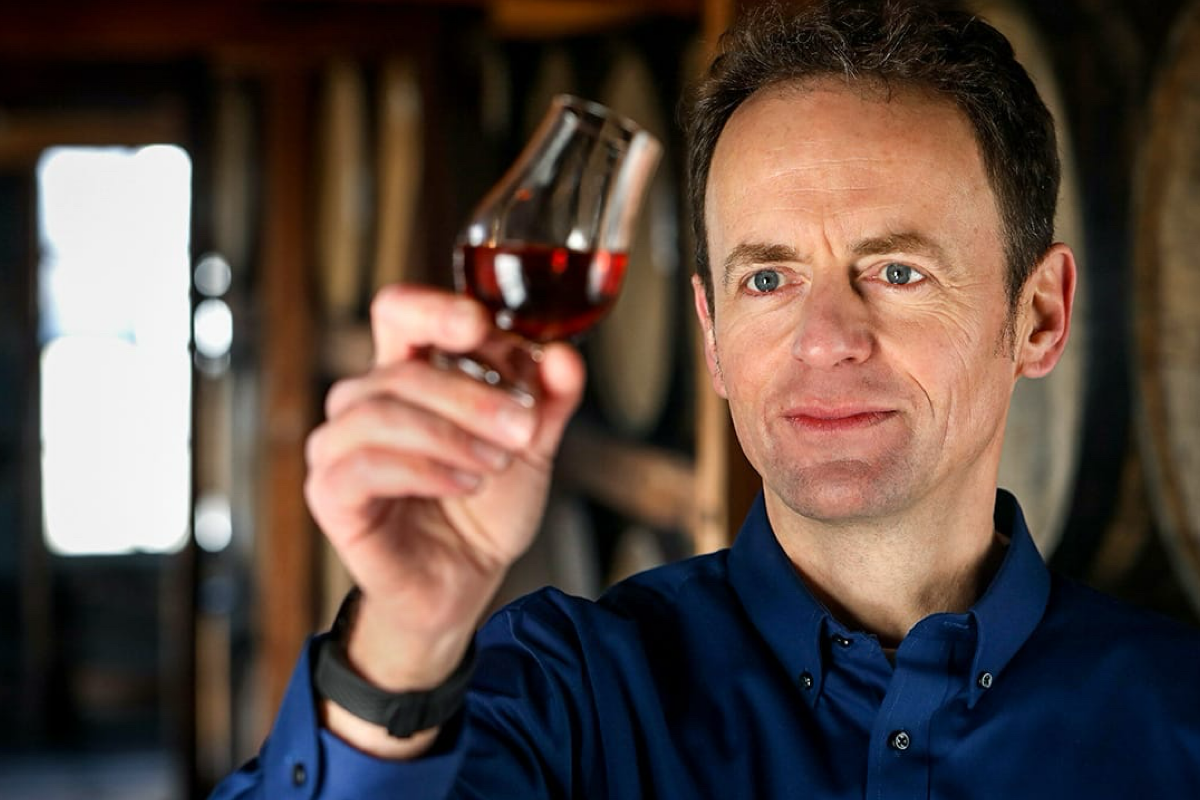
“Heaven Hill lives in the center of bourbon tradition and uses that foundation as a launch pad for new ideas,” said Heaven Hill’s Master Distiller Conor O’Driscoll.
Heaven Hill Distillery is one of the largest and most respected whiskey distillers in the US, with more than 2 million barrels aging in more than 70 warehouses, plus a new distillery that can produce up to 450,000 barrels a year. Headquartered in Louisville and distilling in Bardstown, this family‑owned producer has become the nation’s largest independent spirits company and the world’s second‑largest holder of Kentucky bourbon.
This is the short story of what makes Heaven Hill Distillery a rule-breaker.
A Master Distiller’s Road from Pfizer to Heaven
Conor O’Driscol grew up in Dublin, Ireland, and earned a degree in chemical engineering from University College Dublin. His first job took him to a Pfizer Pharmaceuticals plant near Cork. After about a year, Pfizer sent him to Terre Haute, Indiana, for what was supposed to be a short assignment.
Years later, he left Pfizer, rode a motorcycle across the United States, spent a winter skiing in Colorado, then returned to Louisville for the Kentucky Derby. There, he met his future wife and saw a great long‑term future in American whiskey.
In 2004, Brown‑Forman hired Conor before the modern bourbon boom. He spent years at Brown‑Forman and Woodford, then a short time at Angel’s Envy. When Heaven Hill called, he stepped in as master distiller, a role he holds today.
“Whiskey is a craft I never really finish learning,” Conor said. “One of my bosses told me it would take at least two years to understand a distillery, and he was correct.”
Bringing Back the Fitz
One of the rule‑breaking moves Conor created at Heaven Hill involves a unicorn bottle.
“We developed a limited edition decanter design of the Old Fitzgerald Bottled‑in‑Bond series,” Conor said. “Fans loved it and reviews were glowing. But many enthusiasts looked at our decanters and told us it was whiskey they’ll never get to taste.”
Conor explained how they listened. “Old Fitz is a wheated bourbon built on the same mash bill as our Larceny brand,” Conor said. “Our team asked how they could make that profile easier to find. They had already launched the Heaven Hill 7‑year Bottled‑in‑Bond. They decided to bring back Old Fitz in a way that regular drinkers could buy.”
The result was a 7‑year Bottled‑in‑Bond Old Fitzgerald that sells for about $60 and does not require enthusiasts to wait in line at three in the morning for limited expressions.
“The 7‑year Bottled‑in‑Bond Old Fitzgerald has a layered and complex profile,” Conor said, “with an oak sweetness that shows up as vanilla and butterscotch. He added, “For serious bourbon fans, it checks all the boxes. For newer drinkers, it serves as a step up from everyday bottles without turning into an impossible chase.”
Conor’s travels from Dublin to Terra Haute and beyond explain why he relies on the idea that quality must show up in the glass. “Heaven Hill’s 7‑year Bottled‑in‑Bond bourbon whiskey speaks to our 90‑year legacy, who we are, how we make whiskey, and what we stand for,” Conor said.
Most distilleries treat bottled‑in‑bond as a niche category. Heaven Hill, on the other hand, built a portfolio around it. “The distillery opened in 1935, just after Prohibition,” Conor said, “when bottled‑in‑bond signaled patience and quality.”
“The founders decided to wait four years before releasing a bottled‑in‑bond product so we could hang our hat on quality right from the start. That choice is part of our DNA.”
A Single Mash of Many Personalities
“Heaven Hill’s distilleries do not make brands,” Conor said. “We make styles of whiskey. Brands emerge later from blending, aging, and proofing choices. We like to say the whiskey will tell us when it’s ready.”
He described a core bourbon style they label in‑house as “HH reg.” The mash bill is 78 percent corn, 10 percent rye, and 12 percent malted barley. That recipe accounts for about 85 percent of what they distill. It goes into new charred oak, then into a warehouse system that holds over two million barrels across about 70 warehouses.
From that one style, Heaven Hill gets a portfolio of brands. For instance, a four-year old and 100 proof barrel can become Evan Williams Bottled‑in‑Bond. A four and a half to five and a half years old 86 proof barrel can become Black Label. At eight years and 94 proof, it becomes Elijah Craig. Each expression starts life the same way and ends up with its own personality.
In Conor’s world, some of those personalities become what he calls “gold brick whiskey.” These are the bottles that sit on every shelf, pour beautifully, and price out fairly, yet rarely make the hype lists. They are the everyday workhorses that over‑deliver on flavor and value while everyone else is chasing unicorns.
Heaven Hill’s rule-breaking shows up in the range of whiskey styles they run through the stills every year.
The company makes corn whiskey, bourbon with rye, wheat whiskey, rye whiskey, and, in recent years, an American single malt. He described this as “our everyday stuff,” which says a lot about the scale and ambition of their program.
Rittenhouse Rye and Pikesville Rye illustrate the approach. Rittenhouse is a four‑year‑old bottled‑in‑bond rye built from a mash of 51 percent rye, 35 percent corn, and 14 percent malted barley. Pikesville is six years and 110 proof. Elijah Craig Rye sits in a similar age range to its bourbon sibling at 94 proof. These whiskies avoid the sharp, grassy note that shows up in many 95/5 ryes and instead aim for a more approachable profile.
Bartenders pay attention. “Bar teams often direct the conversation back to Rittenhouse and Mellow Corn,’ Conor said. “These whiskies are 100 proof, four years old, cocktail‑friendly, and reasonably priced. Owners can build serious bar programs on them without blowing the budget.”
Heaven Hill has spent nearly two decades releasing the Parker’s Heritage Collection, a series focused on innovation in mash bills, finishes, aging, and blends. The Parker’s Heritage releases can showcase a unique barrel type, a new mash bill, or a blend that has not been tried before.
Experimentation also shows up in projects like Heaven Hill’s American single malt and new rye profiles. These efforts build on existing knowledge of grain types, barrel types, and warehouse behavior to develop new flavors with long‑term quality profiles.
Frequently Asked Questions About Heaven Hill Distillery
What makes bottled‑in‑bond whiskey worth seeking out today?
When a whiskey is bottled‑in‑bond, it means the whiskey will provide a flavor experience and a story about where and how the whiskey was produced. Bottled-in-bond guarantees at least four years of aging, one distilling season, one distillery, and bottling at 100 proof under government supervision.
How does Heaven Hill balance limited releases with everyday availability?
Heaven Hill produces unicorn bottles and heritage releases, yet the team also focuses on what Conor calls “gold bricks.” These are whiskies like Rittenhouse Rye, Mellow Corn, and core Evan Williams expressions that deliver strong flavor and value without scarcity. Heaven Hill’s goal is to keep serious whiskey within reach for regular buyers.
Why do bartenders gravitate toward certain Heaven Hill brands?
Bar owners often look for whiskies that carry flavor, hold up in cocktails, and, of course, provide a profit. Rittenhouse Rye and Mellow Corn may check those boxes through age, proof, and price. At 100-proof and four years old, they stand up in stirred and shaken drinks while staying accessible enough for a busy bar program.
How does warehouse work shape the whiskey that ends up in the bottle?
Conor reminded me that great whiskey depends on people as much as barrels and mash. Heaven Hill’s warehouse people move hundreds or thousands of 550‑pound barrels a day in every season, and pull and rotate stock so each rickhouse can do its job
Follow the Gold Brick Road
So how does Heaven Hill continue to break some of the unwritten rules of whiskey? “We are one of a handful of legacy producers that survived from the post‑Prohibition era to today, Conor said. “Heaven Hill sits at the heart of the tradition.”
Heaven Hill carries ninety years of bottled‑in‑bond history and still runs experiments in rye, corn whiskey, and American single malt. It breaks rules from inside the tradition, not by walking away from it.
“Whiskey is relatively easy to make, but it’s much harder to make good whiskey people actually enjoy,” Conor said.
That blend of legacy and innovation gives whiskey fans plenty of gold bricks to discover.
View a special podcast with Conor O’Driscol at whiskeyshenanigans.com. And for more conversations with fascinating people in the whiskey world, check us out on Instagram @whiskeyshaniganspodcast and Facebook.