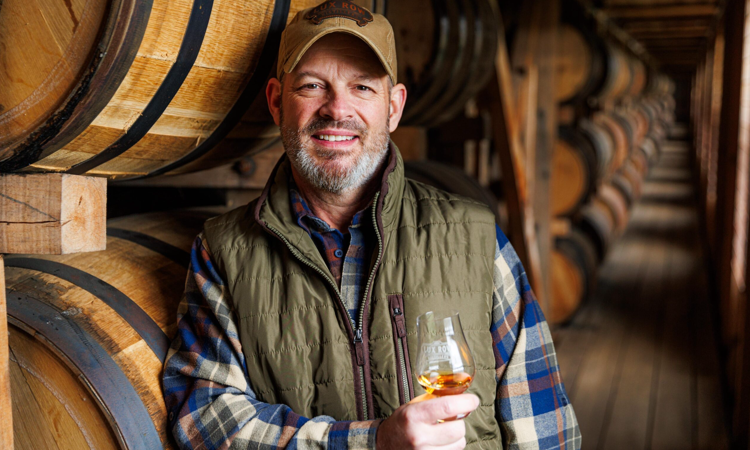
Join us for an intimate conversation with John Rempe, Master Distiller of Rebel Bourbon, as he shares his unconventional path from pre-med student to whiskey innovator. Discover the fascinating story behind Billy Idol’s “Rebel Yell” song, learn about the revolutionary Blood Oath series that’s redefining bourbon blending, and get insider details on limited releases that have fans lining up by the hundreds.
 Apple Podcasts
 Amazon Music
 Spotify
 YouTube
Read more about John in our Whiskey Rebels book.
Transcript
Randy Warren (00:06):
Welcome to Whiskey Shenanigans. I’m your host, Randy Warren. Whiskey Shenanigans, where we help our listeners experience the world of whiskey, every aspect of life, as if it was accompanied by a glass of bourbon. The sports world on whiskey, basically every part of life on whiskey. Whiskey Shenanigans is about getting exclusive interviews from Bourbon Row in Kentucky, where we can learn about the secrets that make our favorite bourbons unique. We will get inside the hearts and minds of many distillers and help you understand what and how they are achieving it. Whiskey Shenanigans is about going beyond boring podcasts featuring just tastings. Heck, what do you get out of that anyway? It’s about bringing on guests and experiencing the entire world through whiskey. But be warned, if you’re diving in and you want to participate in these riveting discussions, you will need to grab a glass or a dram and be prepared to be entertained.
(01:10):
Hello again, Whiskey Shenanigans fans. We are really, really happy to have with us today, John Rempe, the master distiller of Rebel Bourbon. And Rebel is an old and storied brand. Lots of good stuff happened at Rebel. Thank you for joining us today, John.
John Rempe (01:31):
Oh, absolutely. Thanks for having me. I’m looking forward to it.
Randy Warren (01:34):
Yeah. We’re going to learn a little bit about what you guys are doing and we’re always interested in the new and the innovative and all that kind of stuff, but we’ll get to that too. So tell me a little bit about the past. How did you guys make your mark?
John Rempe (01:53):
Well, with Rebel, just strictly with that brand, we purchased that brand back in 1999. I actually started with the company in 1998, so the following year we got this brand very, very excited to get this brand. Knew about this brand long, long ago when I was much younger. A lot of people have stories. I talk to people all the time. They’ve always got stories of Rebel back when it was known as Rebel Yell, but now it’s Rebel. But yeah, so this bourbon, the heritage goes way back to 1849 distillery. It’s that wheated bourbon mash bill. It’s that non-traditional mash bill. So it’s corn wheat and malt versus corn rye and malt, which is a normal traditional mash bill. We’d like to say that just from the get go, it was already kind of a rebel in terms of the way it’s being made. But 1999, we purchased that brand.
(02:53):
We’ve had it since then and we’re using source of whiskey originally as we did for all of our brands back at that time. But in 2018, we opened our distillery here in Bardstown, Kentucky. And I live right here on the grounds here of the distillery and get to wake up and smell the mash of rebel cooking every day.
Randy Warren (03:15):
Wow, that’s incredible. That is so cool. So I heard that you had a signing outside your window since you live right there and a bunch of people queued up for some kind of a special release or something.
John Rempe (03:31):
Well, yeah, that was my blood oath. That is a release that I do every April. It’s new packed of blood oath. It’s something different every year. And this past April we had our packed 11 release or 12. I don’t know. I’ve done so many of them now they’ve run together. But our most recent release here late in April, and like I said, I live right here on the grounds and I wake up that Saturday morning, I get woken up because I can hear people. I mean, I’m well away from the main entrance of the distillery, but I hear them outside my windows and we had around 300 people in line for that release here. So that was incredible. It’s just still kind of a surreal feeling going back to when I started this brand and up to where we are now and then just the interest in the following.
(04:26):
I mean, we’ve got some pretty diehard fans of the brand now and they come in all the time and it’s wonderful to see.
Randy Warren (04:35):
And on that particular day, how many bottles did you sign?
John Rempe (04:42):
I signed over 900 of the Blood Oak bottles that day. Was probably within about an hour and a half, two hours in the morning. I mean, everybody that came through that, that’s one thing that I do on all these releases. I make sure that I am here and I will sign everybody’s bottle. So we had the one line for people purchasing the bottle and then the line for people waiting to get their bottles signed. But they brought other bottles. They brought older blood oath bottles that they had. They’ve even purchased other bottles here in the distillery. So yeah, it was probably around when all was said and done, probably close to 1500 bottles total that I signed that day. Did
Randy Warren (05:17):
Your hand fall off at the end of the day? I mean, that’s a
John Rempe (05:20):
Lot. It does get a little cramped after a while. With the blood oath though, I’m right-handed, so I’m signing with my right hand, but my left hand is the one that really hurts and is sorest the most because trying to hold that box that each bottle comes in, I just kind of slide open the front lid of that and then sign it. But I love it. I would not do it at all. I love it.
Randy Warren (05:44):
Right. Wow. That’s incredible, man. And it’s really good for the fans and the people who love the bourbon that you’re accessible and you’re willing to be out there and you’re willing to sign all these bottles for these people. And it’s a good thing. I mean, it sort of warms the heart. I like that.
John Rempe (06:03):
Yeah, absolutely. It’s one of my favorite things to do, obviously. I love coming down, interacting with customers in our retail shop, talking about whiskey, talking about the bourbons that I make and just watching them enjoy it. I love watching them taste it. And then when they smile, they’re like, “That’s good.” I’m like, “Yeah, that’s my favorite part of what I do.”
Randy Warren (06:26):
So tell me the story, the old story, and I know you’ve told this story before, but tell me the old story of Rebel Yell and Mick Jagger and Keith Richards and all that.
John Rempe (06:41):
Yeah. The story is, it’s been corroborated. Mick Jagger, you can search on Google Mick Jagger Rebel Yell, and you’ll see him just kind of leaning back and holding up a bottle of the old label Rebel Yell. And the story was that he was on tour with Billy Idol at the time the Rolling Stones were, and they were partying one night and they were drinking that Rebel Yell. And that’s how the song Billy Idle song, Rebel Yell came into existence because of that night.
Randy Warren (07:09):
And Billy’s just like, “That’d be a great title for a song.” I think it is a great title for a song. It reminds me of the 80s. Oh,
John Rempe (07:23):
Definitely.
Randy Warren (07:25):
And that’s sort of my era. Hate to admit it, but –
John Rempe (07:30):
That’s mine too. Yeah.
Randy Warren (07:32):
Back in the college days or even high school
John Rempe (07:35):
Really. Yeah. Late 80s was I was in college. I was born in 69. So yeah, I grew up in the 80s.
Randy Warren (07:41):
Right. Right. So that’s a cool story. I mean, there’s not too many brands out there that have a story quite like that one. Hey, look at all these famous people that love our product and name songs after it and everything like that. So I happen to be a Pittsburgh Steelers fan. And when we go to Steelers games, they always do this song, Renegade from Stip from the 80s. And it’s kind of like that thing. And at some point, Renegade became synonymous with the Steelers and the Steelers became synonymous with Renegade. And so in the fourth quarter, when you need a big defensive stop, the whole stadium goes black. And it’s kind of like that thing. It’s like you kind of get associated with these sorts of
John Rempe (08:36):
Things,
Randy Warren (08:37):
Famous sort of things that happen and the whole stadium goes black and then all of a sudden it just comes on and everybody just goes wild. And the opposing team, I would like to say they hate it, but I think they’re so amazed at
John Rempe (08:53):
What’s
Randy Warren (08:54):
Going on? What are you doing? What is this that’s happening? That’s
John Rempe (08:59):
Pretty cool. I didn’t know that. Yeah, that’s pretty cool. I’ve never been to a game there.
Randy Warren (09:04):
Yeah. Billy Idle’s doing the same thing. He’s like, “What is this great drink that you guys are enjoying? We got to make this into something cool.” And when did you drop the Yell part of Rebel?
John Rempe (09:19):
That was probably six or seven years ago maybe, I guess. Maybe a little earlier than that. Yeah. It hasn’t been that long. Yep.
Randy Warren (09:30):
And that was just to disassociate or.
John Rempe (09:34):
Well, really we wanted to completely turn the focus of that brand into your rebel identity. Everybody’s a rebel. I mean, real rebels is what we call it. Everybody is a real rebel in some way. And it’s just focusing on kind of embracing that spirit of I’m not going to be told what to say. I’m going to do my own thing. I’m going to play by my own rules. And that’s really where the brand, that’s what the brand identifies as.
Randy Warren (10:10):
I love that because that’s what kind of makes everything tick in the whiskey world is all the new stuff and everything that people are working on. You got to be a little bit of a rebel. I mean, it’s a very traditional industry, but within that traditional industry, and let’s talk about Blood Oath. I mean, what you’ve done with Blood Oath is just incredible. Tell us how did you come up with that and what’s the story behind it?
John Rempe (10:42):
Yeah. So Blood Oath, that was a brand that I created a little over, probably started creating it about 13 years ago. And I really wanted to come up with something that was. I mean, I didn’t want to just put some old whiskey in a bottle and put a nice label on a big price tag on it. That’s just boring. And everybody is doing that right now. So I really wanted to create more of an experience for that bourbon connoisseur, that customer that really appreciates a little bit of creativity put into it and that really knows what they want out of a bourbon. And so I started with the first pack, I did three separate Kentucky Straigh Bourbon whiskeys that I go out and I got them from around distilleries in Kentucky and I blended them together and it was wildly successful. We put the notice out to our distributors that we’re going to open up ordering for this and it was sold out that day.
(11:43):
So the next year came along and I went to the higher ups at Luxco and I said, “Hey, I want to do something a little different. I’m going to do a port finish on this.” And they said, “No, no, no. That sold out in one day. Don’t change it.” I said, “Well, I can’t keep doing the same thing every day or every year. It’s going to get stale and I want this to be something that people look forward to.” So I started doing barrel finishes on it.
(12:12):
When I first did it, I did get a lot of negative comments from some people, the more traditionalist in the industry and outside of the industry because there wasn’t a lot of those finishes going on. There were some, but not nearly as many as there are today. I remember I was told, “Hey, this better worker, it’s on you.” I said, “My name is on the bottle. I’m not going to do something that I don’t think is going to work. So just trust me and let me do what I want to do.” So I said, “Okay, it’s all you.” And then I did it and then pack two came out, that was the port finish and another wildly successful one again, sold out that first day and going on up to here. I mean, if you talk about the rebel attitude, I like to think that I have that in me a little bit where I’m not going to be told what to do and just to try to keep it safe, play it safe.
(13:13):
I’m not that person. I’m going to go out, I’m going to push some boundaries and I’m going to see how far I can go with some things.
Randy Warren (13:20):
I think that’s totally consistent with the whole rebel idea. Let’s not overlook the oath part of this too. What is the oath part of it?
John Rempe (13:33):
The oath part of it, I’m a history nerd a little bit and that’s why blood oath. I mean, it’s got that old world type script on the label. I wanted that term blood oath in the packs and it signifies that pact that I have with the consumer to where they’re going to trust me on this and I’m not going to answer a lot of questions on blood oath. I’ll give you some basics. I’m not going to talk about the mash bills. I’m not going to talk about where I’m sourcing these bourbons from. The only thing I say is they’re all Kentucky straight bourbon whiskeys. They’re older whiskeys, but I don’t want to give too much information on it because I’ve found over the course of my career that too many new whiskeys that come out are judged before the bottle even is opened because they know what distillery it’s from.
(14:26):
They know what the mash bill is. I don’t like that. I don’t want that. I want it to be judged on how it tastes. I think that’s how it exactly should be. So the whole blood oath and the pack thing is this is my pack between you and me. Just trust me on this, you’re going to love it, but I’m not going to tell you where because I want you to open that bottle. I want you to taste it and then tell me what you think of it.
Randy Warren (14:49):
That’s the way it should be done. I mean, I agree with you 100%. I mean, why judge the bottle before you’ve even tasted it? I mean, just because it came here, has this mash bill, whatever, I’m not going to like that or I’m going to love it. And then you put too much hype behind something that you think you’re going to love or whatever. It can go both ways, but that makes a lot of sense to me. Judge it based on what’s in the bottle and really what you like.
John Rempe (15:18):
Yep. Yep. That makes a lot of sense. Yeah. Another thing that drives me a little crazy too is when I have people come in and I love all of our customers that come in, but I get people coming in and they’ll say, “Hey, do you have pack three that I can sip?” And I’ll say, “No, we haven’t had pack three. We sold out. We sell out and it’s gone.” And they’ll say, “Well, I got a bottle in my basement bar, but I don’t want to open it.” And I was just wondering what it tastes like. And I was like, “I make it to be drank.” I mean, that’s the one thing that drives me crazy is they got these things, they’re just setting them up as trophies, which I appreciate and I love, but I kind of want people to taste it too. That’s kind of why I make it.
Randy Warren (15:59):
Yeah, absolutely. I’m guilty of that myself in the sense that I open every one I get. I don’t save them. And if I really think that the bottle was special, here’s a little tip for the listener. Take some iced tea, put it in your empty bottle, put it back on the shelf, but put a little mark on the bottom of the bottle so you know it’s iced tea and not bourbon. Go back
John Rempe (16:26):
To it. Yeah. One thing that I like to tell them too, I’ll have people down in there and I’ll sign their bottle and they’ll say, “Well, now you signed it. I can’t open it.” And I say, “Yes, you can.” I say, “Get a marker, one of these old paint pen things that I’ll use to sign the bottles.” I say, “Get one of these. And then when you have your good friends over or relatives over that you like and you want to share something special with them, when you pour, hand the bottle, hand the marker to them, have them sign the bottle, have them date the bottle. And then after however long it takes for that bottle to be empty, once that bottle’s empty, you have all those signatures and dates on it of the people that you share that bottle with. To me, that’s worth more than the bottle, to be honest, those memories.
Randy Warren (17:09):
Great idea. I love that idea. That’s the first time I’ve heard that. That’s a great idea. That’s what this is all about. I mean, we talk about culture of whiskey in America and all this kind of stuff, but it’s really about friends. It’s about family. It’s about making deals. It’s about consummating business transactions. Bourbon is great for all of these things and to have people just put their little dates on it and sign it like, “Hey, I tried this. This is great.” I like that. I’m going to do that from now on. I like that idea.
John Rempe (17:46):
Yep. Yeah. It was driving me crazy. They weren’t going to open the bottle.
Randy Warren (17:54):
Where can I get some blood oath? It’s hard to get your hands on it, isn’t it? It
John Rempe (17:58):
Sells out. Out in the market, it can be a little bit tough. It’s very limited. I mean, we don’t do that many bottles of it. Right now, we’re doing about 17,503 bottle cases and that’s it. That’s got to go in all 50 states. And some of it is even going over to the UK and over in Ireland too. But we have it here at the distillery. We actually got more allocated for our distillery retail shop than we ever have before because I’d hate it turning people away. But finding it out in the market, I mean, most of these places that actually, the ones that are actually even going to get bottles out there at retail, most likely they never even hit the shelf because these places, they’ve got their preferred VIP customers. They’re going to get a call and say, “Hey, Blood Oath came in, come down and pick it up.”
Randy Warren (18:49):
Yeah, yeah. Come down, get it. Yeah, because
John Rempe (18:51):
It’s
Randy Warren (18:51):
Going to be gone in five minutes if
John Rempe (18:53):
You don’t
Randy Warren (18:53):
Get your work down here.
John Rempe (18:54):
Yep. Yep. Exactly.
Randy Warren (18:57):
That’s great. Do you guys do any barrel picks or anything like that?
John Rempe (19:02):
Not with Blood Oath, but we do with Rebel and with our Ezra Brooks brand. We do that too. And with this year, something special, I did a state bourbon with some corn that I grew back in 2019, 2020 here at the distillery. That’s our Lux Row brand. It’s my estate bourbon. We’re doing some barrel picks in that. No many, doing about 25 total. But for Rebel, right now we’re doing a six-year bottle in bond pick. And for Ezra, we’re doing the old Ezra single barrel pick.
Randy Warren (19:35):
Six year bottle in bond. Nice. And for Ezra, what was it?
John Rempe (19:41):
It’s the old Ezra seven barrel pick.
Randy Warren (19:43):
Seven year barrel pick.
John Rempe (19:45):
Seven year, yep.
Randy Warren (19:46):
Nice. I’m planning on coming out there soon. Maybe I’ll look you up.
John Rempe (19:51):
Absolutely. Yeah, definitely.
Randy Warren (19:54):
Yeah. I’m trying to arrange a trip with a couple of other people in the industry to all of us go out and put our name on a couple of barrel picks for a big restaurant group in Washington DC.
John Rempe (20:08):
Gotcha. Yeah, definitely let me know. I’ll make sure I’m here and we’ll have some pours.
Randy Warren (20:13):
Definitely. Oh, that’d be so fun. That would be so fun. So you also told me one time that you did a root beer barrel.
John Rempe (20:21):
God. Yeah. I’m doing it not well. It’s not a root beer barrel. It tastes like a root beer barrel candy. It’s our latest re-release in our rebel line, which is our rebel root beer whiskey. That was a flavored whiskey that I came up with years ago and it did pretty well, but we had to pull it from the market. We just didn’t have the wheated bourbon for it to keep supporting that while also trying to support our Rebel 100 on the shelf. So we had to pull it off just to conserve some of the whiskey that way, but now we’ve got plenty of whiskey for that. So last year I said, “I want to bring this back.” I think that we get people that come in the distillery all the time, and even when I’m out in the market, I get people asking me, “Are you going to bring it back?” So we brought it back.
(21:10):
It’s the exact same formulation and it’s outstanding. And I went through probably, I don’t know, maybe 20, 25 different root beer extracts that I was adding to the whiskey. I wanted to taste like those little root beer barrel cannies, a little spicy root beer note to it. It’s not overly sickeningly sweet. It’s just got that little root beer spice. And one of my favorite things, I was just in Michigan a couple weekends ago doing a tasting. We had a NASCAR race up there where Rebel is on the car also. But I was tasting it and so many people, they’ll look at me, they’re like, “This tastes like those root beer barrels.” And I said, “Exactly. That’s exactly what I want. It’s just like those little candies. It’s really good.
Randy Warren (21:52):
It’s
John Rempe (21:52):
A good shooter.
Randy Warren (21:53):
That’s incredible. You brought that back again. That’s really cool.
John Rempe (21:57):
Yep. Yeah. And it’s selling well right now.
Randy Warren (22:03):
Is it readily available or is it hard to get your hands on?
John Rempe (22:06):
Well, I mean, right now it’s still kind of in the beginning stages of getting it shipped out to all the distributors, but I was just out of the market and a lot of places, they do have it and it’s available across the country, all 50 states. So it should be on the shelves anywhere you
Randy Warren (22:22):
Go now. Yeah.
John Rempe (22:25):
That’s great. If you don’t see it on the shelf, ask for it. They’ll get it shipped in.
Randy Warren (22:30):
So just because we’re interested, I’d like to know how you got into this. How did you get associated with Rebel and what made you get into this business?
John Rempe (22:45):
Yeah. So long story. I mean, I’ve been in this business now for going on 28 years. It will be in October. I actually originally went to school to be a doctor. I was going to be a family doctor. I was a family practitioner. That’s what I wanted to be. And I was actually in pre-med at St. Louis University. And our family doctor who was friends with my parents, he came to me and he said, “So you want to be a doctor?” And I said, “Yeah.” And he said, “Why?” And I said, “Well, that’s what I’ve always wanted to be.” And he said, “But you don’t know anything about it really.” And I said, “Well, I don’t know. Maybe I do. Maybe I probably need to know more.” And he said, “Come work with me a little bit this summer and at the end before you go back to school, I’ll ask you if you still want to be a doctor.” And at the end of the summer, he came in and said, “So what do you think?” I said, “Hell no.
(23:34):
Absolutely not. It is completely different than this romanticized version that everybody has in their head of what a doctor is.” And he opened my eyes up to a lot of things that you don’t think of. And so I graduated pre-med from St. Louis University, and then I just went out and I was like, “I’m just going to go start working somewhere.” So I got a job as a microbiologist at a soft drink plant, did that for a few years. Then I went over to a startup fruit juice company and I went and I actually, I think I was like 25 or 26 years old maybe, and I designed their production facility and helped build their production facility and ran that for a couple of years. And then one day I just got a call from a headhunter saying that there was a distilled spirits company in St.
(24:27):
Louis, Missouri looking for a lab/R&D guy. And I said, “I’ll give that a shot.” And so I got the job. And so I was their R&D manager for a while, then worked my way up to director of research and development. And we weren’t distilling anything at all back then. We were just buying bulk finished alcohols from various suppliers. So we were buying scotch from Scotland and Canadian whiskey from Canada. We were buying tequila from Mexico and rum from down the Virgin Islands at the time. And I just started becoming very curious on how they’re making all the distilled spirits and everything from mashing fermentation and distillation and maturation. And so I started traveling to all these places and learning how to do it. So I spent a lot of time up in Canada, Western Canada, just in Alberta, just south of Calgary. There was a distillery up there and I learned how to make rye whiskey and some different vodkas, Canadian whiskeys.
(25:34):
I spent probably, I mean, over the course of my career, if I combined it all, probably about a year down in Guadalajara making tequila down there with Rodolfo Gonzalez at their tequila distillery in Guadalajara. We’ve got more than one now down there. And I traveled a lot over to Ireland also and I actually learned how to make Irish cream liqueurs. That’s what I model my bourbon cream liquors are. I do it the way that they did it over there. I’m not using any kind of non-dairy creamer or I’m not using high fructose corn syrup. I use all natural, all real dairy cream and those, just the way that I learned over there. So I learned how to do all these things and I was down in Kentucky making bourbon for a while. And when we decided to build our own distillery, Don Lux, and then our COO, then David Bratcher, they came to me and they said, “Hey, you want to run this distillery that we’re building?” And I was at the point in my life where I could get up and move.
(26:41):
So I said, “Yeah, absolutely.” And they said, “Here’s a little bonus. There’s even a house already on the property here at the distillery that we’re going to completely gut the whole inside and renovate it and that you can live there.” I think that was just a way to get me to be at work twenty four seven.
(26:58):
So I moved here in 2016. We started building the distillery that year. It took a little bit, about two years to build. We opened our doors here in 2018 and I came in and I figured out the mash bills that we were going to use, the yeast drain and everything from all of our fermentation set points, our column set point, I mean everything from zero to 100 go. And I take a lot of pride in what I’ve done here. I put a lot of hard work. I put a lot of sleepless nights into this place over the last eight years. I mean, a lot of distillers, they’ll go into a distillery where it’s already up and running and it’s already established. They’re already making bourbon and they just kind of take over. But I’m very proud of the fact that I can come and like I said, I was here when this was just a field, built this thing from the ground up in a greenfield site and developed all the processes and everything, all the procedures here.
(28:06):
And we’ve got incredible bourbon coming out of this place.
Randy Warren (28:10):
Absolutely. That’s a real great opportunity obviously for you to put your stamp on this thing and really make it special and make it yours. I mean, everything you touch turns to gold, John.
John Rempe (28:27):
Yeah. We can knock on wood now.
Randy Warren (28:31):
Not anything. So anything not turn to gold? Tell us about a mistake. Any mistakes along the way?
John Rempe (28:39):
There’s always mistakes. I call it learning. I’ll call them mistakes. Learning.
Randy Warren (28:47):
Yeah. That’s how you get better, right? You learn. Exactly. Mistakes either bring you down or you learn something you didn’t know before.
John Rempe (28:56):
Exactly.
Randy Warren (28:57):
I like that. Fantastic. Well, we really appreciate you being on with us today, John, and we really appreciate Rebel and Blood Oath and Ezra and everything that you guys are doing there. It’s really fantastic. And when I’m out there before I’m out there, I’ll give you a shout and we’ll see if
John Rempe (29:16):
We can
Randy Warren (29:18):
Do a barrel pick or something.
John Rempe (29:19):
So I can set that up. I know a guy.
Randy Warren (29:23):
I’ll bet you
John Rempe (29:24):
Do.
Randy Warren (29:25):
You know a guy.
John Rempe (29:26):
Look forward to it. I had a great time talking with you and looking forward to you coming out here. We’ll sit on the patio of our old stone house that was built in 1806 and we’ll sip some bourbon.
Randy Warren (29:36):
That’d be awesome. Thank you so much, John. I really appreciate it. Have a great day.
John Rempe (29:41):
Thank you. You too.
Randy Warren (29:42):
Bye. All right. Here we are again, Whiskey Shenanigans fans. Today we’re going to talk about barrel finishing. Is barrel finishing innovation or overkill? In the past year, I’ve interviewed for Whiskey Shenanigans podcast, really, dozens of master distillers, including Buffalo Trace and Bullet, Heaven Hill, Rebel, Jeffersons, Four Roses, Johnny Walker, Michter’s, Glen Fittich, Woodford, Maker’s Mark, and so many more. Why do we talk with these people? To find out about the innovations that they’re working hard on and get a glimpse at what new things are coming soon. For each and every one of them, or I should say each and every one of them, is working hard to bring you new expressions, and the trends are constantly changing. Ultra aging techniques are abounding, but finishing techniques are still very important. It appears that buyers are not experiencing what some might call novelty fatigue, but rather look forward to and even covet the continuing parade of new releases and new expressions.
(31:01):
And Kentucky is happy to oblige.
(31:05):
What is finishing? There is specific requirements for whiskey, as you probably know by now, to be called a bourbon. And one of those requirements, by the way, is not that it has to be made in Kentucky. Common misconception doesn’t have to be made in Kentucky, just has to follow the requirements. Since the requirements include a prohibition of any kind of additive, the one tool left in the toolbox, and by additive, you can’t add honey to your whiskey and call it a bourbon. Honey bourbon. You can call it honey whiskey, but you can’t call it honey bourbon because it’s not a real bourbon if you add something to it like that. You can’t add vanilla. So since requirements include a prohibition to additives, the one tool left in the toolbox for the distiller is creating a fully compliant bourbon, then dumping the barrel out into a second barrel.
(32:03):
Due to regulations, you cannot just skip the first barrel, you have to do the first barrel because the first barrel is what allows you to comply with the regulations and actually be able to call it a bourbon. In order to be called a bourbon, that first barrel has to be brand new, unused, American oak. But wait, once the first barrel maturation is complete, the requirements have now been met and it is officially a bourbon. Now, after the initial requirements have been met, you can take your official bourbon and dump it into a second barrel for what they call finishing or further maturation. And the key is that this second barrel does not have to be brand new American oak. It could be a barrel previously used to age other alcohol such as Oloroso sherry or Pedro Jimenez sherry or port Mediera or Marsala, red wine, rum, cognac, even champagne.
(33:08):
Almost all the master distillers that I’ve talked to on the podcast are using some kind of finishing technique. For example, if you’ve been listening, you’ve learned that Jefferson’s ocean is not a gimmick. It actually works. It’s not really barrel finishing, but it is part of the maturation process and it is unique to Jefferson’s. If you’re not familiar with their story, it’s interesting. They take their barrels on a journey on the ocean, just like the old days when barrels moved from Kentucky down the Ohio River into the Mississippi, all the way down the Mississippi and around the Gulf, up the East Coast to major population centers in Washington DC, Baltimore, Philadelphia, New York City, and Boston. Jeffersons reproduces that journey and then they add to it. After New York City, they sail back down the East Coast through the Panama Canal and up the West Coast, cross the Pacific, all the way to places like Singapore, and then back again.
(34:07):
The agitation of the ship movement adds to every drop in the barrel, becoming more exposed to the barrel wood. And the changes in climate as it moves around across the equator add to the whiskey breathing in and out of the wood and picking up more and more colors and flavors. One distillery that stands out, because they don’t really do barrel finishing in secondary barrels is four roses. They already have five yeast strains and two levels of rye in their mash bill. So they have the ability to create 10 different recipes or 10 different flavors within their core offering. So you might conclude, well, they don’t really need to do additional finishing because they can get all the flavors they need from these 10 different recipes that they’re working with. However, they have an anthology series, which is an ultra aging technique that brings you 20 plus year old bourbons.
(35:08):
Rebel bourbon produces what they call blood oath, which is the master distillers packed with you, the customer, to bring you something unique each year that you will love. He’s not going to tell you all the details about it. He’s not going to give you the mash bill and all the how wine. He trusts me, that’s what the pact is. I’m going to bring you something great and you’re going to love it. And the results have been outstanding. And if you can get some blood oath, I’d recommend you picking some up. Whiskey Shenanigans has even tried finishing. We created a recipe and we had it distilled, short aged and shipped to us. Then we finished it in the same style that Maker’s Mark finishes their barrels by adding staves into the wood, that means additional slats of wood into the barrel.
(36:09):
And those staves can be different types of wood. They’re not additives. We’re not adding vanilla or some flavor. We’re adding wood to the barrel and that wood can stay there for one, two, six, up to maybe nine, 12 weeks. And you got to keep tasting it all this time until it’s just right. So they start with standard maker’s mark, then add staves to it. Whiskey Shenanigans distilled our own recipe and then we added a stave to it, which is something you can buy off the internet, a corkscrew stave that doesn’t take up much space and gives you a lot of surface area and is a new American Oak stave. Turned out real nice. Thus, finishing has become a pretty significant tool to bring you new flavors for existing bourbon products. Some of these turn out to be exceptionally good and become limited editions, rare and incredibly valuable.
(37:16):
There you have it Whiskey Shenanigans fans. It’s pretty straightforward. Finishing is a real deal. Everybody’s. Well, not everybody. The vast majority of these people are doing it. And that’s because it’s adding flavor. It’s changing a whiskey. It’s maturing that whiskey. It’s bringing out new flavors that weren’t there before. So enjoy.
Speaker 3 (37:41):
What is interesting and what I’m always drawn to, if I watch the Kentucky Derby, I’m always drawn to the story of somebody that made it there against the odds. In bourbon too, and I think what I love about it, there are these wonderful, beautiful stories from these families all across Kentucky in how their brand survived, how it’s evolved, how it’s changed. And then the cool thing is that, which I wasn’t prepared for until I met my first master distiller, I realized, oh wow, all they want to do is tell stories and they’ll unlock every ancestry discussion you could ever want to hear.
George Harper (14:11):
Yeah. Yeah. I’m actually, I’m recording this in our nosing room in the labs in Scotland. So that’s just the scotch whiskey flavor wheel that we have out just there is a little thing to refer to as your nosing whiskey if you’re trying to pinpoint and narrow down exactly what it is you’re nosing.
Randy Warren (14:33):
Right. It’s like, what am I smelling? What is that? And you’re kind of like, okay, was it in any of these categories? And then you can narrow it down a little bit further. That helps a little bit.
George Harper (14:42):
Exactly. Yeah.
Randy Warren (14:44):
It also takes a lot of practice. So you’ve been at it for a long time though.
George Harper (14:49):
Yeah, yeah. As I say, over 10 years. And yeah, it’s just a constant learning, refining, getting better as the days go on. Getting better is the new whiskeys you make as well. Sometimes a new innovation will be an innovation on a previous innovation and it’s you refining it more, taking new learnings in and improving it. So it’s a constant process of just trying to be better, trying to deliver more exciting new things.
Randy Warren (15:25):
What’s the craziest blend you ever put together?
George Harper (15:32):
I think I did an innovation for Johnny Walker a number of years ago. It was actually a blue label innovation. So it was blue label elusive umami. We were tasked with coming up with a blue label that looked at umami flavors and how can we bring that into whiskey? And I think the real exciting challenging part of that was working with, we worked with a Japanese chef who owns a restaurant in Paris, Michelin starred chef. And working with him to understand what umami was and how umami could be shown in a whiskey was really exciting and really thinking out of the box in terms of what inventory we could use in terms of bringing some of those more savory umami flavors into whiskey. That was probably the most challenging and also most rewarding kind of whiskey to work on.
Randy Warren (16:40):
Yeah, because it’s different. I mean umami, it’s not fruit. It’s a very different kind of flavor. So it’s got to be difficult to put that. How do I put that into a whiskey? How do I bring those flavor notes out?
George Harper (16:56):
Yeah, exactly.
Randy Warren (17:00):
What was it?
George Harper (17:01):
It was a combination of things. A lot of it was just thinking about more savory notes that we do have in whiskey. We have some wonderful distilleries that has a meaty character to it. If you think about maybe smoked meats or cured meats. So bringing some of that in, but also bringing some of the smokey notes, the kind of minerality of salinity we get from some of our coastal distilleries, bringing them together. But actually learning from the chef himself and understanding that it’s almost like a deliciousness in umami. It makes you want to take another sip. So it was kind of looking at that and trying to incorporate that into the blend and having balance as well. Sweetness was important. We couldn’t just make a full on umami whiskey. You would need it to be balanced with some of the other flavors. And actually sweetness helped bring out some of that kind of meaty savory notes.
(18:06):
And yeah, really proud of it and went down really well in terms of the feedback we got from consumers and the chef himself. I think there was nothing more validating than having a Japanese chef happy with the blends that I’d created in terms of delivering to that brief of creating something umami.
Randy Warren (18:27):
Yeah. Somebody who really knows and has been working with it for years and years and is really good at it and is going like, yep, that’s it.
George Harper (18:35):
Exactly, exactly. Yeah, it was a proud moment.
Randy Warren (18:38):
Yeah, you got it. Yeah, that’s great. So scotch is interesting in the sense that it’s really tied into Scotland’s heritage and the history and everything like that. And here in America, we’re building our own history in the bourbon area and all that kind of stuff. And everybody, you guys, I think in Scotland have done a good job, better job of getting your whiskey out first, maybe not first, but here in America, but also in India and places like that. And there’s something like, I don’t know, half a billion or so scotch drinkers in India, right?
George Harper (19:17):
Yeah, it’s amazing, isn’t it? It’s amazing this small country of less than six million people has got this product that’s just known globally I think. And that’s as well as the heritage and the tradition. Some of the distilleries are over 200 years old here. It’s that idea that it’s this recognizable product around the world. It makes us proud. It makes us, I suppose, enthusiastic and encouraged to keep that tradition going and keep that scotch name up there with some of the best products in the world. So yeah, it’s amazing. And I think we’re lucky that it’s been embraced, like you said, in places like India, the US, of course, Canada, China, all across the world. It’s a wonderful industry to be a part of.
Randy Warren (20:16):
I can imagine in India they make some stuff, but it’s probably not nearly as good as what you guys make. And to have a bole of scotch on your shelf would be like, that’s a big deal.
George Harper (20:29):
Yeah, I think so. But India’s an interesting market as well. They’ve got some really good distilleries themselves that are really uplifting their own industry and they still use a lot of scotch within some of their brands, but they’re beginning likes so much other countries around the world are really, it’s a burgeoning industry in those countries to make their own whiskey and make it unique and part of their own culture. And I think that’s brilliant. I think that’s great for whiskey as a whole, that so many countries are trying their hand at it and making some exceptional whiskeys.
Randy Warren (21:15):
Yeah. How do you see scotch influencing the culture in your country and maybe even influencing the culture in America? Those are probably two different questions.
George Harper (21:26):
Yeah, like I said, I think in terms of here in Scotland, there’s definitely a loving ownership to Scotch. And as you said yourself, you’ve been to a lot of distilleries across Scotland. You can see in the communities how important and how beloved Scotch is, whether it’s simply in the jobs that it brings to local communities, but also the kind of tourism that it brings. There’s nothing better than being… I live in Edinburgh, but meeting people from around the world and they want to talk to you about Scotch because it’s this known thing. So I think it’s really ingrained in our culture. Because we’ve so many distilleries in such a small country spread across all the mainland, all the islands, it’s really integral to Scotland and part of what’s makes Scotland so unique. And in terms of the US, you’re probably better to answer that than me, but I think there’s a wonderful connection with Scotland and Ireland as well in the US with a lot of Irish American and Scottish Americans that have an affinity with Scotland and their ancestors coming from there.
(22:57):
And so I’ve embraced Scotch and that’s this wonderful thing. And it kind of sits alongside American whiskey. You would imagine with such a great industry like you guys have in America that why do you need Scotch whiskey? But you embrace it and you love it and it’s a fantastic market for us. And I think that there’s definitely something tied in with that kind of heritage and that connection that Scotland and America have. So I think that’s wonderful.
Randy Warren (23:29):
Yeah. And Scottish, any whiskey is like I was thinking of TV shows like Yellowstone that are more current and things like that. And so many deals, decisions are made just with a drink of whiskey. Sitting down two people, three people. Let’s hash this out. Let’s have a drink and now let’s go do this. Whatever it is.
George Harper (23:59):
Yeah. I see that as well. There’s a little pride in my Scottish heart when I watch an episode of Suits or Mad Men and a Bottle of Scotch is open. So it’s fantastic.
Randy Warren (24:13):
Absolutely. It’s fun. And that’s part of the culture too. I mean, it’s like, okay, let’s figure this, whatever problem we got, let’s figure it out and let’s work out our differences or our issues or what direction we’re going to go next. And then bam, let’s go bang that glass on the table.
George Harper (24:34):
Exactly. Exactly. And I think that what you said there, the fact that it’s fun is such an important part of it. No matter what whiskey it is, I don’t know if there’s many other drinks where friends, new acquaintances can get together and they’ll sit and have a glass of whiskey and that bottle will be on the table and it will be a conversation topic. It’ll be part of that conversation. It’ll be part of that meeting, that friendly moment together, which is amazing.
Randy Warren (25:09):
So if somebody’s new to Johnny Walker, where would they start?
George Harper (25:15):
Good question. I think touching on, going back to the White Walker conversation, touching on some of the innovations that we’ve done recently, we’ve really broadened the Johnny Walker portfolio in terms of bringing in more lighter approachable blends. So something like that. So Johnny Blonde or Johnny Walker Red Sole, more recent innovations are in that kind of sweet vanilla kind of flavor space are great introduction whiskeys. I think if you’re already a whiskey drinker and are looking to maybe discover more about blends and blended scotch whiskey, I think you can’t go too far wrong than a bottle of black label. I think that’s really the standard for balanced blends, bringing out a range of different flavors together and being perfectly balanced. Perfect as a neat serve, but also works incredibly well, whether it’s in cocktails, high ball serves, any mixer you can imagine. I think you can’t go too long with that.
Randy Warren (26:33):
Yeah. Yeah. Fantastic. And after the black then comes the blue?
George Harper (26:40):
Yeah. I suppose it depends. If you’re looking for that kind of refined traditional Scottish blend, yeah, blue’s a great next step. If you’re looking for something maybe a bit more playful, I suppose, something that works really well in cocktails, maybe Johnny Walker Gold label reserves a great kind of next step or something a bit more refined, you might go to 18-year-old. It’s a fantastic brand in terms of the wealth of options that you have and hopefully as well. I always say if you like one Johnny Walker, you’re probably going to like many others. So that getting into Johnny Walker, you’ve got this kind of massive list of whiskeys that you can then go and discover and enjoy.
Randy Warren (27:36):
And you guys have a massive experience in Edinburgh, right?
George Harper (27:42):
We do. Yeah. Yeah. It’s been open a number of years now. We call it our brand home, the Johnny Walker experience in Edinburgh. I suppose Johnny Walker being a blended whiskey brings whiskeys from all across Scotland. So it doesn’t have its own distillery as such as many distilleries. So this was really us being able to build a brand hope like a distillery visitor center where people can come and learn about Johnny Walker, learn about the 200 plus year history of Johnny Walker, learn how to enjoy Johnny Walker in terms of on the tour you can try a range of different Johnny Walker’s knee in cocktails and highball serves and really learn a bit more about the world of Johnny Walker, the world of blending. We take you through an experience where you learned how we bring flavors together, how we go about blending. And then you can enjoy the tour and then go up and enjoy some lovely food and drinks in a rooftop bar right in the center of Edinburgh with amazing views of the castle and the streets around the old town of Edinburgh.
(28:49):
So it’s a beautiful place, wonderful place to come.
Randy Warren (28:53):
Yeah. I was reading about that and I’m like, I was all over Scotland, but I guess I didn’t spend enough time in Edinburgh. I don’t know. But I’m like, “How did I miss the Johnny Walker experience?” I mean the rooftop bar and everything like that with the views of the castle, that’s amazing. And it’s like, “Oh, I got to go back now. I got to go. ” Well,
George Harper (29:13):
That’s a good excuse, Randy, to come back. No problem. I’ll take you around if you want.
Randy Warren (29:20):
Yeah, that’d be great. We go up to the rooftop bar and have a few drams together and watch whatever’s happening down on the streets. That’d be cool. It’s about five stories up or something like that.
George Harper (29:31):
Yes, it is. Yeah, yeah. Beautiful. That is cool.
Randy Warren (29:35):
That is cool. Well, listen, we thank you so much for being on the show today and introducing us to Johnny Walker and everything that you guys are busy. You’re doing a lot of cool stuff. And we’re just touching on the world of Johnny Walker here.
George Harper (29:50):
Yeah, no it’s been a pleasure. Absolute pleasure.
Randy Warren (29:53):
Bringing it to our listeners and a lot of our listeners are, probably all of them are American at this Point. And so they’re interested in scotch and they may have started with scotches and then they also tried bourbon or maybe they tried bourbon and went to… I don’t know, but it’s all good.
George Harper (30:15):
Exactly. Yeah.
Randy Warren (30:16):
We’re all learning about it together. So we thank you so much, George, for being on the show. We really appreciate it.
George Harper (30:22):
No, thank you very much, Andy. It’s been a pleasure, as I say, to meet you and to just be part of the show.
Randy Warren (30:27):
Yep. Thank you very much. Have a good day.
George Harper (30:30):
Yeah, same to you, Andy. Goodbye.
Randy Warren (30:35):
Welcome again, Whiskey Shenanigans fans for the shenanigans portion of this episode. So today we’re going to tackle a topic called how to start your at-home whiskey bar for less than say $500. That sounds pretty reasonable. And what should you buy first? And so this is an interesting topic. I mean, I’m sure there’s a million different opinions on what you should buy first and what you should have in your at home bourbon or whiskey bar. But here’s mine. Over the past year, I’ve talked to a lot of these master distillers and I’ve been impressed with some of them. I’ve tried their products, I’ve been impressed with their products, some more than others. But you know what? In a lot of these episodes on the podcast, I ask these distillers, “Hey, you guys have eight different versions of your product.
(31:40):
How’s the regular guy supposed to know when he walks into Total Wine? How’s he supposed to know? Where do I start? You probably don’t want to start with a barrel strength something, something, something.” No, too much. If you’re new and you’re getting started and you’re thinking, “Hey, where’s a good place to start?” So that’s what this is all about. So I thought about a bunch of different brands and there’s so many to choose from, but what I have found is that a lot of the larger brands or the larger distilleries, which is tricky because if you’re new, you don’t know exactly what’s coming from what distillery. So it’s not always clear where is this bourbon coming from? Where is that bourbon coming from? Here’s two bourbons with completely different labels, completely different names that are being made at the exact same place. So it’s kind of like if you ever go out and buy a car, like today it’d be a Kia and a Hyundai 50 years ago would be a Chevy and a Firebird.
(32:53):
Our Chevy and a Pontiac, they’re going down the same manufacturing line over and over and over again. And they’re really virtually the same product, but you wouldn’t necessarily know it. And there’s somewhat significant differences between products. So what are the starter products in some fairly large distillery brands? So I thought about this and I’m like, okay, we’re going to start with a complicated one. I think it’s complicated anyway. They probably don’t think it’s complicated because they invented it. But Four Roses is just a fantastic bourbon. You got to have a bottle of Four Roses in your new whiskey bar. Four Roses has 10 different recipes and they have letters for each recipe that uniquely identify that recipe. So I’m going to give you the four letters, but really there’s only two that matter. They all start with O, so that doesn’t really mean anything. The third letter is always an S, meaning straight Kentucky bourbon whiskey.
(34:04):
So really it’s the second and the fourth letter that means something. So you want to go out and buy yourself a bottle of basic four roses, O, B, O. So what does that mean? O, like I said, doesn’t really mean anything. B means it’s got a little more rye in it and a little rye grain is good. So you’re thinking, “Oh, I don’t like rye.” No, no, no, no, no, no, no. You got the wrong… I had that thought too. You got the wrong thought. I had the wrong thought. Rye is really good. Rye is what helps a nice bourbon make a great cocktail because it doesn’t get overwhelmed by all the other flavors that you’re adding to an old-fashioned or a Manhattan or something like that. So a little bit of rye gives it a little body. So you want a little bit of rye.
(34:59):
So you want the B as the second letter. So O-B-S. And the fourth letter really is, you could go with a couple different ones. You could go with an O, you could go with an F, or you could go with a V. I’m going to say go with a V because I really like the single barrel and that’s what that’s all about. So O-B-S-V, you’ll see it on the bottle. You look at the bottle, read the label, you’ll see those four letters on there. That tells you the recipe that they use to create that particular bottle of bourbon. 20 bucks, guys. 20 bucks. I just looked it up. Total wine, 20 bucks. Come on. It’s a really good bourbon for 20 bucks. Are you kidding me? What else is really good for the price? Elijah Craig’s small batch. Elijah Craig, I wrote an article called Punching Above Their Weight Class.
(35:58):
So this is like a boxer who is a middleweight who knocks out a heavyweight. Elijah Craig is fantastic and it’s not expensive. This particular one, because it’s a small batch and there’s a lot of terminology you got to get used to. Small batch is part of that terminology. Doesn’t mean a lot. All it means is they took a bunch of barrels that are supposed to be pretty similar in age and whatnot, and they blended them together to make a small batch of this particular version of the whiskey.
(36:31):
And small batches, because they’re blended together, they should be fairly consistent in their taste. On Elijah Craig’s small batch is 54 bucks. Not bad. The third bottle you may have heard of, especially if you’ve dabbled a little bit in this particular area, the third bottle you should get is definitely Buffalo Trace. Again, huge distillery. Okay, so you might not… Let me back up for a second. Four Roses is big. Elijah Craig is bigger. Elijah Craig comes from Heaven Hill. That’s the name of the umbrella company. Heaven Hill makes Evan Williams, Elijah Craig, Parker’s Heritage, Larceny, and a whole bunch of other products. Elijah Craig is where you should start. Now, if you want to start a little even simpler than Elijah Craig, you go with Evan Williams. It’s just the same thing. It’s only aged less. I don’t know why you’d want it to be aged less.
(37:32):
It’s cheaper, but I’d suggest you go with the Elijah Craig because you’re going to be like, “Wow, that’s hard to beat.” Because you’re going to move on from this starting point where you get a bunch of bottles and you’re going to go, “All right, you know what? I’m looking for something that’s better than this four roses that Randy told me to buy, that’s better than the Elijah Craig that Whiskey Shenanigans told me to buy, that’s better than the Buffalo Trace that Whiskey Shenanigans told me to buy. Bualo Trace is from the Buffalo Trace Distillery. They make, oh my goodness, so many products. There’s a product called Benchmark. There’s a product called Buffalo Trace. There’s a product called Colonel Taylor. There’s a product called George T. Stagg. There’s a product called Blands. There’s a product called Papi. There’s a product called… And I’m missing a bunch.
(38:22):
There’s so many. There’s so many products. Sazerac is the umbrella company that owns this whole thing. But Buffalo Trace is the place to start. It’s like 28 bucks for a bottle of Buffalo Trace and it’s really good bourbon. Listen, the key here is that these big distilleries, they’re putting their entry level bourbon out there, not because it’s the best bourbon in the world, but because it’s really good for the price and that’s supposed to hook you into their distillery. So if you get hooked on the Elijah Craig, you might start thinking, “Gosh, I got to go find me some Parker’s Heritage and pay up for that. ” Or if you get hooked on the Buffalo Trace, you might think, “Oh man, Buffalo Trace is great, but General Stagg and Colonel Taylor and all these other ones, they’re even better. I got to go get these.” So that’s what they’re hoping for.
(39:23):
So they’re putting out really high quality products for cheap prices. So that’s why you start here. That’s why you start here. 28 bucks? Come on, are you kidding me? All right. Fourth bottle. There’s only five or six I think here that I mentioned. Fourth bottle is going to be a bottle of Jefferson’s Ocean. Got to get a bottle of Jefferson’s. Jefferson’s just such a unique story. I mean, people connect with the stories about these brands. Some of the stories have to do with prohibition or bootlegging or whatever. There’s just a million stories about a million different brands. Jeffersons decided when they started making their whiskey that they were going to do what the whiskey makers did a hundred years ago, which is we’re going to take our barrels and we’re not going to put them in a rick house yet, which is where they mature barrels.
(40:20):
So just a storehouse. Rickhouse is another word for storehouse. Special storehouse, but still a storehouse. No going to put it in a rick house. We’re going to put it on a boat. We’re going to float it down the Ohio River to the Mississippi. We’re going to get to the Mississippi. We’re going to float it down the Mississippi into the Gulf. When we get to the Gulf, we’re going to float it around Florida and up the East Coast. And this is what they used to do a long time ago to get their bourbon to the market. What was the market? The market was Washington, Baltimore, Philadelphia, Boston, New York City. This is the market. So you got to get your whiskey to market. This is what they used to do. And by floating it, you’re changing the humidity, you’re changing the temperature. You get down south there, pretty hot.
(41:11):
That changes the whiskey. And you’re also agitating the barrels. So you’re shaking them up as they’re going along and that changes the whiskey. So it’s a pretty interesting story. It’s a pretty interesting product and it’s very good and it’s not that expensive. So I’m going for a $35 to $45 bottle of the Jeffersons as one of these starter positions. All right, now it just wouldn’t be right if all you bought was bourbon. You got to buy a little scotch.
(41:47):
Scotch is the basis of all of this. I mean, let’s face it. They were doing this long before America was here. Long before America is distilling anything Scotland was making scotch. It’s a very good product. It’s different in taste. It tends to have a little bit more smokey peaty. They call it peat, smoke to peat kind of taste to it. Whereas your bourbon is sweeter. And as Americans, we’re probably used to the sweet. So a lot of people who start with scotch end up switching to bourbon because it’s sweeter. It’s friendlier. They call it a little burn. When you drink a little bit of bourbon, that’s called a Kentucky hug. So you could add that to your repertoire of knowledge. All right, so I’m going to recommend you pick between either one of these two bottles. I’m going to recommend to you a Macallan’s 12-year-old or a Johnny Walker Black.
(42:48):
Both scotches, very different. Macallan’s is a single malt. Typically 12. You start with the 12-year-old. You might find you love the fruity floral notes. This is so good. What’s the 18-year-old taste like, Alan? Well, now you’re stepping up from a 50 to $70 bottle at the 12-year-old to a $250 bottle. So you can get up there and price pretty quickly with the ages of some of these things. Start with the 12. Get yourself a bottle of Macallan’s and/or a bottle of Johnny Walker Black. Johnny Walker’s all about blending. So remember I said MacAllan’s is single malt. That means it comes from a single distillery. Johnny Walker Black is blended. They have like 31 different distilleries all over Scotland and they’re bringing bottles together and they’re masters at tasting what they’re creating. And so they got the beakers going, they’re blending this stuff and it’s like, okay, we got barrel number whatever from distillery number whatever, and we’re mixing it with this barrel and that barrel.
(43:57):
And bam, this is good stuff. So they spend their time doing that and they make a great product for a great price. So buy a bottle of scotch. That would be my recommendation. And finally, the last one is your choice. I’m going to give you one, two, three, four, five names, but I could add more to that list. Yu choose and all of these are going to be less than 50 bucks. So they’re all bourbons. They’re all great. You’re not going to go wrong. You’re not going to get something and go, I don’t like that. That’s not going to happen. All right, horse soldier. Great story. You’re going to love the bourbon. Great product, great price. Woodford, you’ve probably seen it if you’re into an all bourbon or whatever and you’ve ever flown on an American Airlines jet. Well, if you ever ask for a bourbon, guess what you get?
(44:57):
Woodford. Very good. And they’ve got a lot of different, they call them expressions, a lot of different products that they’re putting out under the Woodford name. And it’s really good stuff. And the beginning opening level bottles are really good.
(45:16):
The next is going to be Old Forester, which is all about making a consistent product over decades. So these guys are chemical and tasting engineers and they are making this great product over and over and over again. They got five or six different expressions and they’re making a great product. So that’s a choice. Another choice, and I’m going to introduce a new terminology for you here, is NDP, non-distilling producer. And NDP is like, what do you mean non-distilling? How can a bourbon company be a non-distilling bourbon company? Well, there’s a big company just over the border from Kentucky and Indiana called MGP. Monster. I mean just monster distillery. And they make a lot of product and they put a lot of different mash bills out, a lot of different recipes, and then a lot of different age statements. And then other distilleries, like the next one I’m going to talk about called Penelope, they can go there and they can try them all and they can go, “I like this eight-year-old,” or, “I really want this four-year-old.” And they’ll get barrels many as they want.
(46:35):
Lots of barrels. Ship them to me. Label them for me, put my name on them. So they’re white labeling the product. MGP is the producer. Penelope is the non-distilling producer. They didn’t distill the product, but they might do a little something to finish it. So we’ve talked about finishing on this program. Finishing is really cool. Makes the whiskey sometimes go from good to great. So finishing techniques of its second barrels, extra staves, extra wood in the… These are all different things that you can do. Even Jeffersons, which we already talked about, finishing their product by shipping it. So by sailing it down the rivers and into the oceans and going all over the world, they’re finishing their product differently, maturing their product differently than most other people are doing it. So Penelope’s a choice for you. And finally, this is one I really like, Rebel.
(47:36):
So I had never tried Rebel. I was going to do a podcast on them and I’m like, “Stuff is great. It’s really good. It has a really cool story. Listen to the podcast if you want to hear the story. I’m not even going to tell it to you. You got to listen to the Rebel podcast. Great story about rock and roll, urban and whiskey. People love it. So there you have it. If you buy one of each of these things, four roses, Lijah Craig, Buffalo Trace, Jeffersons, a Macallan’s, let’s call it, and let’s say you pick a rebel, about 250 bucks. So I said you could do this for less than 500 bucks. You can definitely do it for less than 500 bucks. No question about it. All of these products are going to be available at Total Wine or at the ABC store. These are easy to find.
(48:27):
They’re high quality and they’re not expensive and you’re going to love it. Enjoy. What’s the one thing that’s on your mind that I really want to get this message out?
Speaker 3 (48:40):
If you’re talking about the family and the brands, obviously we’re family-owned and family runs. We’re very proud of that. World’s most awarded and that’s for Glen Fiddick and for above any family-owned and family run. And we pioneered the finishing process and it’s the world’s most handcrafted single wall. It’s still made the way it was made a hundred years ago. So that’s what we talk about. I would encourage your listeners to experiment, to try a few different whiskeys, to find one they like. Start with the 12 Glynfedick Original or the 12 above any double wood, and then you can work your way up.