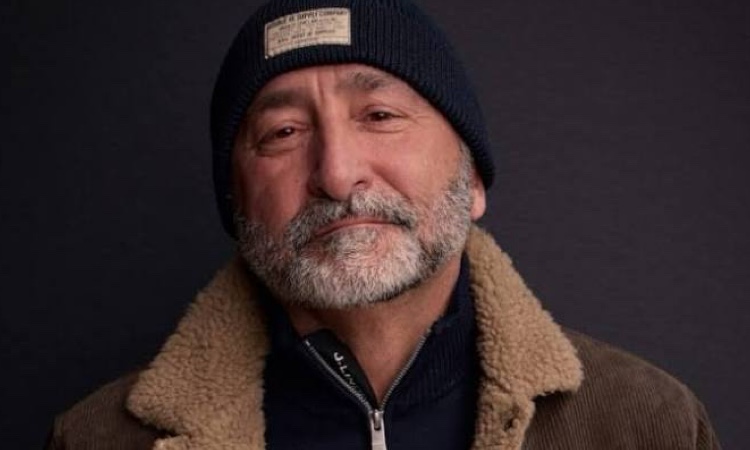
Kaveh Zamanian, the founder of Rabbit Hole Spirits, is one of American whiskey’s most inspiring entrepreneurs. His path from Iranian refugee to psychologist to master distiller and CEO is the American Dream. Kaveh was fourteen when he and his parents fled Iran during the 1979 revolution.
His winding road took him from Southern California to Arizona, New York, and Chicago, where he put himself through school, working in bars and restaurants. He earned a doctorate in clinical psychology and built a twenty-year career as an academic and psychoanalyst.
Then, with no spirits experience, he started one of bourbon’s most creative distilleries. “I really never set out to be in the whiskey business,” he said.
Like many immigrants, Kaveh wrestled with questions of belonging and identity. Whiskey became a way of exploring them, first through Scotch and then through bourbon, which he discovered through his wife, Heather, a Louisville native.
Years earlier, Kaveh had watched Napa and Sonoma grow into world-class wine country. When the family moved to Louisville in 2008, Kentucky felt like the early days of that story. “Bourbon was not what it is today,” he said. “What fascinated me was the intersection of craftsmanship, culture, history, and storytelling.”
Why the Rabbit Hole Moniker?
As the saying goes, every whiskey tells a story.
“The name came from my wife Heather,” Kaveh said. At the time, the couple had a seven-year-old, a five-year-old, and a four-year-old. “So you can imagine telling her I’m thinking about switching careers after twenty years, with three little kids in tow, to get into a business I’ve got no experience in. She said I was going to take the family down the rabbit hole with this crazy idea, but the name stuck.”
“I learned a lot from my patients,” he said. “Many of them either didn’t know what they wanted in life or, if they did, didn’t have the gumption to go after it. In helping them, I learned I needed to follow the same suggestion. I knew I loved making whiskey and creating something from nothing. I would have had regrets if I hadn’t taken the leap.”
“When I started thinking about Rabbit Hole, my goal was to challenge the assumptions and create a genuinely unique American whiskey company,” Kevah said.
He had watched American beer go from Coors, Miller, and Bud to an explosion of craft creativity, and he brought that spirit to bourbon.
Federal law requires bourbon to be at least 51 percent corn. Most Kentucky distillers fill the rest with rye, producing bourbon’s traditional sharp, spicy character. Kaveh saw the remaining 49 percent as creative space the industry was largely ignoring.
“Why weren’t more people capitalizing on the basic principle that as long as you have 51 percent corn, you can play around with the other ingredients and genuinely have a culinary approach to whiskey making?” he said. “That ultimately became the cornerstone of what Rabbit Hole is all about.”
He set up his distillery as a working kitchen for whiskey. “I describe it as a craft distillery designed to scale. It gives us a lot of flexibility to play around with different recipes.”
Rule-Breaking or Just Breaking?
One of Kaveh’s boldest decisions was to make his own recipes rather than source aged liquid from an existing distillery, the common shortcut that gives a new brand something to sell immediately. “I wanted consumers to have a unique whiskey they could not find in any other bottle,” he said.
But a distillery making its own whiskey has nothing to sell for years. Kaveh managed the gap by distilling for other brands while Rabbit Hole’s own liquid aged.
“It was,” Kaveh said, “either a method of rule-breaking or a rather stupid way to start a business.”
Heather, ever practical, told him to buy a few barrels just in case his own turned out lousy. He did, and those barrels were eventually finished and released in Rabbit Hole’s Founder’s Collection.
He also broke with tradition by building in modern downtown Louisville rather than out in the countryside, where Kentucky distilleries have typically been sited.
The varied Rabbit Hole portfolio reflects Kaveh’s culinary philosophy. Cave Hill, one of the original releases, is a four-grain triple malt bourbon that uses honey-malted barley as a flavoring grain.
Raceking is a five-grain double chocolate malt bourbon and is among the most unusual expressions in American whiskey. Just seven percent of the mash bill consists of chocolate-malted rye and chocolate-malted barley. “It’s almost like spice off the spice rack,” Kaveh said. Typical bourbon mash turns golden yellow during fermentation. “With Raceking, the fermentation tank is deep, dark chocolate.”
Dareringer, named for Heather’s maiden name, finishes a wheated bourbon in Pedro Ximénez sherry casks from Spain, bringing notes of raisins, currants, almonds, and vanilla.
“People are kind of surprised because these expressions are not your typical Kentucky high-rye or wheated bourbon,” said Kaveh. “There’s an element of surprise, and generally a pleasant one.”
What’s the Story?
Rabbit Hole attracted interest from major international suppliers soon after the distillery opened in 2018. About one year later, Kaveh entered into a partnership with Pernod Ricard in 2019, and the company fully acquired Rabbit Hole in 2024.
“I had big ambitions for the brand,” Kaveh said. “It made sense to have a partner who can be there for the long haul.”
Kaveh served as Pernod’s chief whiskey officer until late 2025 and still has joint ventures with the company.
One joint venture is a bourbon named Mary Dowling. Mary and her husband, John, were Irish immigrants who built a whiskey business after the Civil War. When John died, Mary rebuilt and ran the Waterfill and Frazier distillery on her own. When Prohibition closed her doors, she moved operations to Juárez, Mexico, where she legally produced bourbon and bootlegged it back across the border. Today, one expression is finished in tequila barrels, tying Kentucky to Mexico in the glass.
“People don’t fall in love with products’ Kaveh told me. “They fall in love with meaning,” he said. “Our taste buds are tied to our mind. Who you’re with, what you’re drinking, and what story you’re being told all impact your taste.”
That’s why every Rabbit Hole bottle carries a name that tells a story. For Kaveh, the story is part of the flavor.
Whither Whiskey Today?
“Whiskey rewards long-term thinkers and punishes shortcuts,” Kaveh said. “The people who got into the industry thinking they were going to make a quick buck are the ones seeing the most challenges now.”
With tariffs and other headwinds slowing exports, the industry is sitting on substantial inventory. Kaveh calls it a setback, not a catastrophe. “You’re going to see higher-aged products, more quality products on shelves. It’s challenging times for suppliers, but good days for consumers.”
As America recently marked its 250th anniversary, Kaveh told me that whiskey has been part of its story from the start, including George Washington’s rye distillery. “Whiskey has always been connected to agriculture, entrepreneurship, immigration, innovation, resilience,” he said.
“You would think there would be a lot of challenges,” he said. “A guy named Kaveh, going to Kentucky to make bourbon. But I had the good fortune to have amazing people help me out.” He believes that welcome runs deep, because many Kentuckians descend from Irish, Scottish, French, and German immigrants who came here to forge their own path.
And How Does That Make You Feel?
The one question almost every clinical psychologist asks is, “How does that make you feel?”
In Kaveh’s case, the answer is in the glass. He arrived in America as a teenager, became a psychologist, and two decades later, started over when many fathers of three would have stayed put. America, he says, gives everyone “a chance at bat,” whether they strike out or hit a home run. Kaveh swung.
Rabbit Hole drinkers reaching for a bourbon with chocolate-malted rye or honey-malted barley are the beneficiaries of an immigrant psychologist with grit and determination. Turns out Kaveh knows how to make people feel good.