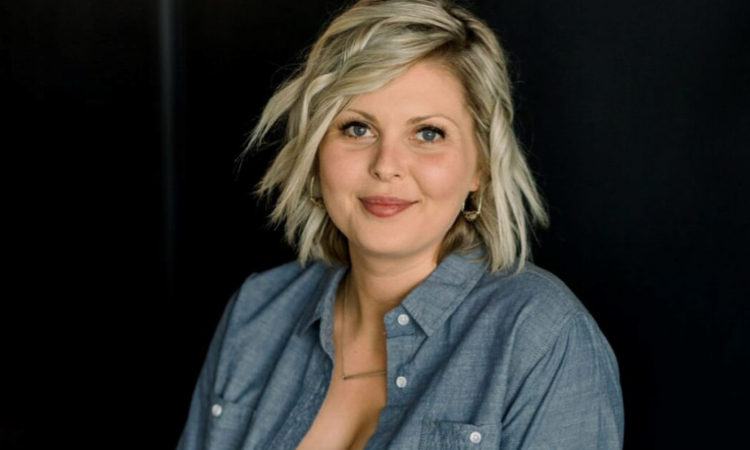
Randy Warren sits down with Marianne Eaves, Kentucky’s first female master distiller, to explore her journey from Brown-Forman to Castle & Key and ultimately to Forbidden Bourbon. Marianne pulls back the curtain on her unconventional mash bills, the use of food-grade white corn and white wheat, and why she believes bourbon’s future depends on expanding its geographic and creative horizons. The episode also features a standalone segment on barrel finishing techniques and what they mean for the modern bourbon landscape.
 Apple Podcasts
 Amazon Music
 Spotify
 YouTube
Read a chapter from Whiskey Rule Breakers featuring Marianne Eaves.
Transcript
Randy Warren (00:06):
Welcome to Whiskey Shenanigans. I’m your host, Randy Warren. Whiskey Shenanigans, where we help our listeners experience the world of whiskey, every aspect of life, as if it was accompanied by a glass of bourbon. The sports world on whiskey, basically every part of life on whiskey. Whiskey Shenanigans is about getting exclusive interviews from Bourbon Row in Kentucky, where we can learn about the secrets that make our favorite bourbons unique. We will get inside the hearts and minds of many distillers and help you understand what and how they are achieving it. Whiskey Shenanigans is about going beyond boring podcasts featuring just tastings. Heck, what do you get out of that anyway? It’s about bringing on guests and experiencing the entire world through whiskey. But be warned, if you’re diving in and you want to participate in these riveting discussions, you will need to grab a glass or a dram and be prepared to be entertained.
(01:10):
Well, it’s great to have you on, Maryanne, and it’s really great to meet you.
Marianne Eaves (01:15):
Thank you very much.
Randy Warren (01:17):
We’ll just dive right in and get going. I mean, you were the founding master distiller over at Castle and Key. And when did that happen? You left in 2019, but when did you join? I
Marianne Eaves (01:31):
Started with Castle & Key, that was 2015 officially. So I had been speaking to them kind of the end of 2014, but made the move just very beginning of 2015. Yeah.
Randy Warren (01:46):
I was there at Castle and Key with some friends, but it was only a year and a half ago. So you weren’t there when I was there.
Marianne Eaves (01:56):
Gotcha. Yeah.
Randy Warren (01:58):
But still, they sent me a really nice bottle to try and I was thinking about it just before we were talking and I’m like, they sent a bottle recently, maybe two months ago, and it was the same week I got three or four other bottles. And so I had all these bottles lined up and I’m like, okay, let’s try all these and see which one’s the best. Got to say, Castle and Key was the best. Oh
Marianne Eaves (02:25):
Nice.
Randy Warren (02:26):
They must have learned something from you.
Marianne Eaves (02:30):
The original recipes all were from my mind. I created the processes and the initial recipes. I’m not sure what they’ve done with things since I’ve left, but I was really proud of what I created there.
Randy Warren (02:41):
When you left Castle & Key. Well, let’s talk about the recipes first. They came out of your head. So what mash bills did you make up at that time?
Marianne Eaves (02:53):
Well, when I was in the original development of process at Castle & Key, I was really looking historically to try and figure out a mash bill that would have been kind of similar to what Colonel Taylor had produced there at the distillery. And one of the first things that I tried with the original founding partners was this pre-prohibition distilled old tailor. And it was really interesting. And I actually took a sample of that bottle to Pat Heist and Shane Baker over at Wilderness Trail and had them analyze it and see if we could try and reverse engineer what the recipe might have been. He spoke a lot about how he used white corn, so I knew that that was going to be my basis. Also had them into the distillery to try and find a yeast strain that might have been latent just sitting there in the distillery.
(03:42):
We found some rusty old pipes that actually had some yeast mash still sitting in them. Unfortunately, not a yeast strain that was viable, but it was a fun process trying to look back into history through science, which wasn’t as developed back in the time that the E.H. Taylor distillery was in its heyday, but using our modern technology to try and decode the past was really a fun part of rebuilding those recipes. But I did want it to have my
(04:16):
Kind of fingerprint on it. So using the white corn, a modern variety of white corn. I did try some heirloom varieties of white corn that were really fun, but knowing that we wanted to scale, you had to be realistic with what was possible available. So yeah, I created, let’s see, it was four different bourbon recipes, so two mash bills, two yeast strains, and then one rye mash bill with two different yeast strains. So it was a pretty complex system that I put together to create those different mash bills that I would then blend together to kind of emulate the old style of what Y.H. Taylor had produced. But of course I never got to that point with that whiskey. I moved on from Castle and Key before any of that blending could be done. So what they’ve done with the product since I’ve left is entirely different, but of course their own architecture.
Randy Warren (05:16):
Right. That’s kind of fun though, to try to reverse engineer it. I did something like that with a representative from Johnny Walker where it was in a competition and we tried to reverse engineer, I think it was Johnny Walker black or green or gold. I don’t know what color it was, but we tried to reverse engineer it and there was a bunch of different teams. My team came in second. Hey,
Marianne Eaves (05:38):
Congrats.
Randy Warren (05:39):
Not bad. I mean, it would’ve been better to be first, kind of like Ricky bobbing
Marianne Eaves (05:45):
Right now. If you’re not first, you’re last. Yeah. If you’re
Randy Warren (05:48):
Not first, you’re last,
Marianne Eaves (05:49):
Right?
Randy Warren (05:50):
Yeah, but we came in second. And so we got pretty close, but it’s a fun process to try to reverse engineer stuff like that. Heck
Marianne Eaves (05:57):
Yeah.
Randy Warren (05:58):
Yeah. And so you left in 2019. Did you immediately start Forbidden Bourbon after that or did you take some time to think about what you wanted to do?
Marianne Eaves (06:06):
No, Forbidden was already being produced. So Forbidden was actually produced initially at Castle & Key in 2016. No, that’s not true. I started creating the mash bill for Forbidden at Castle & Key in 2016, originally distilled there in 2018. And then when I moved on in 2019, we moved production to Bardstown Bourbon Company. So the business partners, the original founders of Forbidden reached out to me right in the transition from Brown-Forman to Castle & Key and said, “Hey, we want to do something different. We read about you. We think that you’re the right person to create something new with us.” And I said, “Well, you’re going to kind of have to meet my business partners at the time.” So Castle & Key decided to contract produce for the Forbidden brand, and I believe it was the first contract client of Castle & Key. So I developed the recipe as Master Distiller of Castle & Key.
(07:02):
And then when I moved on, they were like, “Okay, well, you decided to move on from Castle & Key, but you can’t leave us.” Brought me on as a part small percentage owner in the company. And I’ve been along for the ride with them since 2016, really, but as a business partner since 2020 or something like that, 19 or 20 at some point.
Randy Warren (07:28):
So just about the time when bourbon just exploded in popularity, that was a good time.
Marianne Eaves (07:36):
I know COVID was crazy. It changed everything.
Randy Warren (07:39):
It really did. It really changed everything. We’re still dealing with the aftermath, at least in the whiskey industry anyway.
Marianne Eaves (07:48):
100%.
Randy Warren (07:50):
In every other way too.
Marianne Eaves (07:51):
Yes.
Randy Warren (07:55):
You’re clearly a trendsetter, first woman distiller, all this kind of stuff. What would you say is your most whiskey rule breaking kind of thing that you’ve done in terms of creating these bourbons that you’ve worked on?
Marianne Eaves (08:16):
Whiskey rule breaking. I don’t know. I think my existence in this industry is really just ruffled feathers in a lot of ways, but I make really good product and that’s kind of undeniable. So I’ve kept my place. I think that as far as rule breaking goes, what I did during COVID with the Eves Blind program is really where I would like to push more of my energy as I evolve in this industry. I would love to see the industry evolve into, I’m talking about the bourbon industry specifically, evolve into a conversation that’s not so much about state by state, but more into regions of production. So you mentioned scotch earlier, the scotch regions of production really simplify our understanding of what we’re drinking. And we have nine unique climate regions in the United States that would be so much simpler than thinking about 50 states, 50 styles of bourbon and within each state.
(09:23):
Some states like Texas and California have multiple climate regions within one state. So there’s a way to draw the map that would make more sense and tie production regions together and give us a new way to talk about it. And I also think that if we want to see innovation in bourbon, there’s definitely more ahead of us than there has ever been behind us. And I think a part of that is because of the scientific advancement that we talked about earlier, but also looking for new perspectives. And I think that the first step to finding new perspectives in this industry is broadening the accepted geography of where things can be produced. So if people always repeat the same kind of tired narrative that Kentucky makes the best, you don’t need to worry about anybody else, then we’re missing now 49 states that are producing really cool, unique quality bourbon.
(10:27):
And that’s been kind of my mission since 2020 when I first launched Eaves Blind was highlight producers outside of Kentucky, Kentucky’s fine, but outside of Kentucky that are making really excellent products. So they’re making their own, bottling their own and doing it for passion and quality and craftsmanship.
Randy Warren (10:45):
Yeah. I’ve interviewed a bunch of them around the country and some of them are really, really good. Some of them are. I don’t really find though that anybody’s trying to replicate what Kentucky does. And I’m not sure if that’s good or bad, but it’s like they focus on the local grains and that sort of stuff. But like you said, when you wanted to reverse engineer Colonel Taylor’s recipe, it’s like you use the white corn. So the corn that you use is really important. If you’re using cattle feed corn from some arid spot in Texas, I don’t know how you’re going to produce a really good quality bourbon from that, but it’s going to have a different taste, that’s for sure. It’s not going to be Kentucky, that’s for sure.
Marianne Eaves (11:34):
Oh yeah, absolutely. But I will say the primary source of corn used in Kentucky is cattle feed corn. So it’s feed grade corn. And that’s a big differentiation actually in my product and forbidden is that we use food grade grain instead of feed grade grain. Most large scale distilleries can’t do that just because they need the assurance of having the quantity available and feed grade grain is how they make sure that they always have the volume of grain that they need, which is a huge volume of grain that they go through.
Randy Warren (12:10):
So is forbidden using the bloody – No,
Marianne Eaves (12:13):
No, no. No, it’s a white corn.
Randy Warren (12:16):
It’s
Marianne Eaves (12:16):
A red corn. Yeah.
Randy Warren (12:18):
And at least one of them is a wheated,
Marianne Eaves (12:20):
Right? Forbidden is all the same recipe, 12%, sorry, 75% white corn, 12% white wheat, 13% malted barley. All food grape grain.
Randy Warren (12:31):
Right, right. Excellent. And how did you arrive at that formula? Just curious.
Marianne Eaves (12:37):
Again, it was just a series of testing, some trial and error. And my business partners, all of them live in South Carolina and the primary, I don’t know, the principal partner, Daniel Reckman came to me and he said, “We eat a lot of white corn in the summer. I’d like to maybe use that as a base grain.” I was like, “Allright, that’s great. I’ve already been using that in the old Taylor recipes. So white corn, got it.” And then I was thinking, “How could we do something unique to balance the white corn, do something that’s in that kind of softer expression?” And so white wheat really stuck out to me. I had never used it before, but started sourcing and doing some experimentation. And what I found is that it’s a food grade grain. People use it to make bread and crackers. And there’s a reason for that because it doesn’t have that red seed coat.
(13:33):
It’s not as drying or tannic. And that definitely comes through in the quality of the product. So every other wheated bourbon that you’ve ever tried likely would be red wheat. And there are some, I’m not going to say I’m the only one that has ever used white wheat. That’s not true. I’m not the only one that’s put white wheat and white corn together, but this is an intentional brand recipe. So it’s not just an experimental recipe that I’ve made one or two barrels of. I actually have about 10,000 barrels of this recipe because I went through all the iterations. I think I’ve perfected it, picked a unique yeast strain to go with it. And then we also, in my fashion, I wanted to make a statement in using a high percentage of barley, even higher than the wheat because it gives it a little bit more of a European style, so that high barley content.
(14:28):
But also just making the statement, I’m not skimping on ingredients on the expensive ingredients. It has a mouth feel to contribute. It has flavor to contribute. Everything that I’ve done in creating the Furbidden brand has been about quality and flavor first.
Randy Warren (14:44):
That’s awesome. And I’ve interviewed probably 30 master distillers this year and nobody’s mentioned white wheat before. That doesn’t mean they don’t use it.
Marianne Eaves (14:54):
That’s rare.
Randy Warren (14:55):
Yeah. I haven’t mentioned it. So pretty interesting. And when people try this, what kind of reaction do they give? Any interesting ones? Somebody’s like, “This is the best thing I’ve ever had. This is the worst thing I’ve ever had.”
Marianne Eaves (15:11):
I haven’t had anybody say it’s the worst thing that they’ve ever had. I have had some people like, “This is different.” And when you’ve set up a table, I’m doing a unique bash bill intentionally. I’m creating a different. I’ve done a unique process as well with a low temperature fermentation process because I want it to feel and taste different than what you get everywhere else. So folks are, they might cock their head a little bit at first. They’re like, “Oh, this is different, but I like it.” And a lot of people like wheated. A lot of people know they like wheated, but they’ve experienced wheated in a different way, this with the white corn, white wheat combination. And when we first launched, we were about five years old. I waited until the product was five years old to launch. So I mean, it wasn’t like it was young, but people still wanted to think that it was young.
(16:07):
And another interesting thing is that the white corn is kind of softer than yellow corn. So the biggest difference in flavor profile is that it’s just not as corny. And a lot of people point to that corn note as being the kind of marker of immaturity in bourbon. So if it’s not so corny coming off the still, like the new make is not as corny, then even at a younger age in the mature product, it’s going to taste more mature because it’s not as corny before it goes into the barrel. So my recipe, it’s just different. And a lot of people love it. I’ve had a lot of people say it’s the only thing that I want to drink, but it’s a little pricey. I get that. But I love it. And honestly, I don’t think it’s just because I made it. It’s what I reach for first.
Randy Warren (17:05):
Sure. Is the white corn as sweet as the others?
Marianne Eaves (17:08):
It’s not a sweet variety, so it’s not got a higher sugar content necessarily. It’s just a little bit gentler flavor profile.
Randy Warren (17:16):
Interesting. Interesting. So how did you decide personally how to get into this business? When did that happen?
Marianne Eaves (17:23):
Back in college. I was a chemical engineering student at the University of Louisville, had to find an internship. My dad was originally a scotch drinker. He kind of pushed me to chemical engineering. And then when it came time to choose an internship, so I was very introverted. I’ll start there, very introverted as a college kid. So I had a hard time putting myself out there. So I knew that I needed to interview with as many people as would have me. So I did seven or eight different interviews with different companies, all from extracting soy protein to creating roof adhesives all across the board. And eventually wound up getting an internship with a renewable energy research position at the University of Kentucky and then making bourbon at the university of, sorry, not university, at Brown-Foreman through the University of Louisville co-op program. So I applied through the normal channel through through U of L.
(18:38):
And I also was actually training mixed martial arts at the time. And the owner’s wife who taught the ladies jiu-jitsu class is an accountant at Brown-Foreman. I’m not sure if Jo Cannon is still there or not, but I asked her, I was like, “Hey Joe, would it be possible that you could connect me with whoever runs this internship program so that I could apply directly?” And she did. And so I think that also stood out to them, this college kid finding this creative avenue to get their resume notice. And I was also a non-traditional student, so I didn’t start right away. I didn’t start college right away after high school. I took a little bit of time off. So I don’t know, not that a year and a half makes you that much more mature, but I lived a little bit of life. I helped my mom open a business that failed pretty quickly and they say fail early, fail fast or something like that.
(19:40):
So I got that out the way. I’m going to
Randy Warren (19:41):
Fail, fail fast.
Marianne Eaves (19:42):
Yeah. I got that out of the way and then decided to take my dad’s advice, do chemical engineering, and then found my way to Brown-Forman through mixed martial arts.
Randy Warren (19:57):
Wow, that’s incredible. That’s incredible. I haven’t seen any mixed martial arts things on Instagram. We got to do some kickbox on Instagram.
Marianne Eaves (20:06):
You know what? I am turning 40 in December. I did it in my 20s. Feels a whole lot different now, but I had been going with Fred a little bit. So Fred Minnich is big into Brazilian jiu-jitsu. I would say 52% of his content is jiu-jitsu stuff. But I went to the gym that he goes to a few times and I love it. It’s a really great gym. The people are wonderful, but I do truly feel like I’ve been beat up every time I go. And it’s in Louisville. I live in Lexington, so it’s a little more than an hour away from me. So it was kind of a hike to get there, but I was going on a weekly basis there for a little while, but I’m nursing an injury right now. I don’t know. I just got out of the swing of it.
Randy Warren (20:54):
Right, right, right. So what would you say? I mean, it seems like whiskey means a lot to you. What does whiskey mean to you?
Marianne Eaves (21:01):
That’s interesting question. I don’t know that I’ve ever really sat down to think about it, but it has been so much of my life. I have thought about it a lot recently. What would I do if it weren’t this?
(21:20):
And I feel like my identity is kind of tied up in it. I’m really good at it. So why do something else when I’m passionate about it? I’m really good at it. But the way the industry is moving right now, it’s tough. So if I were going to reinvent being where I am in the industry, what would I do? But it’s hard. And I think that it’s the community too. It’s not just the product, it’s the people around it, the people who make it, the people that enjoy it. It’d be really, really tough to try and find something else that scratches all those different itches.
Randy Warren (22:00):
Yeah. Why do that? I mean, if you’re good at it and you found your niche, so to speak.
Marianne Eaves (22:08):
Yeah. As long as I can keep the lights on,
Randy Warren (22:12):
I’ll keep
Marianne Eaves (22:12):
Doing it.
Randy Warren (22:14):
We all kind of search for why do we do what we do? And you’ve kind of found that. You just said it. I mean, this is why you do what you do and that’s what makes it fun. What kind of questions do people ask you, like whiskey drinkers and they say, “How should I approach bourbon?” I mean, what do they ask?
Marianne Eaves (22:36):
Oh, do you really drink bourbon? Do you really drink it? Silly questions. Yeah. Yeah. People, they always want to know what are my go-tos? What do you drink at home? That sort of thing. Is there anything that you want to try that you haven’t tried yet? Will you ever build a distillery again? Those kind of things I think people tend to be fascinated about. But me uniquely, having the title of Kentucky’s first female master distiller, there is always a lot of that too. How has it been being the one to break the glass ceiling?
Randy Warren (23:24):
What
Marianne Eaves (23:26):
Has that journey been like? And I’ve been having that conversation for so long now. There are so many more women that have risen up in the industry. I think that I’m just really proud to have carried that torch. I’m really excited to see how it continues.
Randy Warren (23:49):
Recently and Nicole. Yeah.
Marianne Eaves (23:52):
Elizabeth trained with me as Master Taster before I moved on from Brown-Forman. I’m really super proud of her.
Randy Warren (23:59):
Nice. You guys have done an amazing job of carrying that torch. I can’t imagine, but I’ll ask, have you experienced any kind of like, oh, you’re just a woman kind of thing? Has that been a thing or is that not even a thing anymore?
Marianne Eaves (24:15):
No, it’s definitely a thing. I would say it’s still a thing too, which is unfortunate. Yeah. And I guess that the news just kind of slowed down there for a minute. So Forbidden has been on the market for about three years now. When we first launched Forbidden, there was another flurry. It seems like whenever anybody gets super interested in my story, we start talking about Marianne being Kentucky’s first female master distiller. But here, 10 years later or now 11 years later after it happened, people are saying clickbait. She’s not the only one, whatever. And it’s true, I’m not, but I was the first. And I think that while there are still people who are interested enough to ask the questions, I’m going to answer them. What I do hope for a future when the designator of male or female doesn’t have to be stuck to the title, our industry is not to a state of equity where you would assume walking into a room, if it was half filled with men and women, that most people who walked in the room would assume that the master distiller was in the group of men.
(25:37):
There have been very few times. I would say never has there ever been a time I walked into a room where somebody assumed that I was the master distiller.
(25:48):
Their assumption is quite different for what I contribute to the industry when I walk into the room. It’s usually marketing or press or digital media or something like that. Never is it production and certainly not. This young woman is not only a chemical engineer, but the master distiller, the one who’s created the processes and the recipes and everything else. But there’s
Randy Warren (26:14):
Been women throughout the history of bourbon that have been hugely instrumental. I mean at Maker’s Mark, all over. Women have been, they have their fingerprints all over this industry.
Marianne Eaves (26:27):
100%. It
Randy Warren (26:28):
Should be appreciated, right?
Marianne Eaves (26:31):
It should be acknowledged and appreciated, yes. And so there’s a woman, Leah Kingsley. She is from Kentucky, lives in LA. She’s an actress, but she is directing and producing a documentary about women and our contributions to the whiskey industry called The Spirit of Women. And I think she’s having trouble getting it funded because people just don’t think that most folks are going to be that interested in only the stories of women in this industry. So it’s again, I think just indicative of we’re not as far as we think we are, but we have made progress. I mean, things happen very slowly in Kentucky. The bourbon ages slowly and unfortunately people’s minds just changed a little slow around here. They
Randy Warren (27:16):
Do.
Marianne Eaves (27:16):
We have to have a little bit of grace and patience and we’ll get there, I think.
Randy Warren (27:23):
How do you see whiskey, the future of a bourbon in particular? I mean, we’ve gone through this incredible boom during COVID and then it’s cooled down and people are like, oh, there’s a glut. People say all sorts of stuff.
Marianne Eaves (27:41):
I fully believe that. I think that because I was seeing it and what was happening and when I transitioned away from Castle and Key, what types of folks were starting to get into investing in
(27:57):
Building whiskey inventory. And then some of the conversations that I was having for people that wanted me to help them devise recipes for investors and that sort of thing during COVID, there were hundreds of thousands of barrels that were laid down just by people who were hoping to turn them and make a profit, not wanting to build a brand, not trying to add to the industry in any kind of interesting way, just truly seeing it as an investment, which there’s nothing necessarily wrong with that, but it was too much. And now we’re in a position, how do I want to say this? Politically, economically that it’s made it hard to rebound and find avenues to sell that bourbon. I mean, what happened between us and Canada was devastating to so many brands, the tear offs and basically blocking bourbon out of the country where that was a huge portion of sales for many brands.
(28:59):
But as it does, it’ll have a moment and it will recover eventually. It will look different on the other side and then who knows exactly when the other side will be, but I think that there will always be a place for thoughtful producers of quality product if we can band together to make it through.
Randy Warren (29:22):
Yeah. And the American Whiskey Association, I know Michael Bilello is traveling the world trying to make bourbon, the whole world’s whiskey and not just America’s whiskey. Absolutely. If he can do something in India, I mean, there’s something like a billion whiskey drinkers in India that. I mean, bourbon is fabulous. So it’s probably, I’m just guessing it might be better than what they make in India. I don’t know that for sure. But I’m just guessing.
Marianne Eaves (29:55):
It’s different. Yeah. I mean, bourbon is definitely A unique style in the landscape of global whiskey. And a lot of people, I mean, the majority of folks around the globe, excluding the United States, and I would even say across a lot of the United States, don’t understand what makes bourbon so special. So having advocates like that is going to be vital, crucial for bourbon to withstand this challenging time.
Randy Warren (30:24):
And what does bourbon mean to the United States and what does the United States mean to bourbon? It’s a cultural question.
Marianne Eaves (30:34):
Yeah, totally. I mean, bourbon is a part, it’s infused in the history of the United States. I was never a history person. I never really cared much about it, but training underneath Chris Morris, who is a historian at Brown-Forman, I learned how closely knit the making and development and evolution of bourbon in our country ties to the history of the nation itself. So it is interwoven into the fabric of the United States. And so they cannot be separated truly, even though it wasn’t actually designated as a product of the United States until 1964. It was very much born from the American spirit, the early settlers that came from Scotland and Ireland and in Germany and brought their craft with them. And I think that that’s the spirit of it that I would really like to tap into as well, that again, exploring how those influences of geography and history and what are folks doing in other countries across the world that could change the flavor profile if we make some tweaks in the process.
(32:04):
And people often say, “Well, there’s not anything you can do because it’s so highly regulated.” Well, that’s true. Has to be 51% corn, can’t distill it above 160, have to go into the barrel below 125, all of these things. But as a chemical engineer, every small detail, every small variable, every change in a temperature or a time point can have an impact on the flavor. And there’s so much more to play with than most people even start to dream of. So I’m really excited to not only go back to early production methods, but also look at production methods of spirits globally and try to inspire what we do next.
Randy Warren (32:50):
Yeah. And maybe like you’re saying, I mean, it’d be interesting to integrate some ideas from the rest of the world. Now you can’t do that and call it a bourbon, but you can take a bourbon that is officially a bourbon and you could blend it with something else.
Marianne Eaves (33:05):
Yeah, for sure. So I worked on this brand with Peyton Manning called Sweeten’s Cove. And the last product that I produced for them was the 2022 release and we ended up finishing it in scotch barrels. It took a long time to get that product out because what I wanted to do was blend bourbon with scotch and then age that in scotch barrels. But it was just impossible to get the product that I wanted from Scotland into the US during that time. COVID, everything was all challenging. But yeah, I’ve seen BBC doing that. They just launched one. What was that? Was it Indian whiskey that they mixed with or was it Japanese? I can’t remember, but one or the other. If they haven’t done both, they will because of their network and their connections and how experimental they are. But yeah, I love seeing that commingling of the product.
(34:06):
But even keeping all the regulations in place, say for example, in the tequila production process, there’s a point in time where they oxygenate the new make for a hundred hours or something like that. It could be longer or shorter before it goes into the barrel. If I started bubbling oxygen through new make whiskey before it went into the barrel, how might that change the flavor profile? Just something as small as that, that’s inspired by international production methods, but it’s still bourbon. I mean, adding a little bit of air to the process isn’t changing my classification. So those are the kind of things that I’m talking about.
Randy Warren (34:48):
And every single I’ve learned, I mean, I’ve been doing this podcast asking you guys questions and I’ve learned every single detail matters for the taste.
Marianne Eaves (34:56):
Yes, it does.
Randy Warren (34:57):
Yes, it does. It’s shocking because you kind of go into this thinking like, all right, so everybody’s distilling this stuff. Everybody’s got a yeast. How much difference does that really make? I don’t know. There’s a little bit more floral here or that there and whatever, but it’s kind of all the same and then they mature it. But they’re all so different. And how does it end up being so different if all these little details don’t matter? And they become just triggers that you guys can pull to affect the flavor. So you guys have a lot of decisions to make every time you go into the lab to make a new bourbon.
Marianne Eaves (35:35):
And I think that’s one of the most exciting opportunities that I saw the reason, and folks were shocked when I moved from Brown-Forman to Castle & Key. They just really didn’t understand why I would leave an opportunity like being the next Woodford Deserve master distiller to jump into the unknown like I did. But I think one of the things that I was most excited about was the exploration and the experimentation and getting to ask my own questions and find my own answers. Working for a big corporation like Brown-Forman, I’m not saying they aren’t experimental, but the guidelines that the brands have are pretty tight and they don’t allow for much variation. And so some things that I might have played with on an R&D scale will never see the light of day just because they don’t have a brand that it would fit into. Those boxes are so tight for each one of the brands that they produce.
(36:35):
But when I got to Castle & Key, it’s like all of that opened back up. So I wanted to try these different heirloom varieties of white corn at Brown-Forman. They wouldn’t have even entertained that because they need certain quantities for many reasons. And I’m not saying, again, I’m not trying to divulge any crazy secrets here, but they do have some experimental expressions that they’ve released along the way, the distillers series and that sort of stuff has been really cool to see coming out from Woodford. I made a chestnut whiskey, which I don’t think you can technically call it a whiskey. It was a whiskey style chestnut spirit or something, but it was so delicious and there’s no category for that. So they would have to come up with a completely new brand. So that’ll never see the light of day, at least under the Brown-Forman umbrella.
Randy Warren (37:40):
Right. I was talking to John Rimpy over at Rebel and he’s got the Blood Oath product, which is perfect for what you’re describing. It’s like, listen, we don’t have a brand for this experiment, but we do have a brand for experiments. And it’s like, oh, that’s an interesting take on it because it’s like, hey, every year it’s going to be different and I’m not going to tell you what it is, but it’s going to be different and it’s going to be something unique and it’s going to be something experimental and it’s going to be something that you’re going to want to try. Totally. And next year it’ll be something different again. And meanwhile, we’ve got the other stuff over here, which is the tried and true, dependable, really good stuff. So a little bit of marketing genius, right?
Marianne Eaves (38:32):
Totally, totally. Yeah. And I think it’s good for them too. It gives you an avenue to stay inspired. Absolutely. When you get into the routine of just creating the same thing day in, day out, I’m not saying. I mean, it just gets a little monotonous.
Randy Warren (38:51):
Yeah. I don’t want to speak for Wes Henderson, but I did interview him and I’ll paraphrase, let’s put it that way. This isn’t what he said, but I’m paraphrasing. It’s like he was so successful at Angels Envy, he was captured by his success, so to speak.
Marianne Eaves (39:07):
It’s
Randy Warren (39:07):
Like you can’t change formula now, Wes. I mean, this is a hit.
Marianne Eaves (39:14):
It’s like golden handcuff kind of
Randy Warren (39:16):
Thing, right? Yeah. Golden handcuffs. Uh-oh, I’ve created something so good that no one will tolerate me changing it.
Marianne Eaves (39:23):
100%.
Randy Warren (39:24):
That’s its own problem for another day. Well, listen, thank you very much, Maryanne, for being on. Thank you for coming on and taking the time. I really appreciate
Marianne Eaves (39:41):
It. You are so welcome, Randy. I really appreciate your patience and working out the logistics to make this happen. It’s been an absolute pleasure.
Randy Warren (39:47):
No worries. All right. Here we are again, Whiskey Shenanigans fans. Today we’re going to talk about barrel finishing. Is barrel finishing innovation or overkill? In the past year, I’ve interviewed for Whiskey Shenanigans podcast, really dozens of master distillers, including Buffalo Trace and Bullet, Heaven Hill, Rebel, Jeffersons, Four Roses, Johnny Walker, Michter’s, Glen Fittich, Woodford, Maker’s Mark, and so many more. Why do we talk with these people? To find out about the innovations that they’re working hard on and get a glimpse at what new things are coming soon. For each and every one of them, or I should say each and every one of them, is working hard to bring you new expressions and the trends are constantly changing. Ultra aging techniques are abounding, but finishing techniques are still very important. It appears that buyers are not experiencing what some might call novelty fatigue, but rather look forward to and even covet the continuing parade of new releases and new expressions.
(41:07):
And Kentucky is happy to oblige.
(41:11):
What is finishing? There are specific requirements for whiskey, as you probably know by now, to be called a bourbon. And one of those requirements, by the way, is not that it has to be made in Kentucky. Common misconception doesn’t have to be made in Kentucky, just has to follow the requirements. Since the requirements include a prohibition of any kind of additive, the one tool left in the toolbox, and by additive, you can’t add honey to your whiskey and call it a bourbon. Honey bourbon. You can call it honey whiskey, but you can’t call it honey bourbon because it’s not a real bourbon if you add something to it like that. Can’t add vanilla. So since requirements include a prohibition to additives, the one tool left in the toolbox for the distiller is creating a fully compliant bourbon, then dumping the barrel out into a second barrel.
(42:09):
Due to regulations, you cannot just skip the first barrel, you have to do the first barrel because the first barrel is what allows you to comply with the regulations and actually be able to call it a bourbon. In order to be called a bourbon, that first barrel has to be brand new, unused, American oak. But wait, once the first barrel maturation is complete, the requirements have now been met and it is officially a bourbon. Now, after the initial requirements have been met, you can take your official bourbon and dump it into a second barrel for what they call finishing or further maturation. And the key is that this second barrel does not have to be brand new American oak. It could be a barrel previously used to age other alcohol such as Oloroso Sherry or Pedro Jimenez sherry or port Mediera or Marsala, red wine, rum, cognac, even champagne.
(43:14):
Almost all the master distillers that I’ve talked to on the podcast are using some kind of finishing technique. For example, if you’ve been listening, you’ve learned that Jefferson’s Ocean is not a gimmick. It actually works. It’s not really barrel finishing, but it is part of the maturation process and it is unique to Jefferson’s. If you’re not familiar with their story, it’s interesting. They take their barrels on a journey on the ocean, just like the old days when barrels moved from Kentucky down the Ohio River into the Mississippi, all the way down the Mississippi and around the Gulf, up the East Coast to major population centers in Washington DC, Baltimore, Philadelphia, New York City, and Boston. Jeffersons reproduces that journey and then they add to it. After New York City, they sail back down the East Coast through the Panama Canal and up the West Coast, across the Pacific, all the way to places like Singapore, and then back again.
(44:13):
The agitation of the ship movement adds to every drop in the barrel, becoming more exposed to the barrel wood, and the changes in climate as it moves around across the equator add to the whiskey breathing in and out of the wood and picking up more and more colors and flavors. One distillery that stands out, because they don’t really do barrel finishing in secondary barrels is four roses. They already have five yeast strains and two levels of rye in their mash bill, so they have the ability to create 10 different recipes or 10 different flavors within their core offering. So you might conclude, well, they don’t really need to do additional finishing because they can get all the flavors they need from these 10 different recipes that they’re working with. However, they have an anthology series, which is an ultra aging technique that brings you 20 plus year old bourbons.
(45:14):
Rebel Bourbon produces what they call blood oath, which is the master distillers packed with you, the customer, to bring you something unique each year that you will love. He’s not going to tell you all the details about it. He’s not going to give you the mash bill and all the how wine. Trust me, that’s what the pact is. I’m going to bring you something great and you’re going to love it, and the results have been outstanding. And if you can get some blood oath, I’d recommend you picking some up. Whiskey Shenanigans has even tried finishing. We created a recipe and we had it distilled, short aged and shipped to us. Then we finished it in the same style that Maker’s Mark finishes their barrels by adding staves into the wood, that means additional slats of wood into the barrel.
(46:16):
Those staves can be different types of wood. They’re not additives. We’re not adding vanilla or some flavor. We’re adding wood to the barrel, and that wood can stay there for one, two, six, up to maybe nine, 12 weeks, and you got to keep tasting it all this time until it’s just right. So they start with standard maker’s mark, then add staves to it. Whiskey Shenanigans distilled our own recipe, and then we added a stave to it, which is something you can buy off the internet, a corkscrew stave that doesn’t take up much space and gives you a lot of surface area, and is a new American Oak stave. Turned out real nice. Thus, finishing has become a pretty significant tool to bring you new flavors for existing bourbon products. Some of these turn out to be exceptionally good and become limited additions, rare, and incredibly valuable.
(47:22):
There you have it, Whiskey Shenanigans fans. It’s pretty straightforward. Finishing is a real deal. Everybody’s. Well, not everybody. The vast majority of these people are doing it, and that’s because it’s adding flavor. It’s changing a whiskey. It’s maturing that whiskey. It’s bringing out new flavors that weren’t there before. So enjoy.