WHY MISTY BLU STEWART IS A RULE-BREAKER
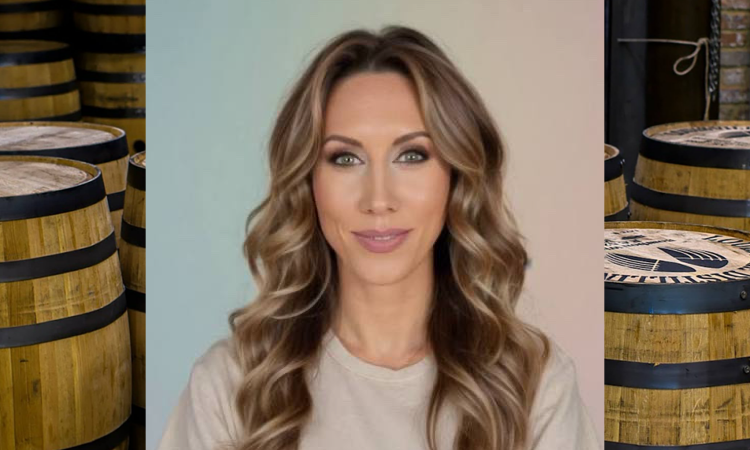
Misty Blu Stewart, the Market Manager at Lipman Brothers, is a bold storyteller and Nashville networker. She’s been a navy brat, a “fun governor,” a trustee at a secret speakeasy, and a builder of uniquely American whiskey experiences.
Misty Blu Stewart is the heartbeat of hospitality at Lipman Brothers in Nashville, Tennessee, where she coaches and manages a team of on-premise sales reps.
Misty brings a wealth of executive experience from the world of whiskey. In fact, she lives whiskey and thinks differently about it.
Lipman Brothers has deep roots in American whiskey history. Founded in the 1930s and headquartered in Nashville, the company was the first distributor to sell Jack Daniel’s following the repeal of Prohibition, along with several other major spirits brands of the era, placing it at the center of Tennessee’s earliest legal spirits trade.
Misty’s own story winds from a Navy-brat childhood to life as a Nashville lifer. Years ago at Brown-Forman, home of Jack Daniel’s, she served as a “fun governor,” building her network across Nashville’s Lower Broadway honky-tonks.
At Bourbon Plus, where she most recently served as Director of Experience, she turned her palate into a platform, leading a nice rebellion against how whiskey media has traditionally covered the category.
Today, she’s one of the most interesting voices in conversations about how American whiskey is talked about, tasted, and trusted.
A Navy Brat Who Found Home in Whiskey Country
Misty grew up moving from place to place as a Navy kid, spending time in California before eventually landing in Nashville. She said that she’s been in Music City for “more than half my life now,” which makes it the closest thing she’s ever had to a hometown.
She appreciates that on any random Tuesday, she can walk into a bar, hear live music, and drink something great. But for her, Nashville is a living culture of distilleries and bar programs for whiskey enthusiasts and newcomers alike.
Misty brings the same passion for whiskey home. “Several years ago, I bought a great house, but I built the bar before I fixed the roof. I now keep more than 400 bottles under strict house rules on what gets poured and what gets stored. I keep Jack Daniel’s ready at all times. And the roof doesn’t leak.”
Before joining Lipman Brothers, she spent years with Bourbon Plus Magazine as director of experience, and at Brown‑Forman, where she ran Jack Daniel’s on‑premise activations in Nashville with the Titans, the Predators, and the Broadway honky‑tonks.
“At Brown-Forman, I called myself the ‘fun governor,’ the person who made sure the brand’s footprint in bars felt like an experience,” she said.
Those years taught her that on‑premise is where brand promises either come alive or die. “On Lower Broadway, you could pour Jim Beam for two dollars less a bottle, but nobody will drink it unless the brand is relevant, and made people feel that they were part of the story,” she said. “In the minute that we stopped doing that, we’ve seen the results.”
The Daughter of a Deacon Who Bleeds Jack Daniel’s
Misty’s professional life doesn’t fit the story most people expect from someone raised by a Southern Baptist deacon who’s been sober since she was a child. Early on, her parents didn’t understand why their daughter’s golf shirts and hats had whiskey brands on them.
But Misty never saw a contradiction between faith, family, and whiskey. She has her own bourbon theology: if God made corn, water, yeast, and oak, it shouldn’t surprise anyone that we learned to turn them into something joyful. Whiskey, in her mind, belongs to the category of blessings and something to be enjoyed.
Her go‑to order is still Jack Daniel’s and water. She says she “bleeds Jack Daniel’s” and can taste it just by saying the name. After so many years with Brown‑Forman, Old No. 7 is home base.
Many drinkers who’ve “moved up” to high‑proof single barrels don’t go back to the black label. Misty always does, and she defends it as part of her origin story. Alongside Jack, she keeps a soft spot for Four Roses Small Batch, Elijah Craig, and Woodford Reserve. They are bottles tied as much to her memories as to mash bills.
Those reminders are literally stacked around her. When she moved into her current house, the first thing she built out was the bar—not the kitchen, not the bathroom, not even the roof. She had hundreds of bottles to protect.
“Anything sitting on top of the bar is fair game for guests, and anything on the shelves is off‑limits unless I pull it down for you,” she told me.
Some bottles will stay sealed for years until the right moment, the right person, and the right story line up.
Lighting Up Lower Broadway and Beyond
By the time Lipman Brothers came calling, Misty had built a successful on‑premise career inside a big supplier machine. She was well known in Nashville and the person that brands called when they needed Lower Broadway to light up.
At Brown‑Forman, her job evolved into managing distributor houses, allocations, and programming. This was work she described as more analytical than imaginative.
Bourbon Plus offered her a chance to help reinvent a media brand around her sense for experience and storytelling. When she joined, the magazine was still, in her words, “really ad‑driven”—a publication that often looked more like a stack of placements than great whiskey storytelling .
At Bourbon Plus, Misty did whiskey events, supplier‑rep and consumer‑interest stories, digital content, and annual ratings that many considered to be equal to or better than Whiskey Advocate’s lists.
The Half Monty
One of Misty’s best‑known inventions from the Brown‑Forman days is the “Half Monty,” a service that solved the industry problem of how to keep drinking through four events in one day without wrecking yourself or your brand.
The original whiskey-oriented Half Monty was half a shot of Jack Daniels paired with a half‑measure of Montenegro, an Italian amaro meant to help digestion. The idea evolved into dealer’s choice, where the bartender picks the Brown‑Forman whiskey—Jack, Woodford, Old Forester—and completes the other half with Montenegro or another amaro.
The dealer’s choice drink lowers the proof of each round and makes the bartender an active co‑conspirator. Misty doesn’t love low‑ABV products. so she doesn’t see them as a as a way to manage drinking volume.
The half Monty turned what could have been a throwaway shot into a small moment of theater. “I see the half Monty as a smart way to manage her drinking volume when her job is to show up at a happy hour, a dinner, an event, and a staff training, all in the same day,” she said.
Where she does get almost evangelical is about how to taste. The way she talks about nosing and flavor reveals another rule she lives by: there are no wrong answers, only unexplored memories.
When she was developing her palate, mentors encouraged her to stop censoring herself. If a whiskey reminds you of Marlboro Reds, orange peel, or your grandfather’s garage, they said, say it out loud.
“The process of naming connects the flavor in my glass to my memory library,” she said. “If something smells crazy at first, follow the rabbit,” she likes to say. “I name what I smell, chase the association, then polish it into what’s actually in front of me. That’s how I can go from “vanilla and caramel” to tobacco, leather, baking spice, and beyond.
Lipman Brothers: Distributors, Not Distillers
Lipman Brothers doesn’t make whiskey. In Tennessee’s three‑tier system, distillers can craft the best bourbon in Tennessee, Kentucky, or elsewhere, but still have no direct path into a bar three counties over, because producers are generally required to sell to licensed distributors, not straight to retailers.
A distributor like Lipman Brothers fills that gap by buying the whiskey wholesale, warehousing it, and delivering it to thousands of individual accounts.
Because Lipman doesn’t own the brands it sells, it trades in relationships, typically in a specific order.
The idea is that whoever controls distribution controls which bottles get poured. First, a distillery has to trust Lipman to hand over its Tennessee business in the first place. Then a buyer, like a store’s purchasing manager or a restaurant’s owner, has to respect Lipman to add a new bottle to the shelf or menu.
And finally, a bartender has to trust Lipman Brothers to reach for that bottle on a Friday night, since getting poured is a different win than just getting stocked. That chain of confidence, more than any bottle in the warehouse, is the business.
The company has built trust since 1934, when Harry Lipman founded Franklin Distributing Co., a liquor and wine wholesaler in Franklin, Kentucky, at the repeal of national Prohibition. His younger brother Meyer soon joined him. When Tennessee repealed its own ban in 1939, they moved the business to Nashville, officially named it Lipman Brothers, and received Tennessee State Permit No. 1, the state’s first wholesale liquor license.
Lipman Brothers became the first distributor of Jack Daniel’s Tennessee Whiskey in the state after the repeal of Tennessee Prohibition.
While national distributors grew by buying up competitors state after state, Lipman Brothers focused on depth over reach, concentrating on Tennessee accounts on the theory that a distributor who knows every bar and store personally beats one managing forty states from a spreadsheet.
Ninety years later, the company’s strategy is unchanged. The firm is still family‑run and headquartered in Nashville. The portfolio has grown beyond whiskey, into wine, beer, mixers, and cigars. It now sits alongside R.S. Lipman Brewing Company, parent to Hap & Harry’s Brewery in Nashville—whose Hap & Harry’s beer honors founder Harry Lipman and his friend Hap Motlow of the Jack Daniel’s family.
Distillers still need someone who knows every link in the distribution chain. That’s the trade Misty inherited.
Fixing What’s Broken in Whiskey Media and Culture
Misty rejects the common idea that Gen Z’s slower path to alcohol is a crisis for whiskey. “It’s true that younger generations are taking longer to get to alcohol,” she said, “Just as they’re taking longer to buy homes, drive, marry, or have children. But when they do arrive, they drink, and they care about authenticity.”
Misty has an unsentimental view of where American whiskey stands now. I asked her if the industry has reached saturation and she didn’t hesitate, “Yes, the whiskey industry has become saturated, but not in the way most people think.”
The noise, she argues, is coming from big‑label “premium” brands built on the same sourced juice with different packaging and marketing.
“The younger generations just want to believe in something just the same as we did when we were coming up,” she said. “So we got to speak their language.”
She’s candid about the industry’s fascination with low‑ABV “solutions,” especially the thought that younger drinkers will come back to whiskey if offered softer versions of it. In her view, people who don’t want to drink simply don’t want to drink. A slightly weaker cocktail won’t change that.
The real headwind, in her view, is the rising cost of goods and the way major suppliers respond whenever sales dip. The first budget cuts usually hit sales teams and consumer‑facing activations, the places where connections are made.
The Mount Rushmore of Mentors
Misty’s mentors, the people who pushed her and gave her a seat at tables she might never have found on her own. Together, they explain why she works the way she does.
First is John Hardaway, a Brown‑Forman veteran whom she credits with taking her seriously when she moved from behind the bar into the business. He was, in her words, “A good human and a good man, someone who saw more in her than a shift schedule.”
He loved Old Forester, and she still has a little left from a single‑barrel pick he helped choose before he died. The bottle was nicknamed “the shooting star,” and in her mind, that’s exactly what he was. That’s what she’d pour with him at the table.
Next is Tom Miller, another Brown‑Forman mentor who didn’t let her skate by on charm. “I once called Jack Daniels ‘generic,’ she said. “Tom laughed me onto a bus to Lynchburg.”
After a six‑hour VIP distillery day—culminating in Jake Owen playing acoustic on Barbecue Hill while she drank Jack Daniels on the rocks—Tom walked up and asked, “Is it original enough for you now?” He was the legacy on‑premise leader for Brown‑Forman for many years, and she eventually stepped into his role. If he joined her at Mount Rushmore, he’d be drinking Jack Daniel’s Old No. 7.
Her third face is filmmaker Eric Byford, the creator of a documentary series on bourbon and American whiskey. Years ago, she appeared as a background extra in a scene about the bourbon culture. Now she’s being interviewed as a steward of that story.
Some lists also include Dan Gardner of Four Roses, a retired industry stalwart who would be drinking Four Roses Small Batch if he were at her table. He represents continuity and craft, the idea that heritage brands can still surprise you if you pay attention.
Her mentors came from big heritage houses, independent storytellers, and people who insisted she see whiskey as both a business and an art form. Taken together, her Mount Rushmore four explain why Misty insists on experience and connection.
Why Whiskey Still Wins
Misty’s worldview is that people drink whiskey because it gives them something they can’t get from CBD seltzers, THC beverages, or the next wave of wellness tonics.
Whiskey tastes good, it offers a buzz that’s been part of human social life for centuries, and it carries history, legacy, and story in every pour.
She believes the pendulum will swing back toward that ritual. New categories will come and go, but they rarely inspire the same connection that a group of strangers turning into friends over a shared bottle would.
The future she’s working toward at Lipman Brothers is one where those moments are shared widely without losing their intimacy.
“I am honored to pass along my knowledge and passion to the next generation of whiskey pros, while remaining closely connected to the ever‑evolving market in Music City,” Misty told me. “There are special people and moments here that I don’t want to miss.”