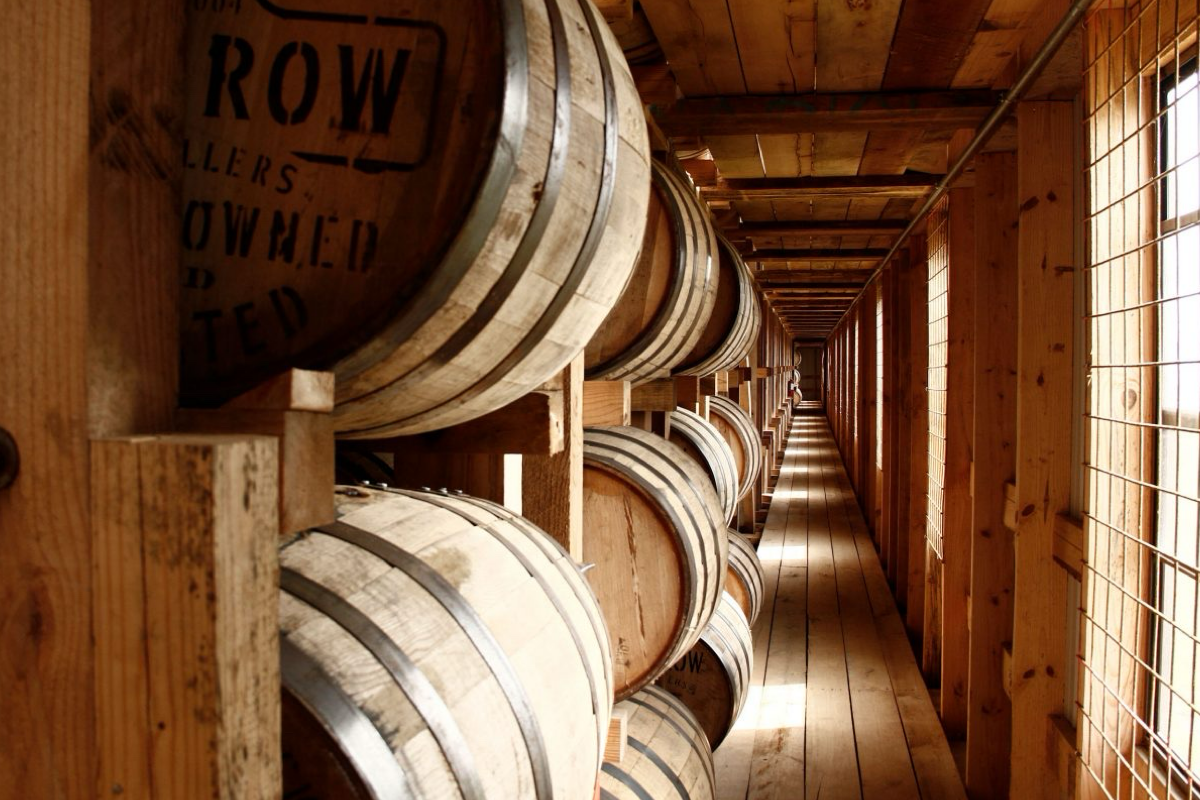
Barrel picking has been around since the early 1980s. Typically, a distribution retailer, such as Total Wine, would travel to Kentucky and visit a distillery like Buffalo Trace, and they would bring out several barrels from which the retailer would pick their favorite. Then the retailer would wait for full maturity, bottling and labeling, then sell those in their stores. Some of the early adopters that legitimized this concept were the major distillers Buffalo Trace and Heaven Hill.
How Long Have Barrel Picks Been Around?
Phase 1 — Early origins (1980s–1990s)
- Programs started with distilleries like Buffalo Trace Distillery (then Ancient Age) and Jim Beam
- Mostly: liquor stores, a few premium bars, and niche, relationship-driven
Phase 2 — Expansion (2000s)
- Growth alongside bourbon revival
- More distilleries introduced single barrel programs and private selection offerings
- Still insider-heavy, not mainstream
Phase 3 — Acceleration (2010–2019)
- Bourbon boom hits
- Retailers aggressively adopt barrel picks
- Social media begins amplifying
- Enthusiast groups emerge in scale
Phase 4 — Status era (2020–present)
- Explosion in demand plus visibility
- Private barrels used for branding, community building, and investment positioning
- Access to top distilleries becomes a signal of status and relationships
Key shift (this matters)
- Originally: barrel picks = retail differentiation tool
- Now: barrel picks = status + access + experience + potential asset
What Are the Key Points About Barrel Picking Programs?
- The rise of private barrel selections in Kentucky bourbon has created a new category of ownership that blends consumption with asset-like characteristics.
- A “barrel pick” gives buyers control and customization over flavor profile, aging characteristics, and brand positioning—effectively curating their own micro-label.
- For investors, barrels function as a quasi-alternative asset, with value driven by age, distillery pedigree, and secondary market demand. As an alternative investment, these barrels should be less overall volatile than the stock and bond markets.
- The scarcity dynamic—limited barrels, long aging cycles—creates natural supply constraints that support premium pricing.
- Barrel pics have become social proof, signaling access, relationships, and insider status.
- Ownership of a barrel at a top-tier distillery increasingly parallels wine futures or cask Scotch investing, but with stronger U.S. cultural momentum.
- Enthusiasts are shifting from passive consumers to active participants in production, deepening brand loyalty and perceived expertise.
- Private barrel programs enable RIAs and high-net-worth individuals to integrate lifestyle assets into broader portfolio narratives.
- The experience component—travel to Kentucky, tasting sessions, rickhouse tours—adds intangible ROI beyond the liquid itself.
- Secondary market dynamics (via private sales and platforms) can create arbitrage opportunities, especially for well-known mash bills.
- Branding opportunities are significant: custom labels, group picks, and limited releases can build micro-brands with followings.
- Distilleries benefit from upfront capital, inventory turnover, and direct-to-consumer engagement without full retail dependency.
- Risks remain: storage costs, evaporation (“angel’s share”), regulatory constraints, and liquidity limitations versus traditional assets.
- Net effect: private barrel ownership and barrel picks are evolving into a hybrid status symbol—part investment, part experience, part cultural capital.
Who Actually Does Barrel Picks?
Restaurants are only one slice of the market, and not the dominant one. Corporate and high-net-worth buyers are the fast-growing segment, due to status, gifting, and the investment angle. The bottom line is that restaurants participate, but retailers and private groups dominate the barrel pick ecosystem.
Restaurants were early adopters, but were never the primary driver. Barrel picks have existed 30+ years, but in the last 5–10 years we’ve seen exponential growth, and in the last 3–5 years, barrel pics have become a status symbol.
Liquor retailers (biggest group)
- Total Wine, Specs, and local high-end shops
- They drive volume and consumer access
Bourbon groups / private clubs
- Enthusiast groups, country clubs, and investor circles
- Often split barrels among members
Bars and restaurants
- Yes, but typically for branding and exclusivity
- Lower volume vs retailers
Distributors
- Sometimes coordinate picks for key accounts
What Does Barrel Picking Actually Cost?
1) Economics of a barrel pick
Typical structure – realistic cost ranges (2025–2026 market)
- Barrel size: ~53 gallons
- Yield: ~150–220 bottles (depends on proof + age)
- Buy-in: varies widely by distillery
Entry tier (you’ll get access easily)
- Distilleries like Maker’s Mark, Knob Creek
- Cost: $8,000 – $15,000 per barrel
- Bottle cost basis: $40–$70
Mid-tier (strong demand)
- Russell’s Reserve, Four Roses Distillery
- Cost: $12,000 – $25,000
- Bottle cost basis: $60–$120
Top-tier / allocated (status barrels)
- Buffalo Trace Distillery (Eagle Rare, Blanton’s, EH Taylor picks)
- Heaven Hill Distillery (Elijah Craig Barrel Proof picks, etc.)
- Cost: $20,000 – $60,000+
- Bottle cost basis: $100–$250+
Additional costs (most underestimate these)
- Bottling and labeling upgrades
- Freight and insurance
- State compliance, if reselling
- Storage, if aging further
- Opportunity cost
2) Revenue and profit mechanics
Margin depends heavily on brand, proof, story, and positioning. This is where “investment” narratives come from. The retail group pick model includes:
Typical math
- Bottles: 180
- Retail price: $80–$150
- Revenue: $14K – $27K
High-demand flip scenario – top-tier picks can behave differently
- Cost per bottle: ~$120
- Secondary / private resale: $200–$500+
Reality check
- Most barrels = good margin, not huge profit
- Only elite distillery picks = outsized returns
3) Investment vs. Reality
Why people think it’s an investment:
- Aging increases perceived value
- Fixed supply (one barrel = finite bottles)
- Secondary bourbon market is strong
- Insider access premium
Actual investment characteristics:
Pros
- Tangible asset
- Inflation-resistant (premium spirits trend)
- Strong demand tailwinds
- Experience value (non-financial return)
Cons
- Illiquidity (hard to exit quickly)
- Regulatory friction (3-tier system to create a sale (1) Distillery (2) Distributor (3) Retailer)
- Quality risk (not every barrel is great)
- Market saturation risk (too many picks emerging)
Bottom line
- 90% of barrels = lifestyle + branding assets
- 10% = legitimate high-return opportunities
4) Status hierarchy (this is what actually matters)
Not all barrels are equal. The “status signal” is driven by access, not just ownership.
Tier 1 — Maximum status give out a signal that, “I have relationships and allocation power.”
- Buffalo Trace Distillery allocated picks
- Blanton’s
- EH Taylor
- Eagle Rare
Tier 2 — Highly credible barrel picks signal, “I know what I’m doing.”
- Four Roses Distillery (especially OBSV/OBSK recipes
- Wild Turkey Distillery (Russell’s picks)
Tier 3 — Strong but accessible, these picks say, “I’m participating.”
- Maker’s Mark Private Select
- Knob Creek Single Barrel
Tier 4 — Commodity picks simply announce: “Entry-level involvement”
- Widely available distilleries
- Lower differentiation
5) Why barrel pics became a status symbol
The psychology
- Rickhouse photos = proof of access
- Tasting from the barrel = insider experience
- Custom label = ownership identity
What it signals
- Network (you got invited)
- Taste (you selected the barrel)
- Capital (you committed funds)
- Story (you control the narrative)
Comparable to
- Wine allocations (Napa cult wines)
- Scotch cask ownership
- Art collecting (emerging artists)
6) Where this is going
- More fractional ownership models
- More investor syndicates
- Increased brand + media layering (content around picks)
- Potential platformization (marketplaces for barrels)
7) Risks if supply of picks explodes
- Status premium compresses
- Only top-tier distilleries retain value
Why Private Barrel Picks Matter
Private barrel programs are best viewed as status-rich lifestyle assets that deliver access, branding, and immersive experience—with only optional financial upside. They work less as pure investments and more as relationship-building trophies that showcase taste, network, and storytelling power.
For conversations with fascinating people in the whiskey world, check us out on whiskeyshenanigans.com and Instagram @whiskeyshaniganspodcast.